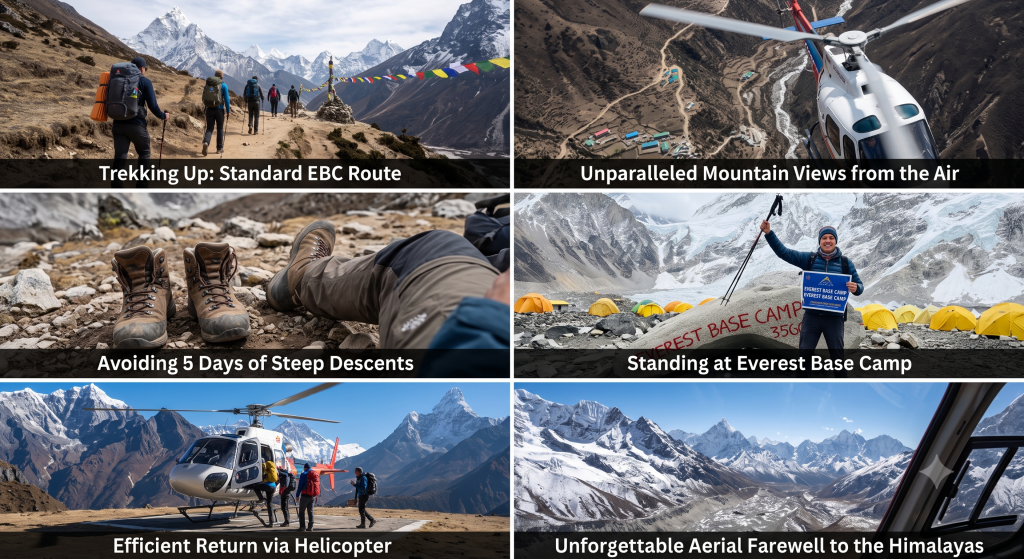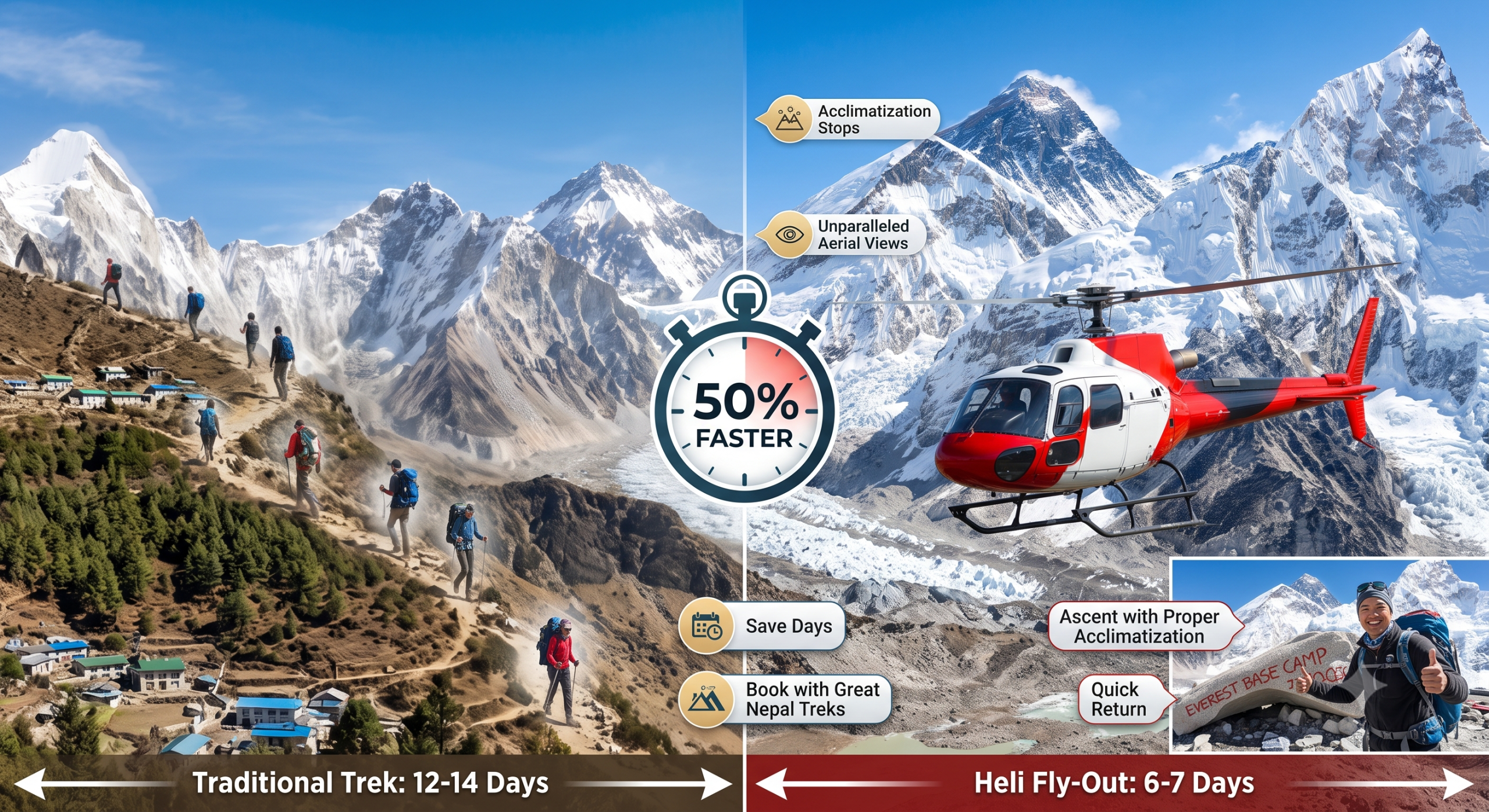
Trekking to the foot of the world’s highest peak is a bucket-list dream for millions, but let’s be honest: not everyone has two to three weeks of vacation time to spare. A traditional Everest Base Camp (EBC) trek takes a mandatory 12 to 14 days of grueling round-trip foot travel through the Khumbu region. However, with the rise of modern travel options, experiencing the everest base camp with helicopter has become a popular alternative.
But what if you could slash that time exactly in half without missing a single highlight?
This innovative approach offers a unique way to reach the base camp without the extensive time commitment of the traditional trek.
Enter the Everest Base Camp Trek with Helicopter Fly-Out. This hybrid adventure is rapidly becoming the ultimate hack for busy professionals, luxury travelers, and anyone wanting to save their knees from days of punishing downhill descents. Discover how you can enjoy this unforgettable experience and make your dream a reality in just a few days.
What is an EBC Heli Fly-Out Package?
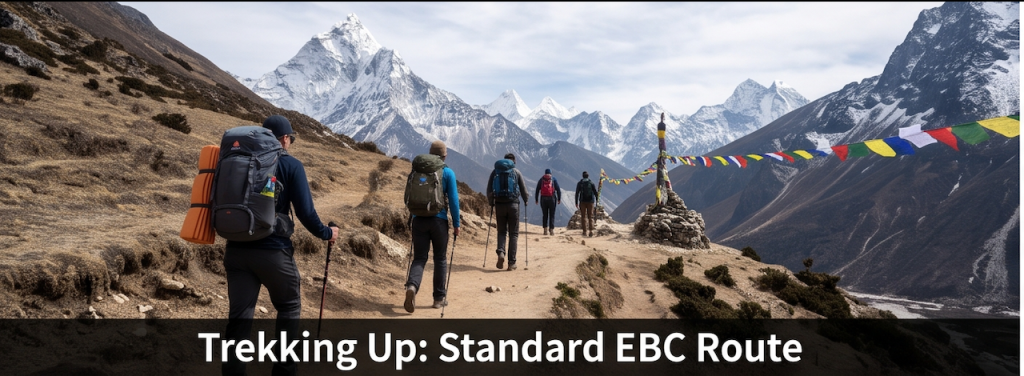
The premise is brilliant in its simplicity: You trek up, and you fly back.
On a classic trek, you spend roughly 8 days hiking up to Namche Bazaar, Dingboche, Gorak Shep, and finally Everest Base Camp to acclimatize safely. Once you achieve your goal, you turn around and spend 4 to 5 days retracing your exact same steps down the mountain to Lukla.
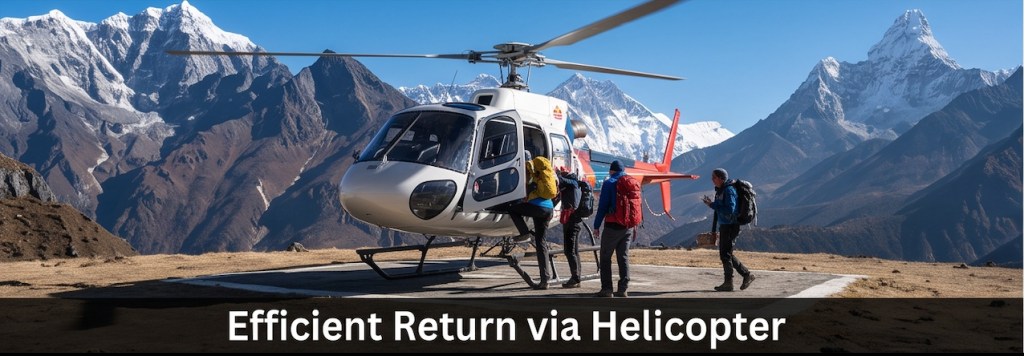
With a luxury fly-out package, the moment you reach your peak destination and stand at the iconic Everest Base Camp rock (17,598 feet / 5,364 meters), your footwork is officially done. Instead of walking backward, you hop into a private or shared Airbus H125 helicopter and soar back to Lukla or directly to Kathmandu in under an hour.
The Math: Traditional Trek vs. Heli Fly-Out
| Feature | Traditional EBC Trek | EBC Heli Fly-Out Trek |
| Total Duration | 12 to 15 Days | 7 to 9 Days |
| Hiking Distance | 80 miles (130 km) | 40 miles (65 km) |
| Knee Strain | High (5 days of steep descents) | Minimal (Uphill only) |
| Scenery Overlap | High (Same trails up and down) | Zero (New perspectives via air) |
Why the “Trek Up, Fly Out” Trend is Exploding
- Massive Time Savings
Time is the ultimate luxury. By condensing a two-week trip into a tight 7-to-9-day itinerary, you can easily pull off an Everest expedition using just a week of annual leave. - Acclimatization Without the Burnout
The danger of short EBC trips is altitude sickness (Acute Mountain Sickness). You cannot rush the ascent. The heli fly-out itinerary is genius because it never shortcuts the climb. You still spend the necessary 8 days hiking upward at a safe, slow pace to let your body adjust. You only cut out the return journey, where altitude sickness is no longer a risk. - A Bird’s-Eye View of the Himalayas
Walking through the Khumbu gives you an intimate look at Sherpa culture and suspension bridges. But seeing the Ama Dablam, Lhotse, and Mount Everest massifs from a helicopter cockpit offers a jaw-dropping scale that text or photos simply cannot capture.
Pro Tip: The descent from Gorak Shep back to Lukla is notorious for causing joint fatigue and minor injuries. Skipping the downhill entirely preserves your knees and lets you finish your vacation feeling refreshed rather than completely broken down.
The Perfect 8-Day Heli Fly-Out Itinerary
While custom schedules exist, this is the gold standard itinerary perfected by elite local operators to ensure maximum safety and view satisfaction:
• Day 1: Scenic flight from Kathmandu/Manthali to Lukla; trek to Phakding.
• Day 2: Hike into the high-altitude hub of Namche Bazaar (11,286 ft).
• Day 3: Acclimatization day in Namcheexplore local cafes and viewpoints.
• Day 4: Trek through rhododendron forests to the spiritual hub of Tengboche Monastery.
• Day 5: Climb past the tree line to the alpine village of Dingboche (14,468 ft).
• Day 6: Second crucial acclimatization day with a hike up Nagarjun Hill.
• Day 7: Push through the rocky terrain of Lobuche to Gorak Shep.
• Day 8: The Grand Finale. Hike to Everest Base Camp, celebrate your achievement, and board your helicopter right from the glacier for a thrilling flight back to Kathmandu.
Ready to Hack Your Everest Adventure?
An adventure this precise requires flawless execution. Weather changes in minutes in the Himalayas, meaning helicopter logistics, permits, and experienced high-altitude guides must be synchronized perfectly.
Great Nepal Treks specializes in premium, safety-first Everest Heli-Trek hybrid packages. With over a decade of local experience, guaranteed oxygen support on every flight, and seasoned Sherpa guides who know every rock on the trail, they ensure your bucket-list trip runs flawlessly.
Don’t let a tight schedule keep you from the top of the world. Contact Great Nepal Treks today to secure your seat on an upcoming seasonal departure and experience the majesty of Everest in half the time.
Frequently Asked Questions (FAQ): Everest Base Camp Helicopter Trek
Navigating an adventure to 17,598 feet requires planning. Here are the most common questions about combining the classic Everest trek with a modern helicopter return to Kathmandu. Here are the frequently asked questions (FAQs) designed to address the most common queries potential clients may have when reading about your Everest Base Camp Trek with Helicopter Fly-Out package.
1. How does the EBC Heli Trek save time compared to the traditional trek?
The traditional Everest Base Camp (EBC) trek is an 80-mile round-trip journey requiring 12 to 15 days, with at least 5 days dedicated to walking back down the same trail. Our EBC Heli Fly-Out package reduces the total trip time to just 8 or 9 days. You still enjoy the full experience of hiking up to Base Camp, but instead of walking back, you take a spectacular helicopter flight from EBC directly to Lukla or Kathmandu in under an hour. This is the perfect luxury shortcut for busy adventurers.
2. Is the “Trek Up, Fly Out” itinerary safe regarding acclimatization?
Yes. Safety is our top priority. The rapid time savings of this package only occur on the return journey, where Altitude Sickness (Acute Mountain Sickness) is no longer a risk. On the ascent, we follow a strict, slow acclimatization schedule.You will still hike for 8 days, including mandatory rest and adaptation days in Namche Bazaar (11,286 ft) and Dingboche (14,468 ft), exactly like a traditional trek. Great Nepal Treks guides are trained to monitor your health daily using pulse oximeters.
3. What are the fitness requirements for this adventure?
While the helicopter flight saves your knees from the demanding downhill sections, you must still be in very good physical condition to complete the ascent. You will be trekking 5 to 7 hours a day for 8 consecutive days on rugged, steep,high-altitude terrain while carrying a daypack. We recommend a training regimen focused on cardiovascular endurance (running, cycling) and leg strength (hiking with weight, stair climbing) started at least 3 months prior to your trip.
4. What is included in the helicopter portion of the trip?
When you book with Great Nepal Treks, the fly-out package includes:
- A seat in a shared or private Airbus H125 helicopter (the best model for high-altitude operations).
- Guaranteed oxygen support on board.
- A spectacular aerial tour over the Khumbu Icefall, Everest Base Camp, and the Himalayas.
- A landing at Lukla for refueling (and a chance to say goodbye to the trail from above) followed by a final flight to Kathmandu.
5. Can I see Mount Everest from Base Camp?
This is a common surprise for trekkers: The peak of Mount Everest (8,848m) is actually not visible from the actualEverest Base Camp rock, as it is obscured by the massive West Shoulder. The best vantage point to see the summit is from Kala Patthar (18,519 ft / 5,644m), a viewpoint we hike to early on the morning of your final push, just before heading to Base Camp and boarding your helicopter. However, you will get an incredible, unobstructed aerial view of the Everest summit during your helicopter return.
6. What happens if the weather delays the helicopter flight?
Mountain weather is highly unpredictable. We prioritize safety above all else. In the event of high winds, low visibility, or heavy snow, helicopter operations are suspended. This is why our itineraries always include 1 or 2 contingency days. If your helicopter is grounded, you may need to wait in Gorak Shep or Pheriche. Great Nepal Treks maintains constant communication with pilots and ground staff to adjust schedules. In extreme cases where a flight cannot occur within a safe window, we have contingency plans to assist with a foot descent to lower altitudes or secure priority placement on the next available flight.
7. How does Great Nepal Treks prioritize safety?
We are a premier local Nepalese operator with an immaculate safety record. Our approach to your EBC Heli Fly-Outincludes:
- Using only highly experienced pilots certified for high-altitude rescue and transport.
- Daily health monitoring for all trekkers to detect early signs of altitude sickness.
- Our guides are certified in Wilderness First Aid and carry oxygen.
- We use the newest, most reliable high-altitude helicopters (such as the Airbus H125/AS350 B3e series) that perform exceptionally well in thin air.
8. What is the best time of year to book this Heli-Trek?
The prime seasons for this adventure align with the best trekking weather in Nepal:
- Spring (March to May): This is the main climbing season. The weather is stable, wildflowers are in bloom at lower altitudes, and Everest Base Camp is a bustling ‘tent city’ filled with expedition teams aiming for the summit.
- Autumn (Late September to November): This season offers the clearest skies and sharpest visibility, perfect for your Himalayan aerial tour.
9. How do I book my Everest Base Camp Helicopter Trek with Great Nepal Treks?
You can book your trip directly through our website by viewing the full itinerary and dates here [https://greatnepaltreks.com/everest-base-camp-trek-without-lukla-flight].Alternatively, you can contact our travel specialists via email [[email protected]] or WhatsApp [+9779851078338] to discuss a custom luxury itinerary or arrange a private group booking. We recommend booking at least 6 months in advance, as helicopter seats during peak season are extremely limited.