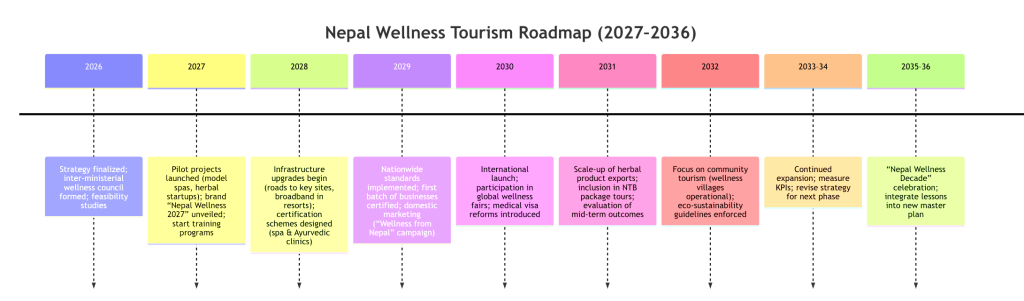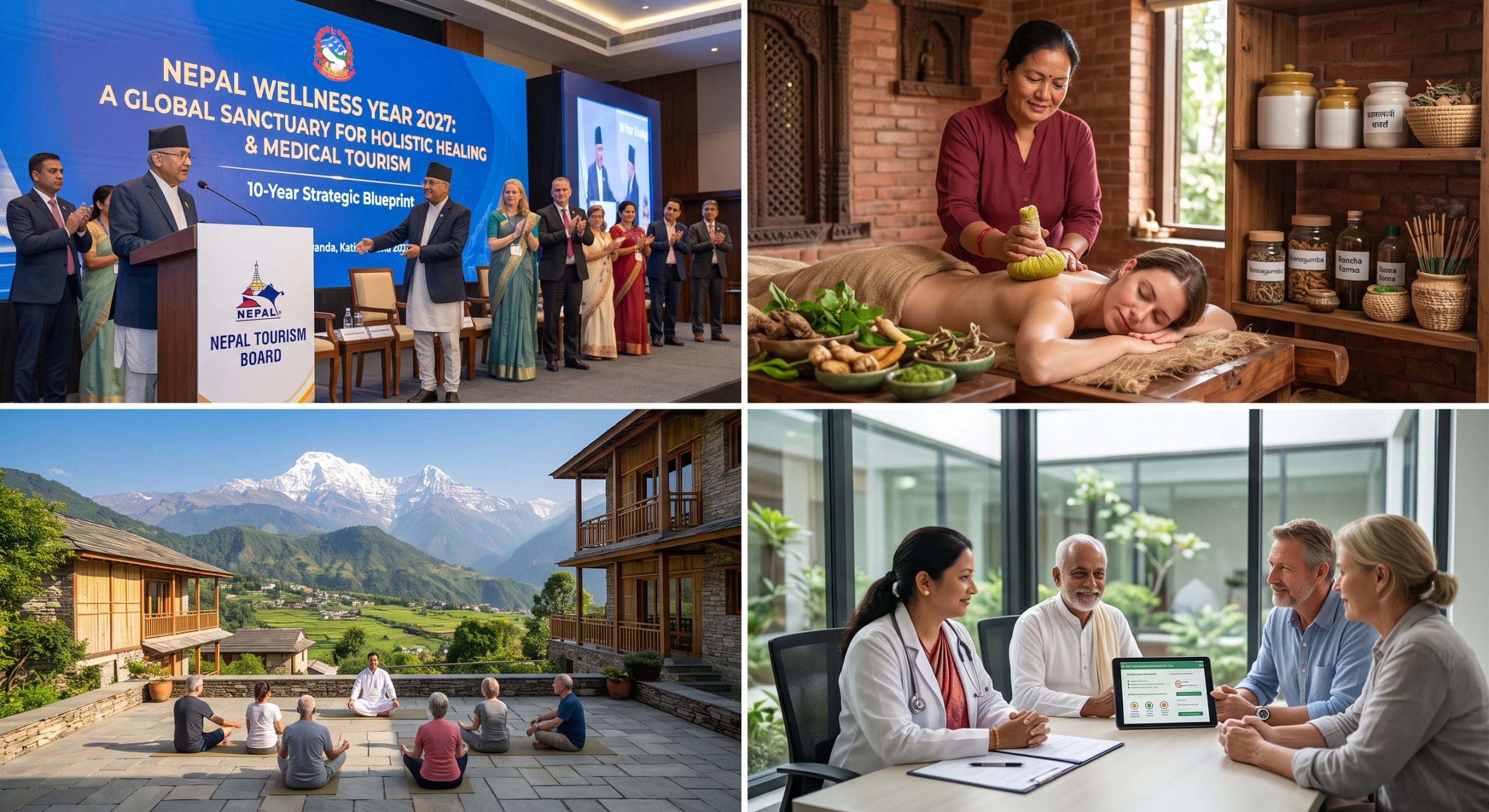
On April 15, 2026 (International Wellness Day), the Nepalese government and Nepal Tourism Board (NTB) formally inaugurated the “National Wellness Tourism Strategy (2026-2035)” with a five-year action plan. 2027 was marked as the “Nepal Wellness Year”. The unprecedented move seeks to transform Nepal, which is popular for adventure trekking, into a global destination for holistic health and healing tourism, particularly focusing on wellness tourism in nepal. The strategy seeks to attract more than 10,000 foreign wellness tourists per year (post-2030) and generate US$20-30 million worth of revenues through high-end wellness tourists.
Four key sectors have been identified for promoting Nepal’s wellness spa/massage services, Ayurvedic treatments (Panchakarma), yoga & meditation, and natural spiritual healing. Most importantly, the strategy plans to develop integrated wellness centres in strategic locations and establish national standards and codes of conduct for wellness services by 2027. This strategy (which involves the appointment of ambassadors, campaigns under “Arogya Nepal” and intersectoral cooperation) specifically capitalises on Nepal’s unique attributes, nature, herbal biodiversity and spiritual culture to provide a transformational wellness experience to the tourists. The inauguration ceremony (shown above) at Sainik Manch, Kathmandu, focused on Nepal’s desire to share its natural and spiritual sanctuary for holistic well-being with the world.
Developing and Operating Nepal’s Wellness Tourism
For translating its vision to reality, Nepal should build infrastructure and capacity for its wellness pillars. Steps include establishing and accrediting wellness resorts and retreats in each region (e.g., spa resorts in Pokhara, forest-healing lodges in Chitwan, hot-spring spas in Tatopani, and yoga ashrams in the hills). Infrastructure development (roads, lodging, and telecom) in rural and mountain areas will support community-based wellness villages (e.g., long-stay retreats in Nagarkot or Mustang). The strategy’s phased targets (a pilot of 500–1,000 tourists in 2026–27, 3,000–5,000 by 2028–29, and over 10,000 post-2030) guide investment in wellness centres, certified practitioners, and eco-friendly hotels. For example, the plan earmarks funds to create integrated spa and medical hubs and to upskill local therapists and Ayurvedic doctors. Nepal has already started crowd-sourcing promotion (e.g., a nationwide NTB “Wellness Reel” video contest in 2026 saw 111 entries highlighting Nepal’s yoga, Ayurveda and nature healing). Such grassroots campaigns will be complemented by international outreach: Nepal is engaging tourism ambassadors, partnering with regional wellness associations (e.g., the Asia Pacific Spa and Wellness Coalition), and featuring wellness in trade shows (e.g., in Shenzhen, Tokyo, etc.).
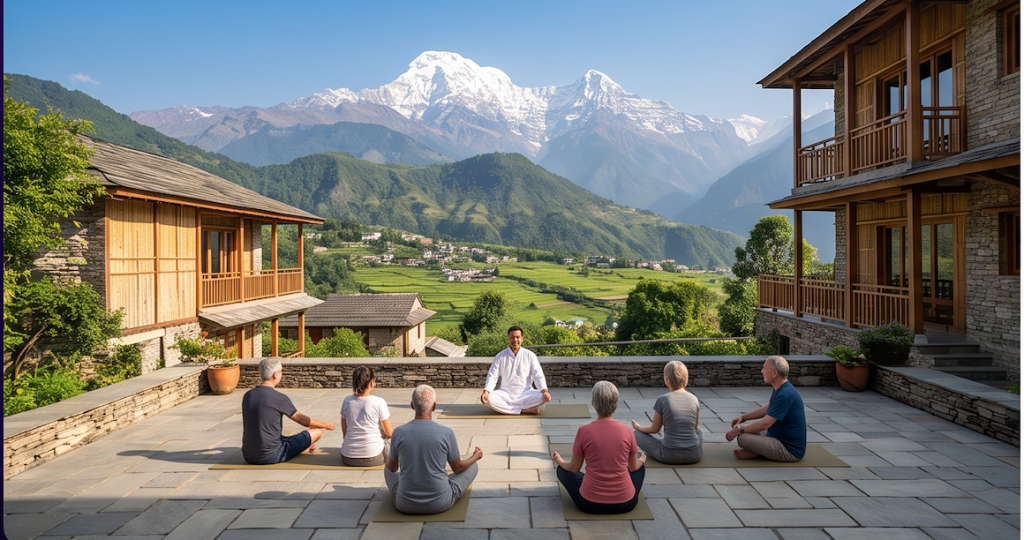
On the supply side, the government will enforce wellness service standards so that tourists can trust “Arogya Nepal” experiences. A national wellness committee and accreditation system will certify Ayurveda clinics, yoga schools, and spa operators (in line with the planned National Wellness Standards and Code of Conduct by end-2027). Health and tourism ministries will collaborate to ensure wellness offerings meet both medical and hospitality norms (e.g., collaborating on Ayurveda hospital licensing, as India’s AYUSH initiative has done). Community involvement is key: local healers (Vaidyas, Amchis, and shamans) can be trained in hospitality and hygiene, turning traditional healing villages into wellness pilgrimage sites. The strategy also explicitly aims to de-seasonalise tourism: by promoting monsoon Ayurvedic detox and winter immunity retreats (aligned with Ayurveda’s seasonal principles), Nepal expects wellness tours to mitigate the sharp seasonality of trekking. In fact, Nepal’s health ministry notes that tapping the wellness market can “reduce dependence on seasonal adventure tourism”, providing year-round income for remote communities.
The focus on wellness tourism in nepal aligns with global trends towards health and well-being, making it a timely initiative for the country.
The wellness market of Nepal can “reduce dependence on seasonal adventure tourism”
International Case Studies: Lessons for Nepal
Many countries with rich nature or cultural traditions have successfully harnessed wellness tourism, offering useful models for Nepal. For example:
- Thailand: The Thai government has launched an ambitious 10-year (2025–34) wellness and medical tourism plan, investing over $2 billion in luxury spa and health infrastructure. Thailand now has thousands of certified wellness centres, and its wellness industry (including spas, medical wellness and real estate) is booming. In 2024 Thailand’s wellness tourism spending reached about $14 billion (a 36.4% jump in one year). Officials aim to generate 690 billion baht ($20 billion) annually from wellness and medical travel. Thailand’s success stems from blending traditional Thai massage, herbal therapies and Buddhist meditation with modern standards and marketing. The government’s targets, wellness hubs, training, and high-tech medical tourism (e.g., border hospital hubs) closely mirror Nepal’s planned approach.
- Bhutan: Bhutan’s entire tourism model is built on the concept of Gross National Happiness. By strictly limiting visitor numbers and focusing on cultural and ecological preservation, Bhutan has become a de facto wellness sanctuary. Its emphasis on spirituality, nature and mindfulness (“everyday GNH”) attracts travellers seeking mental and emotional well-being. Tourists undergo mandatory “high-value, low-impact” excursions, often including meditation, visits to temples and nature treks, reflecting an integrated wellness experience. Bhutan’s model shows how branding national values (happiness and harmony) can power a wellness economy without large-scale commercialisation.
- Costa Rica has incorporated its “Blue Zone” in the Nicoya Peninsula, famous for remarkable longevity, into its ‘Wellness Pura Vida’ tourism initiative. By highlighting the lifestyles of centenarians, such as plant-based diets, active routines, and strong community bonds, Costa Rica promotes itself as a top wellness destination. Its tourism authority explicitly connects this Blue Zone to wellness travel, stating, ‘The ICT launched the Wellness Pura Vida country strategy to position Costa Rica as a wellness destination with unique, transforming experiences. ‘Similarly, Nepal could leverage local regional health traits, like Himalayan longevity practices, to craft a unique narrative.
- Singapore: As an urban contrast, Singapore has fused wellness into city living, emphasising sustainability and longevity. The city-state markets itself as a budding “Blue Zone city” by integrating green spaces, wellness festivals, and cutting-edge health services. Singapore’s focus on holistic city design (walkable neighbourhoods, lush parks, and preventive health programmes) shows how government policy and brand positioning (even in dense environments) can grow a wellness market. Nepal could adopt a miniaturised version of this approach in Kathmandu or Pokhara, e.g., by developing “wellness parks” or urban yoga centres.
- India: Neighbouring India has aggressively promoted Ayurvedic and yoga tourism. A dedicated AYUSH Visa (introduced in 2023) streamlines entry for foreign visitors seeking Ayurveda, yoga, or other traditional treatments. India’s Ministry of AYUSH co-hosts international wellness summits and partners with tourism boards to brand yoga retreats (e.g., Rishikesh) globally. Nepal shares this Ayurvedic heritage and could emulate such visa and summit models, making it easier for visitors to seek Panchakarma or Tibetan medicine in Nepal. (For comparison, India’s initiatives illustrate how visa facilitation and international promotion boost wellness travel.)
Other wellness-rich destinations (e.g., Japan with its onsen culture, Greece with mineral springs and diet, and European spa towns) highlight the value of marketing natural/local health assets. The Global Wellness Institute notes that successful destinations define a clear niche (mountain wellness, thermal springs, spiritual retreats, etc.) and then improve quality, infrastructure and branding. Nepal’s approach of regional specialisation (Kathmandu Valley for cultural spa tours, Pokhara for yoga treks, and Lumbini for meditation) closely follows such best practices.
Wellness Products and Offerings for Nepal
To capitalise on wellness tourism, Nepal can develop and brand a range of products and experiences based on its assets:
- Yoga & Meditation Retreats: Nepal can offer immersive yoga teacher training and meditation courses in mountain or monastery settings. Retreats in Pokhara, Nagarkot or near Lumbini can combine daily yoga with nature excursions. Branded packages (e.g., “Himalayan Yoga Week”) would attract students worldwide.
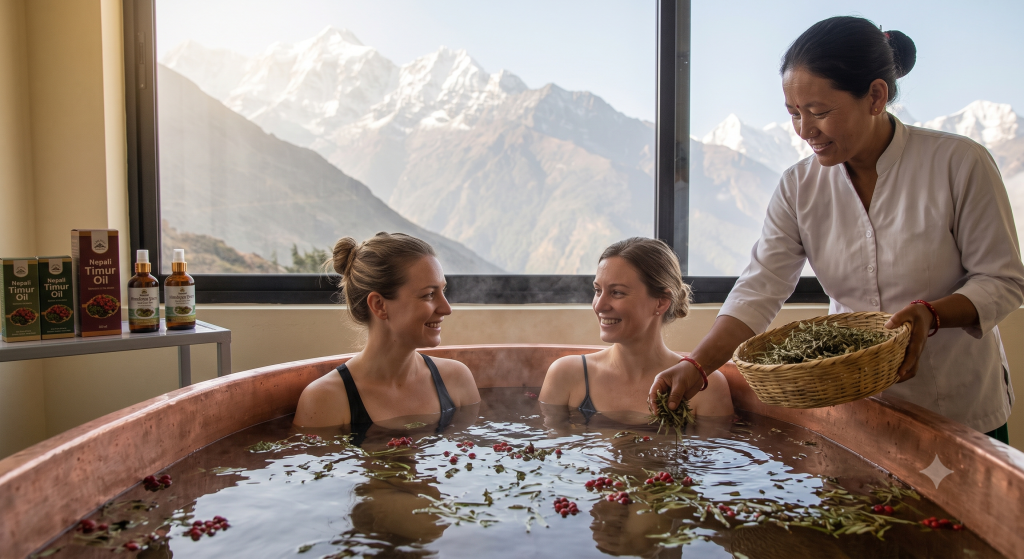
- Ayurveda Spa Packages: Full Panchakarma detox programmes using Nepal’s local herbs can be packaged at Ayurvedic hospitals (e.g., in Kathmandu or Bharatpur) or resorts. Spa treatments using organic Nepalese massage oils (made from mustard, sesame or local medicinal plants) and herbal baths (mountain spring water) can be sold as signature services.
- Thermal Spring Resorts: Nepal has over 20 natural hot springs (e.g., Tatopani in Annapurna and Sikta in Nuwakot). These can be developed into spa resorts or therapeutic pools. Branded products like “Tatopani Bath Salts” (mineral-rich Himalayan salt with local herbs) can be sold on-site and abroad.
- Herbal Teas and Tonics: With the Himalaya’s rich flora, Nepal can export and brand its herbs. Examples include rhododendron tea (made from the national flower’s leaves), Tulsi and lemongrass blends, mountain berry juices, and fortified “immunity teas” (turmeric, ginger, and honey). These can be marketed as exotic wellness teas (e.g., “Himalayan Wellness Blend”).
- Organic Cuisine and Fasting Retreats: Wellness travellers often seek healthy diets. Nepal can offer organic farm-to-table stays or supervised mono-diet (rice porridge or kitchari cleanses using local rice and spices) to rejuvenate the body. Branded cooking classes on Nepali wellness foods could also be a product.
- Holistic Adventure Packages: Specialised trekking programmes that integrate wellness, such as guided “yoga treks” (daily stretching or meditation breaks in scenic spots) or “mindfulness jungle safaris” (wildlife park walks with breathwork), can attract those wanting both nature and healing.
- Cultural-Spiritual Experiences: Products blending culture and wellness, for example, mantra-meditation nights at monasteries, sound-healing sessions with Tibetan bowls, or prayer-flag crafting workshops, leverage Nepal’s spiritual heritage. These unique experiences (e.g., Buddhist chanting in Lumbini) can be sold as part of wellness packages.
- Wellness Souvenirs: Nepal can promote artisanal wellness products: pure Himalayan honey (including medicinal varieties like “mad honey”), herbal salves, incense made from local resins (e.g., pine and “Tulsi” incense), and organic cotton meditation cushions embroidered with Nepali motifs. Even spa gift baskets containing Himalayan salt, handmade soaps (with yak milk or yak butter oil), and herbal lotions can carry the Nepal brand.
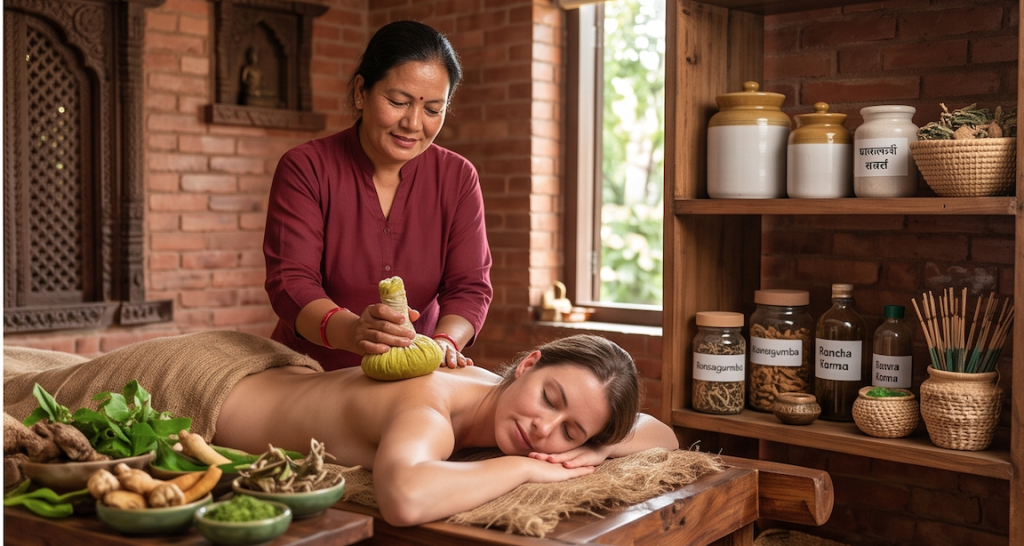
Each product above should highlight Nepal’s uniqueness. For instance, massage oils might be sold under a label like “Nepal Aatmiyata Oil” (blending Ayurveda and Nepali hospitality) and teas as “Everest Herbal Tea Blends”. Packaging and certification (e.g., organic or fair-trade) will add value. By developing these products and ensuring their quality, Nepal can create a portfolio of wellness offerings that complement its tourism infrastructure.
Unique Traditional Wellness Assets of Nepal
Beyond generic wellness offerings, Nepal has indigenous healing traditions that no other country can replicate. These include:
- Medicinal Himalayan Herbs: Nepal’s mid-hill and alpine regions harbour hundreds of medicinal plants. Endemic herbs like yarsa gumba (Cordyceps), ashwagandha, brahmi, kachnar, barberry and wild ginger can be made into supplements, powders or oils. For example, “Nepal Brahmi Oil” could be a scalp tonic for stress relief and Swertia chirayita (chirayita) teas for digestion. Promoting these as part of Ayurveda or local remedies taps into global interest in herbal medicine.
- Sowa Rigpa (Tibetan Medicine): In Himalayan regions (e.g., Mustang, Dolpo), traditional Tibetan healers use unique formulations. Clinics offering Druk Yul treatments (with juniper, Indian snow lotus, etc.) for altitude wellness or mental calm can be signature Nepali experiences. Herbal balm products (similar to Tibetan zhimo) could be branded as “Himalayan Tibetan Ointment”.
- Shamanic Healing (Jhankri): Nepal’s ethnic communities (Magar, Rai, Gurung, Tamang) have shamanic/traditional healing rituals for stress and illness. Experiential tours in villages can include dhami-jhankri ceremonies (ritual drumming and blessing), which might be offered to open-minded tourists seeking spiritual cleansing. Documenting and preserving these (with community consent) adds cultural depth to the wellness narrative.
- Himalayan Salt and Minerals: Nepal’s salt mines (e.g., the Sikta Salt Mine) produce pink Himalayan salt. Branded as “Pure Himalayan Bath Salt”, this could be a spa product for at-home mineral baths. Similarly, local clays (fuller’s earth) could be turned into facial masks for natural skincare products.
- Thermal Spring Waters: Apart from building resorts, Nepal can bottle rare spring waters or market the baths themselves. “Tatopani Wellness Retreat” or “Gosainkunda Antioxidant Springs” tours highlight natural mineral cures (for muscle pain and skin health).
- Cultural Harmony Practices: Nepalese concepts like Aatmiyata (heartfelt hospitality) and Dharma (balance) can be woven into wellness branding. Even communal practices (like group prayer at dawn) can be sold as communal mindfulness events. Selling handicrafts (prayer beads and Thangka painting kits) gives travellers a piece of Nepali spirituality.
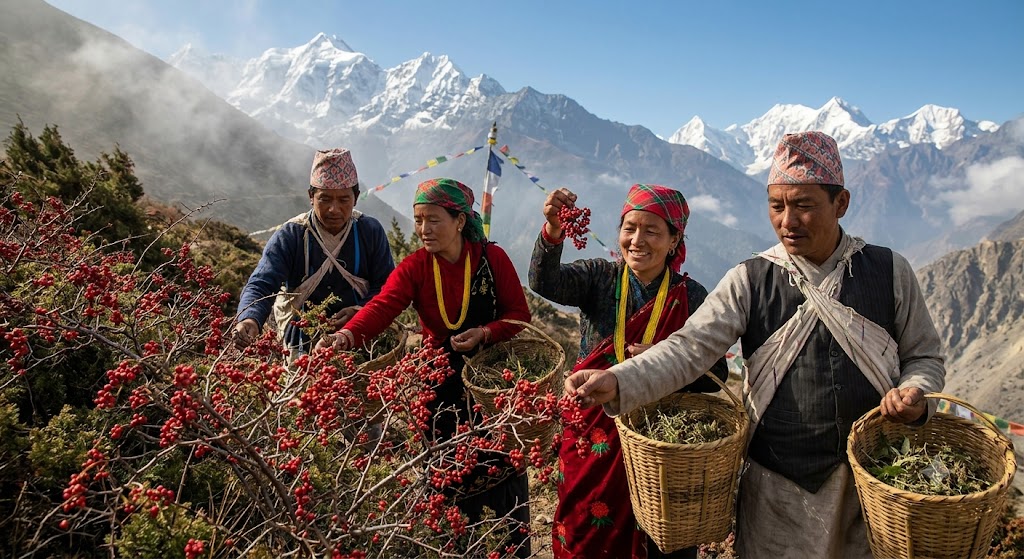
By packaging these traditional assets thoughtfully, Nepal creates high-value niche products. For instance, an international traveller might pay a premium for an authentic Panchakarma at a Himalayan monastery or for a Nepal-designed herbal remedy unavailable elsewhere. This uniqueness can command higher prices and encourage repeat visits.
Branding, Promotion and Policy Recommendations
A successful wellness strategy requires strong branding and partnerships. Nepal should:
(1) Market itself globally as “Nepal: Land of Holistic Healing”, emphasisingtraveller storytelling across social media, travel fairs and diplomatic channels. The NTB’s recent campaigns (wellness video contest and promotional reels) are good models; continuing Nepal Wellness Year 2027 branding will raise awareness.
(2) Forge public–private partnerships: train local hoteliers and tour operators in wellness tourism standards; incentivise resorts to build spa facilities; collaborate with airlines and travel platforms to create wellness packages.
(3) Create incentives: tax breaks or grants for wellness resort investment; streamlined visas for wellness travellers (similar to India’s AYUSH visa); and inclusion of wellness tourism in vocational training curricula (Ayurvedic nursing and yoga instruction).
Policy-wise, Nepal should track wellness tourist numbers and feedback and adjust the five-year plan accordingly. Setting up a National Wellness Tourism Committee (as proposed) will coordinate ministries of tourism, health, culture and foreign affairs. This body can negotiate bilateral tourism agreements (e.g., with China, India, and EU nations) to channel wellness travel. NTB should continue to gather data and benchmarks (in line with Global Wellness Institute reports) to measure progress.
International experience shows that alignment of culture, policy and promotion is key. For instance, Thailand’s focus on “quality over quantity” and Costa Rica’s “Pura Vida” ethos are deeply embedded in national narratives. Nepal’s angle, “heal and reconnect in the Himalayas”, must similarly become a clear, compelling message. With rigorous quality standards, skilled human resources, and sustained marketing, Nepal can emulate other nations’ success. The government’s strategic blueprint (2026–2035) provides the roadmap; now executing its vision will enable wellness tourism to drive economic growth, create jobs, and strengthen rural livelihoods across Nepal. By leveraging its forests, mountains, herbs and spiritual heritage, Nepal can truly become a premier sanctuary of global wellness.