Honey Hunting Tour In Nepal – 11 Days
Price starts from
Duration
Tour Type
Explore Tours
Country
Nepal
Duration
11 Days
Trip Grade
Medium
Best Season
Spring/Autumn
Altitude
5535m/18159ft
Group Size
Min 2 Pax
Accomodation
N/A
Co-ordinates
N/A
Activity
N/A
Trek Style
Tea House Trek
Transportation
Domestic Air/ Land Transportation
Culture
N/A
Himalayan Sight
N/A
Airport
Domestic
Range
N/A
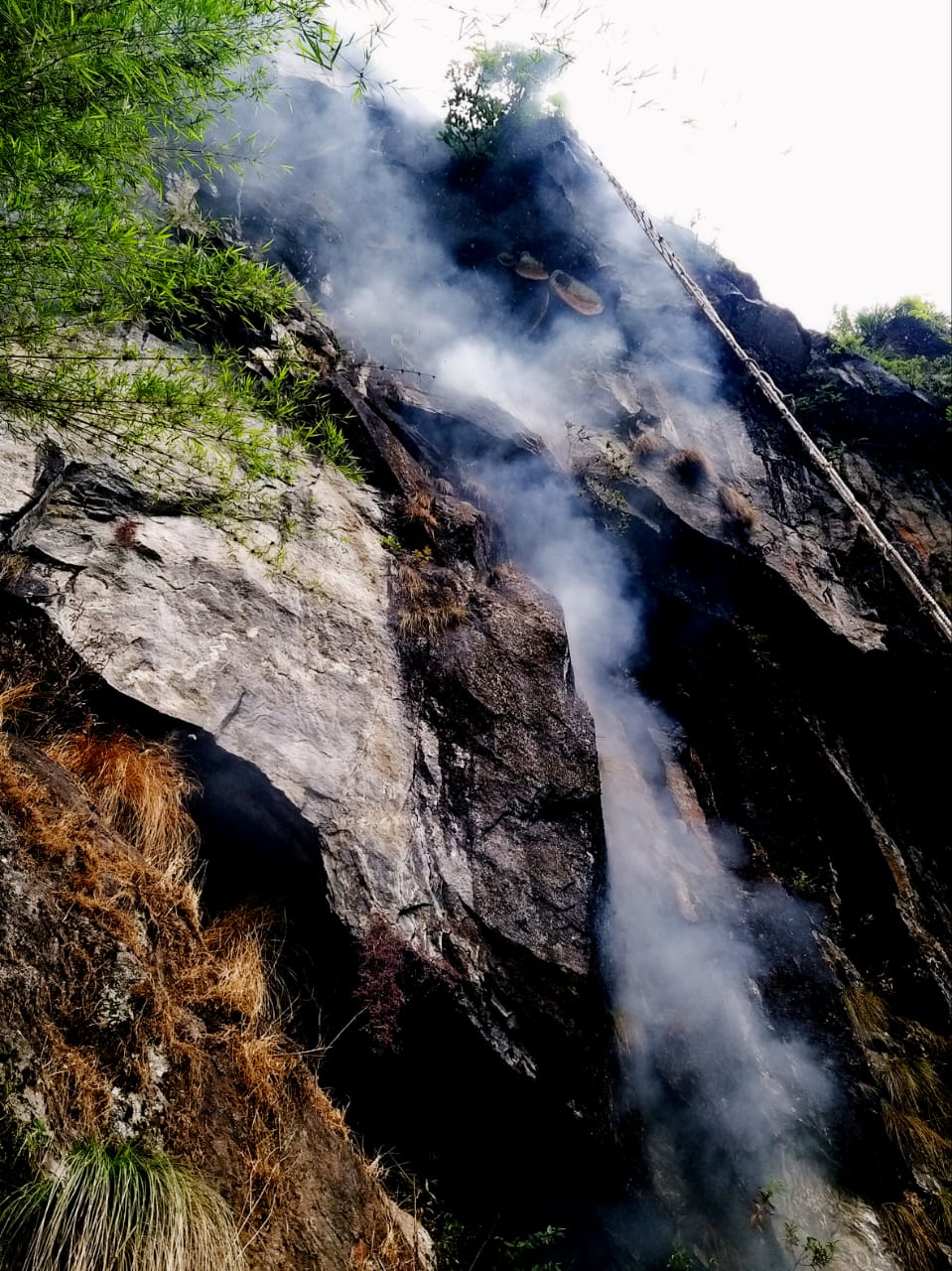
Honey Hunting Tour is one of the most amazing tours conducted in Nepal which will take you to the Himalayan foothill of Central Nepal. These hunts take place only twice a year and locate the world’s largest honey bee colony, making it a very prestigious place. These Himalayan Honey bees are also known as the world’s largest bees and make their honey’s out of the wild rhododendron flowers that grow in the forest. Honey is also considered to have medicinal qualities and used for special purposes.
Honey Hunting Tour in Nepal begins from the village of Ghan Pokhari and Ghale Gaun homestay to the local Gurung tribe. The wild honey bees make their hives high on the rocks near a waterfall, which can only be approached by climbing with the help of bamboo ladders and ropes. The lead honey hunter will collect the honey in his bucket and passes it down to other members. Honey hunting is a part of livelihood for the people of this region and is a very important aspect of their culture. Besides that, you will also experience the culture, village life, and beautiful scene of the green hills and Himalayas of Nepal during this tour.
Experience a mesmerizing honey-hunting tour in Nepal, where you can watch the Indigenous Gurung community collect wild honey from cliffs against the backdrop of the beautiful Himalayas. This adventure offers an insight into local culture and traditions. As well as taking a walk to admire the scenery and soak in the pure nature Perfect for adventure seekers and culture lovers.
This tour is a must-do for anyone looking to explore off-the-beaten-path Nepal.
Tour Plan
Welcome to the land of Himalaya at 1333m. You will be warmly welcomed by the mountains and our company representative will be standing with your name card at the arrival terminal with a beautiful smile. You will be escorted to your hotel and you will be provided with all the detailed information about your Honey Hunting Tour in Nepal program. If your arrival is late in the evening then there is always another day to provide you information about your tour.
We explore the Pashupatinath Temple, Bouddhanath Stupa, Swoyambhunath Stupa (Monkey Temple) and Patan Durbar square etc which are enlisted in UNESCO world heritage sites.
Drive along the Prithvi highway across beautiful villages, colorful peoples, landscapes, all we drive along the River Valley.
Ascend all the way to Ghalagaun, The trail passes through the beautiful forest, you may get chances to see some of the wildlife’s. This area holds a tremendous potentiality for bird watching. It really can be a birdwatcher’s paradise.
This place provides you with stunning views of numerous Mountains, This place itself is located at beautiful mountain with Gurung community wher you are offered to observe their culture & traditions.
Today your trail descend to Bhujung and followed by ascend to Passgaun. It will comparatively be counted one of the hard trek today.
Thoroughly ascends gently through jungles, beautiful waterfalls and the chirpings of the birds. Again after few hours will be time to descend steep downwards. The intense heat, humidity and the direct sunlight striking can really be unbearable.
Trail descends about 1150 Meters & drives approximately 3 hrs by jeep through unpaved Road to Pokhara. O/N Hotel in Pokhara
Visit Sarangkot 1592m above sea level to enjoy the stunning view of sunrise. Back to hotel for breakfast, take some rest then go for boating in Fewa Lake, visit Barahi temple, mountain Museum, Mahendra cave, Bat’s cave. O/N Pokhara
Today, you fly back to Kathmandu after your long mountain journey. The early morning flight drops us in Kathmandu or alternatively you can use surface transport. You can rest and relax throughout the day at hotel. If you get interested to take some gifts home from Nepal for friends and relatives, you can visit to some nearby shops or venture out in Thamel for typical Nepalese goods.
Our Honey Hunting Tour in Nepal comes to an end today. The Great Nepal representative will escort you to the airport approximately 3 hours before your scheduled flight or to the stop where your next destination begins.
Included
- All arrival and departure transfer services to and from Airport both Domestic and International with ( A/C or non A/C Vehicles) as per itinerary.
- Assistance at the International airport by Great Nepal’s representative while arriving and departing.
- All accommodation with BB plans on twin sharing basis.
- Necessary staffs including experienced guides during the tour.
- 3 meals a day (Breakfasts, Lunch, and Dinners with tea or coffee) along with available accommodation at Hotel/ Lodge/ Guest Houses at the village in twin sharing basis.
- First Aid medical kits for the Group and the staffs.
- Our service charge and Government Taxes levied in Nepal.
- Farewell Dinner in a typical Nepali restaurant with domestic culture show in Kathmandu before departure
Excluded
- Any packed food/snacks, aerated drinks, energy drinks, mineral water, alcohol, cigarettes, chocolates, nutria-bars or any other food consumed beyond the prescribed breakfast, lunch and dinner, etc.
- Items of personal nature, Laundry Expenses, Tips.
- Expenses incurred towards usage of landlines, mobiles, walkie-talkies or satellite phone And Internet expenses
- Clothing, Packing Items or Bags, Personal Medical Kit, Camera/Video Fees or Trekking Gears
- Any extra expenses arising out of various/unforeseen situations like natural calamities, landslides, political disturbances, strikes, changes in Government regulations, etc that is beyond our control.
- Transportation is not on disposal basis. It is strictly as per the itinerary. Any extra distance traveled will be charged extra.
- Any additional staff other than specified.
- Medical Insurance
- Tips, gifts, souvenirs.
- Any other item not included in cost includes section
- Airfare of international flights.
- Nepal entry visa fee
- Any extra services or products or offers or activities which are not mentioned in the itinerary
Location
Find a route from your location
Frequently Asked Question (FAQ)
What is Acclimatization? Is it important to acclimitized?
To enable all trekking & expedition members to acclimatize well and hence maximize their chances of success, our trekking & expedition programs are prepared with sufficient time for acclimatization. Adaptation to the altitude takes time and there can be no short-cuts, even if supplementary oxygen is used in the final stages. The atmospheric pressure at the base camp is half of that at the sea level. A thorough program of acclimatization is built into the itinerary which consists of regulated height ascents, followed by descents and rests before the final ascent to the summit. Yes it is very important for all trekkers and climbers because this will prevent the climbers to get rid from altitude sickness.
What kind of personal first aid should i carry while trekking or Expedition in Nepal?
Although our guides from Great Nepal Treks carry first aid medical kit, it is better to carry a supply of first aid items for your own personal use according to your health conditions. Here are the list of some general as well as some special medications you may require:
– Antiseptic cream (Betadine)
– Sunblock SPF 30+
– Throat lozenges
– Painkillers and anti-inflammatory such as Aspirin, Paracetamol, Ibuprofen etc.
– Band-aids, bandage, compression bandage and ‘Second Skin’ for blisters
– Re-hydration salts. (Trioral, Electrobin, Oral Rehydrating Salt)
– Dextrose glucose tablets
– Water treatment tablets
– Your prescription medications
– Antibiotics for longer climbing and expedition style trips
Does high altitude effect and benefits?
You will be affected by high altitude problems if it is your fist trip at a high altitude. The altitude has some important beneficial effects on the human body and your trips have been designed to enable these. Please familiarize yourself with the information on AMS (Acute Mountain Sickness) and understand how to avoid it and read on benefits of high altitude and take advantage of these to improve your body’s metabolism.
What is Acute Mountain Sickness(AMS)
Altitude sickness is the reaction of the body adjusting to decreasing amounts of oxygen. The high altitude slowly decreases the flow of oxygen means the higher you climb, the flow of oxygen is very thin resulting the malfunction of body. Altitude sickness most commonly occurs from above 2,800 meters (9,200ft) but this is different for everyone – there is simply no way of knowing your own susceptibility prior to being at altitude thus it is vital for you to monitor your own health. AMS occurs when the body is unable to adopt at the higher altitude having less amount of oxygen. At an altitude of 5490m (18000 ft.), the oxygen availability becomes just the half of the availability at sea level. While only a third of oxygen is available at the summit of Mt. Everest. Symptoms may be mild and subside/go away after a day’s rest, or if it is ignored it could lead to death.
What are the symptoms of AMS?
Symptoms can appear within 1-2 hours although most often appear 6-10 hours after ascent and generally subside in 1-2 days as the body adjusts to altitude. They may reappear as you continue to go higher. Symptoms of AMS usually occur gradually and can be one or a combination of the following:
• Headache: Due to the less amount of oxygen in air, the blood influences the blood vessels to spread wide in order to supply more oxygen to the brain and which cause them to show the early symptom of AMS.
• Dopiness: The trekkers or climbers feel very sleepy but could not.
• Shortness of breath: The breathing pattern changes as the breathing becomes faster and deeper than normal in order to get enough oxygen and rapid pulse
• Loss of appetite and nausea: Despite of physical exercise, the trekkers don’t have an appetite to eat.
What are the Life threatening forms of AMS?
High Altitude Pulmonary Edema (HAPE)
If one accumulates of fluid in the lungs and mild fever then, there is a chance of High Altitude Pulmonary Edema (HAPE). The filling of fluid in the lungs is Pulmonary Edema. The fluid blocks the passage of fresh oxygen to get into the lungs which causes the shortage of oxygen. Though the exact reason for the HAPE has not been identified, scientists think that pressure of blood vessel around the lungs is directly proportional to the altitude. As a result the smaller blood vessels leak allowing the fluid to escape to the lungs. The treatment for the HAPE victims is to give the oxygen at the rate of 4 liters a minute, using Portable Altitude Chamber (PAC). In case of unavailability of PAC bag or oxygen, one is taken down to the low altitude which is the only way of life-saving. HAPE can also lead to unconsciousness which may also results to death in a short period of time.
High Altitude Cerebral Edema (HACE)
HACE is the accumulation of fluid in the brain due of the swollen blood vessels to the brain. HACE is also seen within a couple of hours and can send the patient to coma and take his/her life in just few hours likewise to HAPE. The excessive flow of blood to the brain due to the low-level oxygen causes vasodilation which eventually leads to leakage of blood vessels to the brain. A 4 to 8mg of dexamethasone is given as a first dose to those who suffer from such sickness and then 4mg Diamox is given an every six hours gap. Similarly, 2-4 liters/minute oxygen is given and one is taken to down if it is necessary.
What are the Symptoms of HAPE?
Breathlessness
– A dry cough, developing to a wet one with blood-tinged discharge or saliva
– Tightness in the chest & blueness/darkness of face, lips & tongue
– Low fever up to 38°C/100°F
– Severe fatigue, progressing to coma
What are the Symptoms of HACE?
– Severe headache symptoms not relieved by painkillers or lying down
– Confusion, disorientation & drowsiness
– Nausea/vomiting
– Loss of balance or coordination
– Blurred or double vision/retinal hemorrhage
How to Prevent Altitude Sickness?
Certain medical conditions (such as respiratory disease) or medications (such as sleeping pills) can increase the risk of altitude sickness – it is important that you inform your guide of any medical conditions or medications before ascending to altitude. You can help your body to acclimatize and avoid altitude sickness by:
– Avoiding alcohol, tobacco and substances that can interfere with good delivery of oxygen to the body or cause dehydration
– Eating small, frequent meals high in carbohydrates
– Drinking plenty of water – the test of sufficient amount of water intake is ability to urinate colorless urine
– Taking it easy or have a rest. Walk at a slower pace than you would at sea level and avoid over-exertion
– Climb the mountain gradually and stop for a day or two of rest for every 600m/2000ft above 2,400m/8000ft
– Climb high but Sleep at a lower altitude if possible
– Learn how to recognize early symptoms of mountain sickness
Since our Guides from Great Nepal Treks are very professional and well trained about altitude sickness, they will guide you during your trekking and expedition activities in Nepal.
How GNTE handle you during the case of emergency?
You never know when the unexpected situation comes and put you in hearse condition whether you are professional or beginners. Our professional guides do their best to make you well with first aid support. If the situation goes worse, you will be evacuated by Helicopter. You are entirely liable for all the expenses incurred in evacuation. So, before coming to Nepal, please make your travel insurance. Ask your guide to arrange a runner to the nearest communication point and inform office about requirement of a helicopter. For evacuation, we require the name of the sick person and the exact location from where helicopter can airlift you. You should not leave the place after calling Helicopter for evacuation though you are feeling better than before.
How to get safe drinking water during trekking and Expedition in Nepal?
On the trek, there is a facility of purchasing safe drinking water in teahouses.It is better if you carry the water purifying pills on your own. On camping trek, the water will be treated with Potassium permanganate or Iodine. On the trail, water from the streams is safe to drink, but better not to use it directly for drinking.
Are we safe with Great Nepal Treks during our trekking or expedition journey?
Security and a safe journey is our core objective of trekking. Our guide holds licenses issued by the Nepal Government and our staffs are local, honest, kind and genuine. But we also insist you to take care of your own personal belongings. If you are on ‘camping trek’ please take your main bag inside the tent once you reach campsite and put all bags and belongings in the middle of the tent when you feel sleepy. Your guide assigns a Sherpa on turn wise basis to guard the campsite throughout the night. If you are on ‘Tea house arrangement, never leave your baggage unattended and keep your lodge room locked when you go out. Feel safe since you are in the hands of ethical trekking company in Nepal.
What kind of personal first aid should i carry while trekking or Expedition in Nepal?
Although our guides from Great Nepal Treks carry first aid medical kit, it is better to carry a supply of first aid items for your own personal use according to your health conditions. Here are the list of some general as well as some special medications you may require:
– Antiseptic cream (Betadine)
– Sunblock SPF 30+
– Throat lozenges
– Painkillers and anti-inflammatory such as Aspirin, Paracetamol, Ibuprofen etc.
– Band-aids, bandage, compression bandage and ‘Second Skin’ for blisters
– Re-hydration salts. (Trioral, Electrobin, Oral Rehydrating Salt)
– Dextrose glucose tablets
– Water treatment tablets
– Your prescription medications
– Antibiotics for longer climbing and expedition style trips
How to Prevent Altitude Sickness?
Certain medical conditions (such as respiratory disease) or medications (such as sleeping pills) can increase the risk of altitude sickness – it is important that you inform your guide of any medical conditions or medications before ascending to altitude. You can help your body to acclimatize and avoid altitude sickness by:
– Avoiding alcohol, tobacco and substances that can interfere with good delivery of oxygen to the body or cause dehydration
– Eating small, frequent meals high in carbohydrates
– Drinking plenty of water – the test of sufficient amount of water intake is ability to urinate colorless urine
– Taking it easy or have a rest. Walk at a slower pace than you would at sea level and avoid over-exertion
– Climb the mountain gradually and stop for a day or two of rest for every 600m/2000ft above 2,400m/8000ft
– Climb high but Sleep at a lower altitude if possible
– Learn how to recognize early symptoms of mountain sickness
Since our Guides from Great Nepal Treks are very professional and well trained about altitude sickness, they will guide you during your trekking and expedition activities in Nepal.
Are we safe with Great Nepal Treks during our trekking or expedition journey?
Security and a safe journey is our core objective of trekking. Our guide holds licenses issued by the Nepal Government and our staffs are local, honest, kind and genuine. But we also insist you to take care of your own personal belongings. If you are on ‘camping trek’ please take your main bag inside the tent once you reach campsite and put all bags and belongings in the middle of the tent when you feel sleepy. Your guide assigns a Sherpa on turn wise basis to guard the campsite throughout the night. If you are on ‘Tea house arrangement, never leave your baggage unattended and keep your lodge room locked when you go out. Feel safe since you are in the hands of ethical trekking company in Nepal.
How to get safe drinking water during trekking and Expedition in Nepal?
On the trek, there is a facility of purchasing safe drinking water in teahouses.It is better if you carry the water purifying pills on your own. On camping trek, the water will be treated with Potassium permanganate or Iodine. On the trail, water from the streams is safe to drink, but better not to use it directly for drinking.
What kind of personal first aid should i carry while trekking or Expedition in Nepal?
Although our guides from Great Nepal Treks carry first aid medical kit, it is better to carry a supply of first aid items for your own personal use according to your health conditions. Here are the list of some general as well as some special medications you may require:
– Antiseptic cream (Betadine)
– Sunblock SPF 30+
– Throat lozenges
– Painkillers and anti-inflammatory such as Aspirin, Paracetamol, Ibuprofen etc.
– Band-aids, bandage, compression bandage and ‘Second Skin’ for blisters
– Re-hydration salts. (Trioral, Electrobin, Oral Rehydrating Salt)
– Dextrose glucose tablets
– Water treatment tablets
– Your prescription medications
– Antibiotics for longer climbing and expedition style trips
Travel For Cause
At Great Nepal Trek, your adventure directly fuels positive change. We are proud to allocate 10% from every tour booked with us to our Initiative Inclusion Development Forum Nepal. This dedicated commitment channels vital funds directly into supporting education and healthcare for underprivileged children from the Himalayan communities we explore. By trekking with us, you're not just witnessing the majestic mountains—you're actively helping to build a brighter, healthier future for its next generation.
What makes us different?
Changing Community Through Tourism
Travel for Cause - 10% of every booking amount goes to our CSR initiative, Inclusive Women Development Forum (IWDFN), educating and provide lively hood training to the women and children from Under preveliged society in Rural Nepal.
Sustainable Tourism
At Great Nepal Treks, we believe adventure should protect and empower. Our treks are designed to minimize environmental impact (zero-waste policies, solar-powered teahouses) and maximize community benefits—hiring local guides, sourcing supplies from village cooperatives, and funding education projects. When you travel with us, your journey supports conservation and cultural preservation across the Himalayas.
Related Information
Review Scores
Related Tours
All Inclusive Price –
per person
No . of people
1 Pax
2-3 Pax
4-9 Pax
10-14 Pax
Price per person