
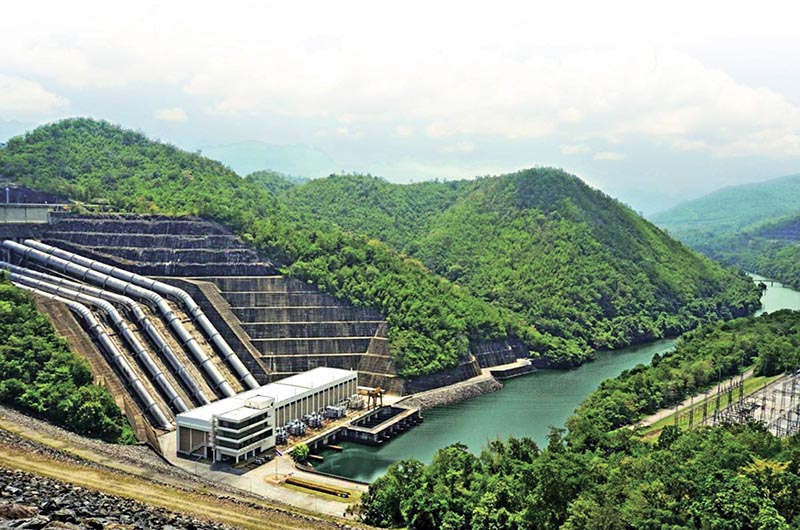
The evolution of global travel has increasingly shifted from passive sightseeing toward experiential and pedagogical engagement, particularly among travelers from developed economies who seek a deeper understanding of the world’s structural transformations. In the paradigm of a “learning society,” tourism transcends traditional leisure by functioning as a multifaceted “learning scenario” that facilitates knowledge acquisition, skill development, and cultural internalization through immersive processes. For Nepal, a nation positioned in a critical stage of industrial and foundational growth, the visibility of its development becomes its most unique tourism asset. This report analyzes the potential for “Developmental Tourism”a product designed to allow visitors to witness, analyze, and learn from the active construction of a nation’s foundational systems, contrasting primitive manual labor with high-tech modern engineering.
Philosophical and Pedagogical Foundations of Developmental Tourism
To understand why travelers from the West would find the construction of roads, dams, and bridges in an underdeveloped nation compelling, one must examine the concept of Tourism Learning Resources (TLRs). These refer to attractions that carry learning content or stimulate learning behaviors, determining the quality and effectiveness of the tourist experience. In a developed nation, infrastructure is often invisible, fully matured, and sequestered behind regulatory barriers. In Nepal, the “process” of nation-building is transparent and pervasive. Infrastructure development refers to the building and improvement of foundational facilities like roads, bridges, and energy networks, which are crucial for societal advancement.
For the developmental tourist, Nepal offers “ubiquitous learning”, a combination of formal and informal modalities embedded within an authentic environment. The fascination lies in the raw mechanics of progress. Witnessing how a society manages the transition from isolation to connectivity provides a visceral connection to human history and engineering resilience. This type of tourism is classified under “inspirational development” and “skill experience” types, satisfying the modern traveler’s need for both reflection and cognitive growth.
The Lifecycle of Infrastructure in a Developing Context
The importance of infrastructure in tourism is best understood through its three stages: exploration, development, and consolidation. Nepal currently resides in the “development stage,” characterized by rapid expansion to accommodate both local needs and a surge in international travel. During this phase, infrastructure is often minimal, focusing on the basic building blocks of growth, transport systems, energy grids, and water sanitation.
Stage of Development Characteristics Learning Opportunity for Visitors
Exploration Minimal infrastructure; focus on identifying preferences. Observing pre-industrial landscapes and virgin ecosystems.
Development Rapid building of transport networks, hotels, and services. Witnessing active construction, manual labor, and site engineering.
Consolidation Infrastructure matures; focus on management and maintenance. Analyzing long-term sustainability and urban planning models.
Infrastructure investment acts as a “virtuous circle” that improves quality of life and generates progress through socially sustainable and territorially balanced growth. For the visitor, observing this “multiplier effect” in real-time provides a masterclass in developmental economics, as they see how a single road project creates jobs, improves health access, and fosters small and medium-sized enterprises (SMEs) like local guesthouses and guide services.
National Pride Projects: The Icons of Modern Engineering
Nepal has designated several high-stakes engineering feats as “National Pride Projects” (NPPs). These are strategically significant projects designed to drive economic growth and reduce power shortages. For the developmental tourist, these sites represent the “modern” end of the spectrum, showcasing international cooperation and large-scale investment.
The Kathmandu-Tarai/Madhesh Fast Track (Expressway)
Managed by the Nepal Army, the Fast Track is a 70.97-kilometer expressway that represents Nepal’s first venture into “Asian Highway Standard” infrastructure. As of mid-January 2026, the project has achieved approximately 45.16% physical progress. The project is a monumental study in Himalayan terrain management, divided into 11 construction packages.
For the visitor, the Fast Track offers unparalleled views of massive civil works:
● Bridge Engineering: A total of 89 bridges are under construction, including “special bridges” that stand up to 82 meters high—towering above the height of the historic Dharahara tower in Kathmandu.
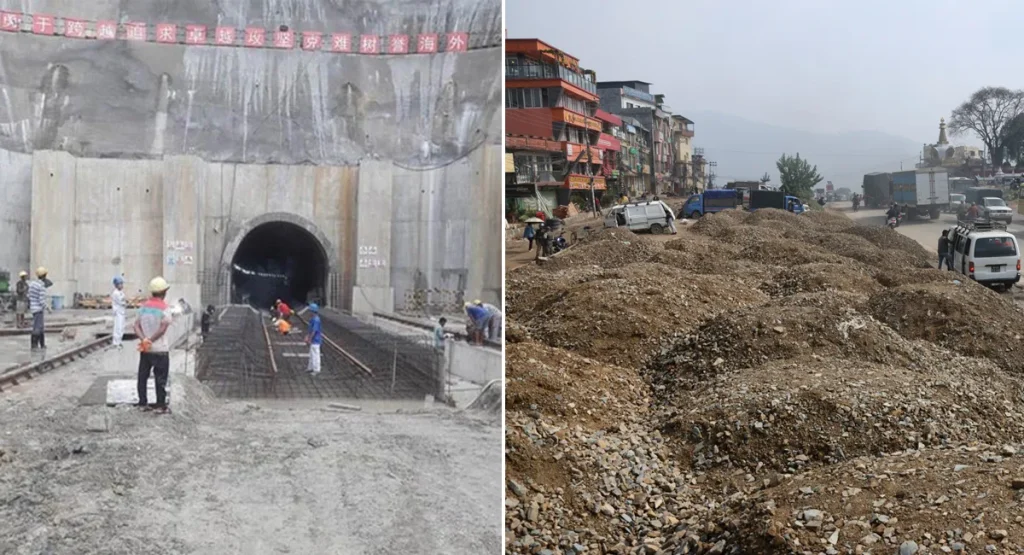
● Tunneling: The project features seven tunnels with a combined length of 10.98 kilometers. The 3,355-meter Mahadevtar tunnel is currently over 69% complete, offering a glimpse into the complexities of drilling through the fragile geological strata of the Siwalik range.
● Geopolitical Impact: Once completed, the expressway will reduce travel time from the capital to the southern plains by nearly four hours, resulting in annual savings of over Rs 50 billion in goods transport.
The Arun III Hydroelectric Project
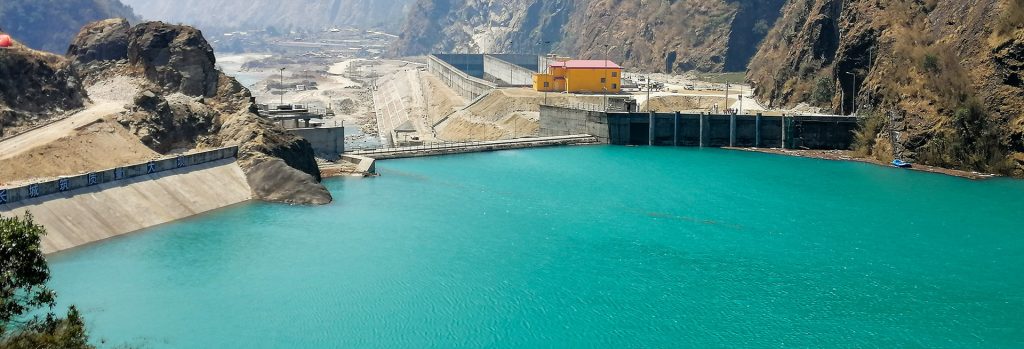
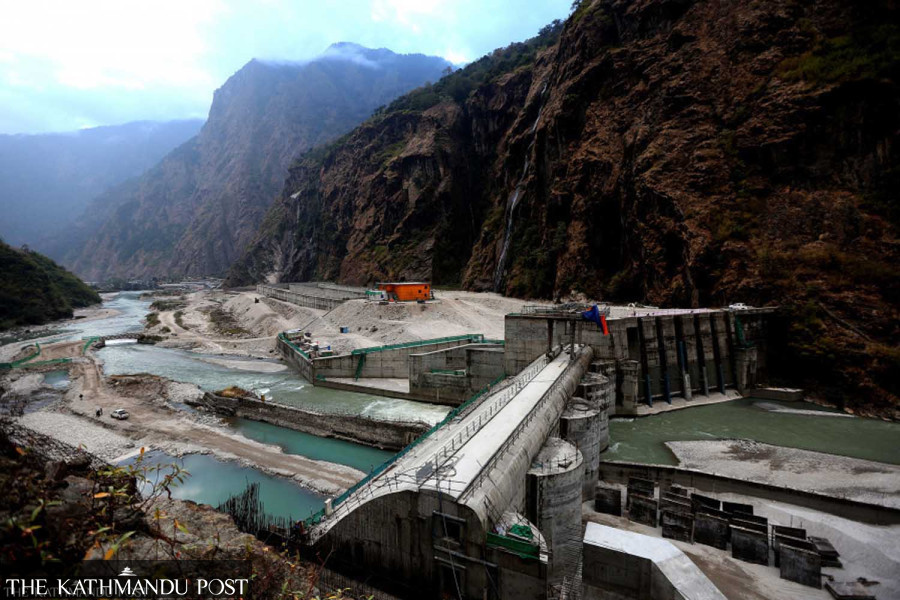
Located in the Sankhuwasabha District, the 900 MW Arun III project is the largest hydroelectric venture in Nepal and a flagship of cross-border clean energy cooperation with India. It utilizes a “run-of-river” model, which is highly efficient for the steep, high-volume rivers of the Himalayas.
Project Component Technical Detail
- Dam Structure 70-meter high concrete gravity dam at Phaksinda.
- Head Race Tunnel 11.74 kilometers long.
- Powerhouse Underground powerhouse at Pukhuwa.
- FDI Value Part of a massive investment totaling approx. Rs 144 billion.
- Environmental Role Reduces fossil fuel reliance and supports regional clean energy.
Visitors to the Arun Valley can observe the “BOOT” (Build-Own-Operate-Transfer) model in action, where the project will be handed over to the Government of Nepal after 25 years of operation. They can witness the construction of the Koshi Corridor 220 kV transmission line, which is essential for evacuating power to the regional grid.
The Upper Trishuli-1 Hydropower Project
This 216 MW project in the Rasuwa District is the largest Foreign Direct Investment (FDI)-powered energy initiative in Nepal to date.15 It is particularly notable for its “dry energy” capacity, generating 39% of its output during the winter months when electricity demand peaks and river levels fall.
The site is a living laboratory for “Social Engineering.” It is the first project in South Asia to be developed after obtaining “Free, Prior and Informed Consent” (FPIC) from indigenous communities.15 Visitors can learn about biodiversity conservation plans, “fish ladders” for aquatic migration, and the “e-flow” (environmental flow) management that ensures the river remains viable downstream of the diversion dam.
Primitive Resilience: Traditional Construction and the Art of the Manual
While the National Pride Projects showcase modern machinery, the heart of the “Developmental Tourism” experience lies in the “primitive” or traditional construction methods that still dominate the Nepalese landscape. These methods are not merely a product of underdevelopment but are often a strategic choice for sustainability, cost-effectiveness, and resilience in remote areas.
The “Green Road” Concept: Manual Labor and Bio-Engineering
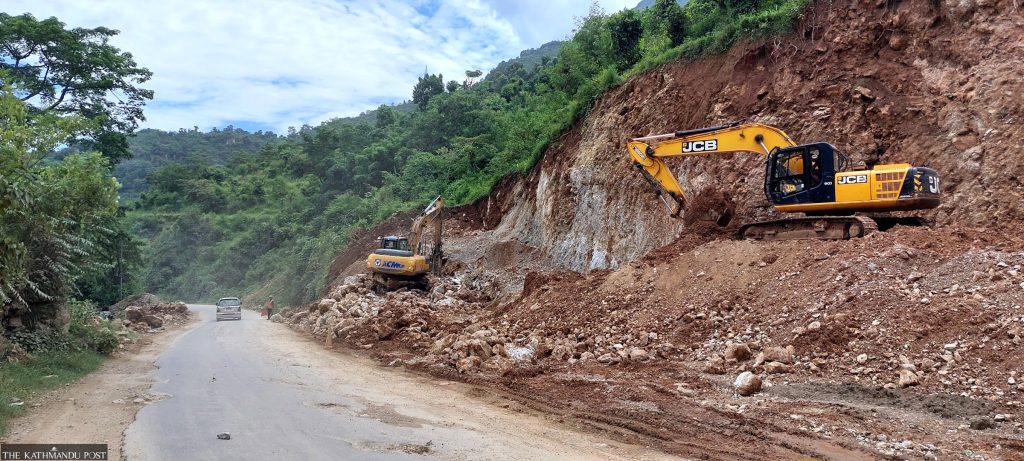
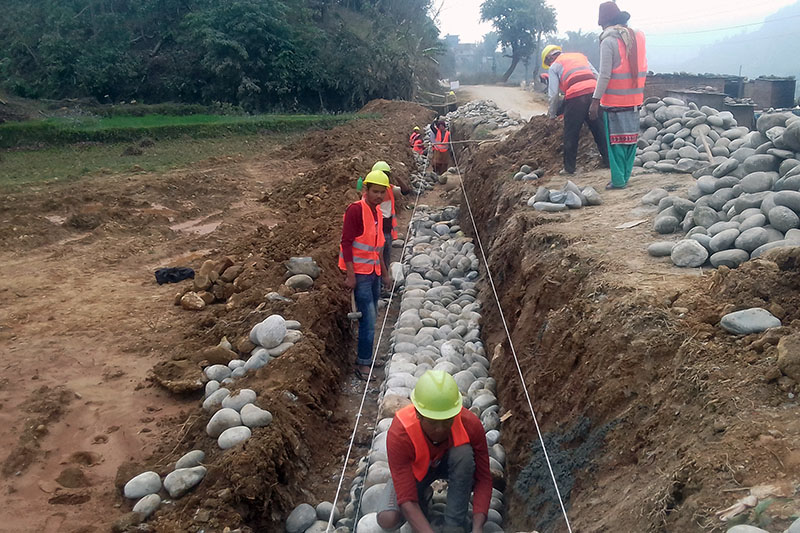
Since the 1970s, Nepal has pioneered “Green Roads”, environmentally sound rural roads built using labor-intensive methods. This approach rejects heavy machinery and explosives, which can destabilize fragile slopes and cause landslides, in favor of manual labor and “bio-engineering”.
Parameter “Green Road” Approach Modern Highway
Primary Method Labor-intensive (manual digging). Capital-intensive (excavators/blasting).
Tools Chisel, hammer, local blacksmith-forged tools. Heavy earth-moving equipment.
Erosion Control Bio-engineering (planting vegetation). Concrete retaining walls.
Social Impact Direct cash/food for work for local poor. Contract-based specialized labor.
Visitors observing “Green Road” construction in districts like Palpa or Dhading see communities organized into “User Committees”. They witness the “phased construction” approach, where a track is opened manually and left for several monsoon seasons to stabilize before further widening. This provides a unique perspective on “ownership” and how infrastructure acts as a tool for socio-economic empowerment.
Traditional Materials: Stone, Bamboo, and Mud
The use of indigenous materials is central to Nepal’s vernacular architecture and engineering. Travelers from the West, accustomed to steel and concrete, find the structural versatility of these “primitive” materials fascinating.
● Stone Masonry: In the Mid-Hills and Himalayan regions, buildings are set on raised stone plinths built from locally available boulders. Foundations are often “dry-stacked” or bonded with mud mortar mixed with cow dung to improve bonding properties. For seismic resilience, traditional builders use a “stone-and-wood box” frame, alternating wood beams with stone courses.
● Bamboo Engineering: Often called “the poor man’s timber,” bamboo is now being engineered for high-performance construction. It has twice the compressive strength of concrete and a tensile strength equivalent to steel. The “Manual for Design of Bamboo Structures – 2025” has introduced treated bamboo as a permanent structural alternative for marginalized communities. Visitors can observe “CBFT” (Cement Bamboo Frame Technology) in the southern plains, where bamboo frames are plastered with cement for durability.
● Traditional Brickwork: In the Kathmandu Valley, the “Newar Vernacular” involves a sophisticated dual-leaf brick wall. The external leaf uses “Dachi appa” (trapezoidal cut bricks), while the internal leaf uses common bricks (“Kachhi appa”), with the space between filled with broken brick and clay. The joints are filled with a special mortar called “silay,” made from oil, vegetal resin, and red clay.
The Evolution of Bridge Building: From Iron Chains to 10,000 Spans
Nepal’s footbridges are a global marvel of localized engineering. For centuries, permanent suspension bridges were built by local blacksmiths (“Kamis”), who used local ore to forge strong iron chains linked together to span gorges up to 250 feet wide. These builders possessed an “intuitive knowledge” of river morphology, choosing spots where the banks were most stable without the aid of surveyors or modern instruments.
Today, Nepal has completed over 10,000 trail bridges through a standardized program that domesticated Swiss engineering technology.
Technical Landmarks in Suspension Bridge Construction
Bridge Name Technical Highlight Status / Accessibility
Gandaki Golden 567m span; 122m height; supports 612 people. World-renowned; gateway to Baglung.
Kushma Bungy 490m span; 200m height; inspired by Sochi AJ Hackett. Adventure-infrastructure hybrid.
Hillary Bridge Towering at 135m; critical for Everest logistics. Imposing gateway for Namche Bazaar.
Dodhara Chandani Longest multi-span suspension footbridge in Nepal. Unique multi-pylon design in the West.
The construction process itself is a spectacle. For “primitive” bridges, cable and equipment are divided into light, compact loads for porter transport. Towers are often constructed using “segmented pouring” methods, where concrete is poured in sections to manage the curing process. Engineers use simple “tensioning systems” and temporary supports to maintain cable stability during the build. The vertical alignment of towers is monitored using “precision checks,” often done in the early morning to avoid temperature-induced fluctuations.
The physics of these bridges can be modeled using the sag ratio: where is the dip (vertical distance from the midpoint of the cable to the line between towers) and is the span. A lower sag ratio increases vertical stability but places higher stress on the main cables and anchorages.
Traditional Water Management: The Raj Kulo Systems
For travelers interested in sustainable resource management, the 400-year-old “Raj Kulo” irrigation systems in Argali and Chherlung offer profound insights into community governance and gravity-fed engineering. These systems were virtually invisible to the state for centuries, yet they operate with a high degree of technical skill.
The Mechanics of the “Royal Canal”
In Argali, the “Raj Kulo” transports water over 10 kilometers along steep hillsides.
● Intake Engineering: Farmers construct annual “brushwood and boulder” diversions to channel water from streams like the Kurung Khola into earthen or stone-lined canals.
● Social Engineering (Water Rights): In the 1930s, the Chherlung system introduced a revolutionary model where water rights were separate from land rights. Shares were allocated based on labor and money contributed during construction, allowing even the landless to trade their labor for “water shares”.
● Technical Precision: “Wooden proportioning weirs” are used to divide water flow accurately among shareholders. Small tunnels a few meters underground are hand-dug to bypass vertical cliffs.
The Logistics of Developmental Exploration: Permits, Safety, and Ethics
Developing a tourism package around active construction sites requires a nuanced understanding of Nepal’s regulatory and safety frameworks.
Legal and Entry Protocols
Foreigners visiting for technical observation or research must navigate specific permit requirements. While “short-term visitors” don’t typically need work permits, “National Pride Projects” and restricted areas have specialized entry protocols.
● National Pride Site Access: Infrastructure projects are often classified as sensitive areas. “Ordinances” allow commercial projects in protected areas, but visitors often need recommendation letters from relevant government bodies.
● Trekking Permits: If a construction site (like the Upper Trishuli-1) is located in a restricted trekking region, visitors must obtain a Trekking Permit through an authorized agency.
● Research Permits: For those conducting a “Deep Dive,” an application to the Department of Mines and Geology (DMG) or Tribhuvan University is required, usually three months in advance for foreign researchers.
Visitor Safety and On-Site Ethics
Visiting an active construction site is “far different than another day at the office”. Travelers must adhere to Personal Protective Equipment (PPE) standards.
PPE Item Requirement / Standard
- Hard Hat Mandatory even if no work is happening directly above; must fit the head shape.
- Safety Vest Class 2 high-visibility reflective vest is the standard for construction sites.
- Footwear Closed-toe shoes with thick material; steel-toe boots (ASTM F2413) may be required.
- Eye Protection Safety glasses to protect against airborne debris or dust.
- Hearing Protection Required for areas with noise levels of 90 dBA or higher.
Ethically, visitors must be “mindful of their surroundings” and avoid interfering with subcontractors and laborers who are working against tight deadlines. “Yellow caution tape” indicates a known hazard, while “danger tape” must never be crossed. It is standard protocol to “stick with your guide” and never roam the footprint of a project unescorted.
Signature Itinerary: “The Nation-Builder’s Expedition” (14 Days)
This itinerary is designed for the high-value traveler from a developed country, providing a comprehensive look at both primitive and modern construction across Nepal. It is structured to be “website-ready” as a premium tourism package.
Package Overview: “Nepal: The Foundation of a Nation”
● Focus: A technical and cultural journey through active infrastructure sites.
● Why Travel? Gain a “behind-the-scenes” look at the birth of a nation’s systems. From hand-forged bridges to international-standard expressways, learn the theme of development in one of the world’s most challenging topographies.
Detailed Daily Itinerary
● Day 01: Arrival and The Urban Matrix (Kathmandu). Arrival and orientation. Visit the Nagdhunga-Sisnekhola Tunnel Road office with Great Nepal Treks to see the modern operator selection process and the first modern tunnel project in Nepal. Evening briefing on “Nepal National Building Code 2060” and seismic resilience in the Kathmandu Valley.
● Day 02: Traditional Architecture and Craftsmanship. Visit to Bhaktapur Durbar Square (UNESCO Site) to see active restoration work. Learning the “Dachi appa” bricklaying and the use of “silay” mortar.
● Observation of traditional wood carving and the “stone-and-wood box” framing.
● Day 03: The Fast Track (Expressway) North. Drive to the Khokana entry point of the Fast Track. Discuss the complexities of land acquisition in heritage areas. View the preliminary clearing and “Package 11” dispute zone where locals are demanding alignment shifts.
● Day 04: Engineering the Siwaliks. Travel to the Lendanda area of the Fast Track. Observe the breakthrough of the 1,622m Lendanda tunnel and the superstructure work on the 82m special bridge. Discussion with Nepal Army engineers on managing Himalayan “slopes and river training works”.
● Day 05: The “Green Road” Experience (Dhading). Drive to a village development project in Dhading. Observe “Green Road” construction in action, manual stone breaking, hand-dug culverts, and bio-engineering techniques. Participation in a “Community Maintenance” session where travelers can observe local User Committees.
● Day 06: The Physics of Bamboo (Southern Plains). Travel to the Siwalik region to study bamboo utilization. Visit a treated bamboo pilot project. Learn about “friction tight rope” connections using rattan and coconut fiber, and the “Induo-Anchor” technique for larger diameters.
● Day 07: The Eastern Gateway (Tumlingtar). Flight from Kathmandu to Tumlingtar (Sankhuwasabha). Observe the Sabha Khola Bridge, a major steel truss project. Briefing on the “Koshi Corridor” regional development plan.
● Day 08: Arun III: The Power of Gravity. Visit the Phaksinda dam site of the Arun III Hydroelectric Project. Observe the 70m concrete gravity dam construction and talk to SJVN engineers about the Run-of-River (RoR) mechanism. Learn about safety and quality benchmarks under difficult Himalayan conditions.
● Day 09: Underground Engineering. Explore the Pukhuwa underground powerhouse and associated infrastructure. Observe the installation of vertical Francis turbines. Afternoon visit to a manual “ferry service” at Satighat to contrast with the modern Arun River bridge project.
● Day 10: The Raj Kulo of Argali. Travel to Argali (Palpa) to study the 400-year-old irrigation system. Witness the “brushwood and boulder” intake diversions and the “wooden proportioning weirs”. Discuss the water-sharing social contracts with local farmers.
● Day 11: The “Museum of Bridges” (Baglung). Visit the Gandaki Golden Footbridge (567m span). Crossing the gorge to learn about simple suspension engineering and wind guy-wire stabilization. Observation of the local blacksmithing history that led to the “Kami” chain bridges.
● Day 12: Modern Connectivity and Disaster Recovery. Drive along the Mugling-Pokhara road expansion. Observe the construction of the complex bridge over the Seti River. Discussion on “Contractor Malfeasance” and the logistical hurdles that cause highway delays.
● Day 13: The Future of Urban Planning (Pokhara). Visit the Pokhara International Airport as an example of modern aviation infrastructure expansion. Discussion on how improved connectivity impacts the “Tourism stages of development”. Evening reflections on “Nation Branding” through infrastructure.
● Day 14: Synthesis and Departure. Return to Kathmandu. Final seminar on the “multiplier effect” of the projects visited. Departure.
Key Selling Points for Travelers
Selling Point Narrative Hook
- Exclusive Access “Go behind the barriers of National Pride Projects managed by the Nepal Army”.
- Technical Insight “Learn the physics of bamboo and the social engineering of 400-year-old water rights”.
- Direct Impact “Support community maintenance through participatory tourism models”.
- Unique Narrative “See what it takes to build a country from the ground up, one bridge at a time”.
Economic Impact and Sustainability of Developmental Tourism
Introducing travelers to active construction sites provides “economic confidence” and attracts foreign direct investment. Tourism not only generates direct income through expenditure on food, transport, and permits but also stimulates the growth of small and medium enterprises (SMEs) like guesthouses and local workshops.
Furthermore, educational tourism is recognized as a “sustainable form of tourism” that promotes long-term economic development while minimizing environmental and cultural impacts. The interaction between “international students/professionals” and local stakeholders fosters a “knowledge exchange” that can benefit local communities with new skills and capacity building.
Conclusion: A Living Museum of Progress
The development of a “Developmental Tourism” product in Nepal offers a powerful differentiation strategy in a competitive global market. By leveraging the nation’s current state of active construction, from the “National Pride” megaprojects to the centuries-old “Raj Kulo” canals, this package provides an “unforgettable experience for all who venture”. It transforms “underdevelopment” from a liability into a pedagogical asset, allowing travelers from developed nations to gain a profound, visceral understanding of the theme of nation-building. As Nepal enters a decade of rapid transformation, these “arteries of the industry” will not only serve the domestic population but will also invite the world to witness the literal building of a country’s future.
Who Should Join?
- Development professionals
- University & research groups
- Engineers & planners
- Social entrepreneurs
- Responsible travelers
- NGO/INGO workers
- Students (geography, sustainability, anthropology, tourism, development studies)
- Travelers seeking meaningful experiences
Key Themes of the Tour
- Mountain infrastructure development
- Rural road construction techniques
- Micro-hydropower & renewable energy
- Community-based tourism (CBT)
- Post-earthquake reconstruction
- Local governance & cooperatives
- Traditional vs modern lifestyles
- Sustainable mountain livelihoods
We do not only sell mountains and monasteries in Nepal, We position Nepal as a living laboratory of development, resilience, and innovation globally.

