Whispers of the Khumbu: How the Trail to Everest Rewrote My Story
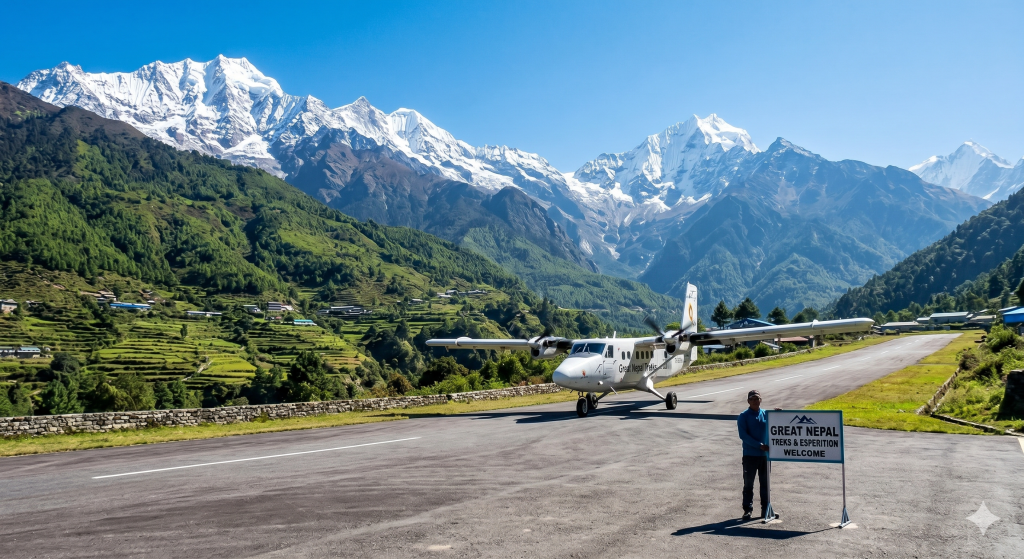
The flight into Lukla is less of a journey and more of a threshold. As our tiny twin-otter plane banks sharply between green terraced hills, the world we left behind, with its endless deadlines, vibrating smartphones, and predictable routines, simply evaporates. Ahead, rising like jagged white teeth against a stark blue sky, are the Himalayas. When the wheels touch down on the steep, abbreviated runway of Tenzing-Hillary Airport, a collective exhale fills the cabin. We step out into the crisp, thin air of the Khumbu. Waiting for us with a warm, steady smile is Nuru, our veteran guide from Great Nepal Treks & Expedition. “Namaste,” Nuru says, draping lightweight silk khadas (blessing scarves) around our necks. “Welcome to the home of Sagarmatha. Walk slow, look deep, and let the mountains change you.”
Into the Green: The Living Forest
Our journey begins down a trail lined with ancient stone walls and lush valleys. The first few days are a masterclass in the natural bounty of Sagarmatha National Park. We cross the roaring, glacial-blue waters of the Dudh Koshi River via swaying suspension bridges hung so high they seem suspended by threads. Below us, mules and heavy-coated yaks jangle their bells, carrying supplies to the high country.
As we climb toward the legendary Sherpa capital of Namche Bazaar (3,440m), the trail feels vibrantly alive. We are walking through forests of blue pine, juniper, and giant rhododendrons. Nuru stops suddenly, pointing a quiet finger into the thicket. “Look there,” he whispers. Perched on a mossy branch is a Danphe, the Himalayan monal pheasant and Nepal’s national bird, its iridescent plumage gleaming with metallic greens, purples, and blues. Later that afternoon, a herd of Himalayan Tahr (wild mountain goats) grazes effortlessly on a near-vertical cliff face across the gorge. The ecosystem here is delicate but resilient, perfectly balanced at the edge of the sky.
The Spiritual Pulse: Mantras in the Wind
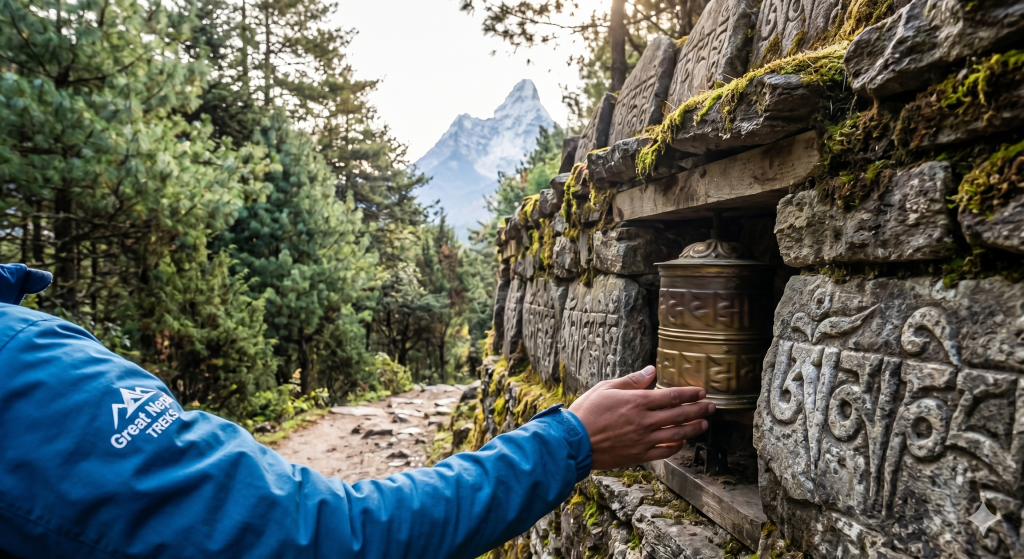
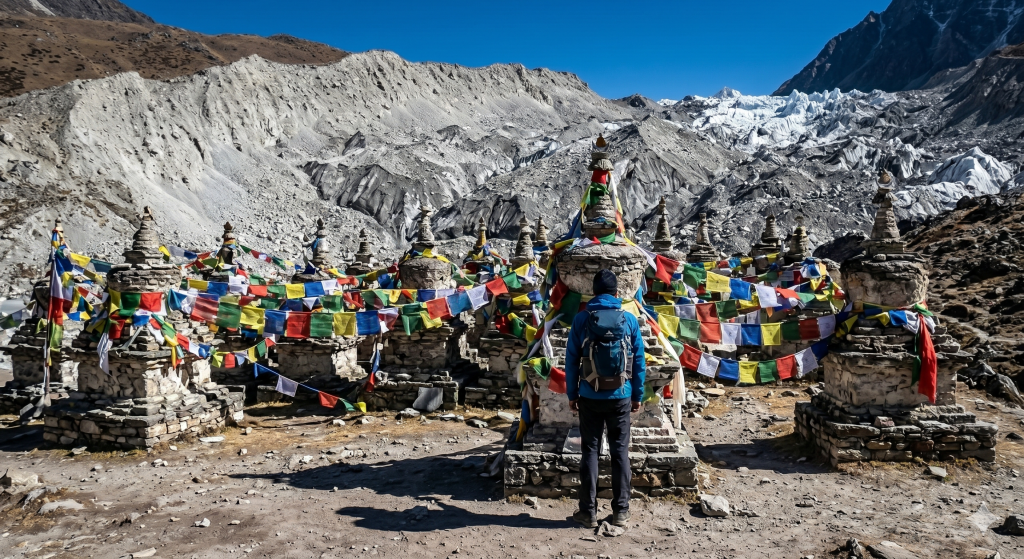
Trekking to Everest Base Camp is as much an inward journey as it is a physical climb. The trail is entirely defined by sacred Buddhist geography. Every few hundred yards, we come across massive, boulder-sized Mani stones, intricately carved with the sacred mantra: Om Mani Padme Hum (Hail to the Jewel in the Lotus). The Rule of the Trail: “Always pass a Mani stone, a Stupa, or a prayer wheel on its left side,” Nuru instructs us. “It mimics the rotation of the universe and sends positive energy outward.” On day five, we reach Tengboche Monastery (3,860m). Nestled on a high ridge, the monastery sits under the watchful eye of Ama Dablam, arguably the most beautiful mountain on Earth, rising like a sharp obelisk of snow and ice. We step inside the monastery during evening prayers. The air is heavy with the scent of burning juniper and yak-butter lamps. The deep, rhythmic chanting of the monks and the low rumble of Tibetan horns vibrate through the wooden floorboards, settling deep into our chests. In that quiet, spiritual space, the physical fatigue of the uphill climb melts away. We aren’t just tourists walking a path; we are pilgrims gaining perspective.
High Altitude and Human Ingenuity Past Tengboche, the treeline vanishes. The lush greens give way to an alpine desert of rock, ice, and scrubby tundra. Yet, even in this harsh environment, human ingenuity shines through. We stay in traditional Sherpa teahouses, cozy, family-run lodges that represent the “artificial” or modern infrastructure of the trail. In the dining halls, heated by a central stove fueled by dried yak dung, travelers from every corner of the globe share stories over steaming plates of Dal Bhat (lentil soup and rice) and garlic soup.
Elevation Zone
Landscape Type
Key Landmark
Wildlife/Flora to Spot
2,600m – 3,500m
Lush River Valleys & Pine Forests
Hillary Suspension Bridge
Danphe Pheasant, Rhododendrons
3,500m – 4,500m
Alpine Shrub & High Valleys
Tengboche Monastery
Himalayan Tahr, Musk Deer
4,500m – 5,364m
Glacial Moraine & Alpine Desert
Khumbu Icefall / Base Camp
Snow Leopard (elusive), Alpine Chough
Even at 4,000 meters and above, we enjoy hot showers, wireless internet to send photos back home, and eclectic menus featuring everything from traditional sherpa stews to apple pie. But it’s the logistics handled by Great Nepal Treks & Expedition behind the scenes that make this wilderness feel safe. Our guide checks our blood oxygen levels with an oximeter every morning and evening. Porters of incredible strength carry our heavy duffle bags ahead, ensuring they are waiting in our rooms before we even arrive. This fusion of rugged mountain isolation and meticulous local hospitality turns what could be an ordeal into a profound adventure.
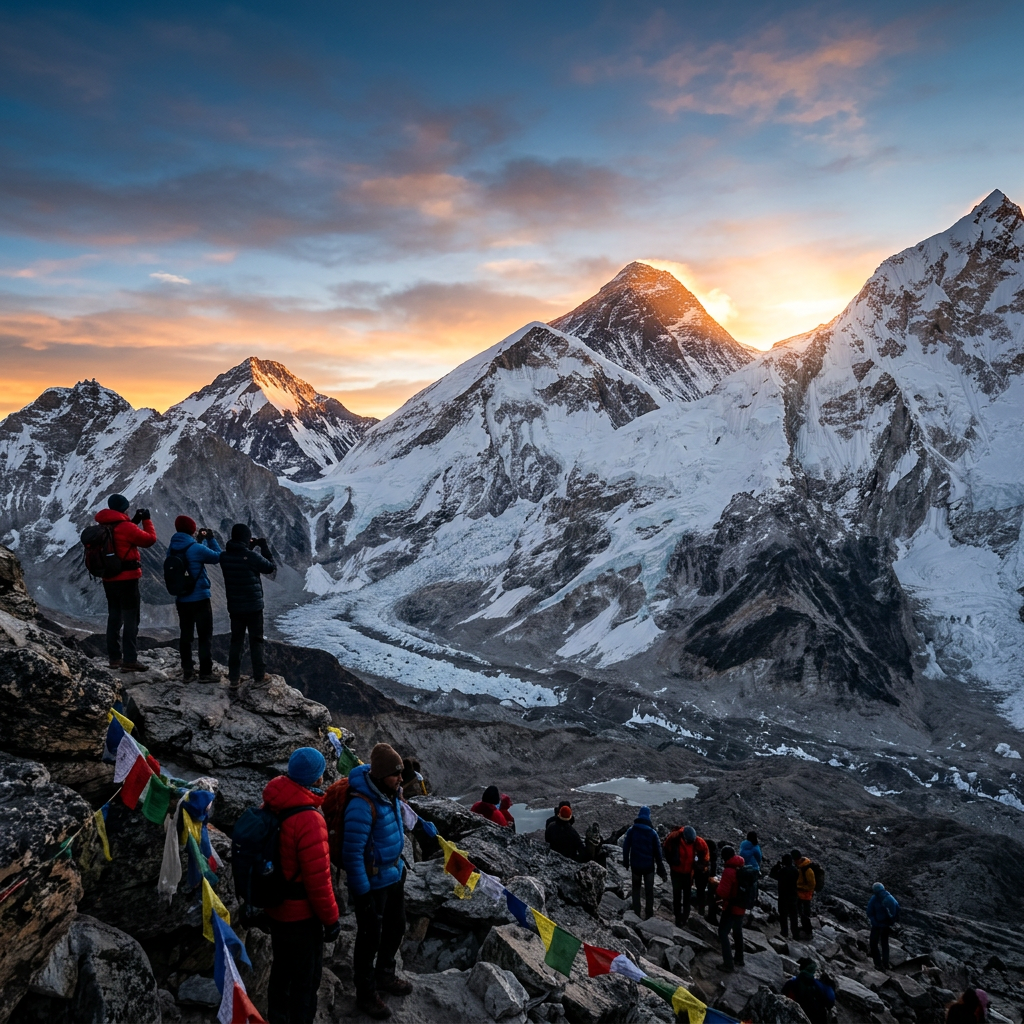
The Ultimate Milestone: Reaching the Boulder On the morning of day eight, we make the final push from the isolated settlement of Gorak Shep toward Everest Base Camp (5,364m). We walk alongside the massive, undulating spine of the Khumbu Glacier. The terrain is a stark labyrinth of grey moraine, shifting gravel, and towering pinnacles of blue ice. And then, there it is. A massive, graffiti-and-prayer-flag-covered boulder marking the edge of the world’s highest base camp. Directly behind it, the terrifyingly beautiful shards of the Khumbu Icefall tumble down from the Western Cwm. We stand together, embracing, some of us shedding quiet tears. The journey has demanded everything from us, early mornings, cold fingers, and breathless climbs. But looking up at the summit of Nuptse, the black pyramid of Everest peeking over the ridge, and the endless horizon of ice, a profound silence settles over our group. You realize you are stronger than you ever gave yourself credit for. The next morning, we summit Kala Patthar (5,545m) at dawn. As the sun rises behind Mount Everest, painting the highest peak on earth in brilliant hues of gold and amber, the transformation is complete. We came here looking for a challenge; we are leaving with a new sense of self.
Your Story is Waiting to Be Written
The mountains don’t wait, and life is too brief to leave your greatest dreams on a bucket list. Reaching the roof of the world requires preparation, respect, and the right team by your side. When you trek with Great Nepal Treks & Expedition, you aren’t just booking a tour; you are partnering with local experts who ensure your safety, honor the mountain communities, and handle every detail from your Kathmandu hotel to the base of Everest. • 100% Guaranteed Departures: Your dream won’t get canceled due to group sizes. • Expert Local Guides: Wilderness first-aid certified leaders who call the Khumbu home. • Seamless Logistics: Domestic flights, permits, full-board meals, and premium gear provided.
Embarking on the 12-Day Everest Base Camp Trek with Great Nepal Treks & Expedition is a seamless balance of rigorous adventure, strict safety standards, and unmatched Himalayan hospitality.
Below is the comprehensive 12-day corporate breakdown, package inclusions, and booking calendar ready for integration alongside your company blog post or client proposals.
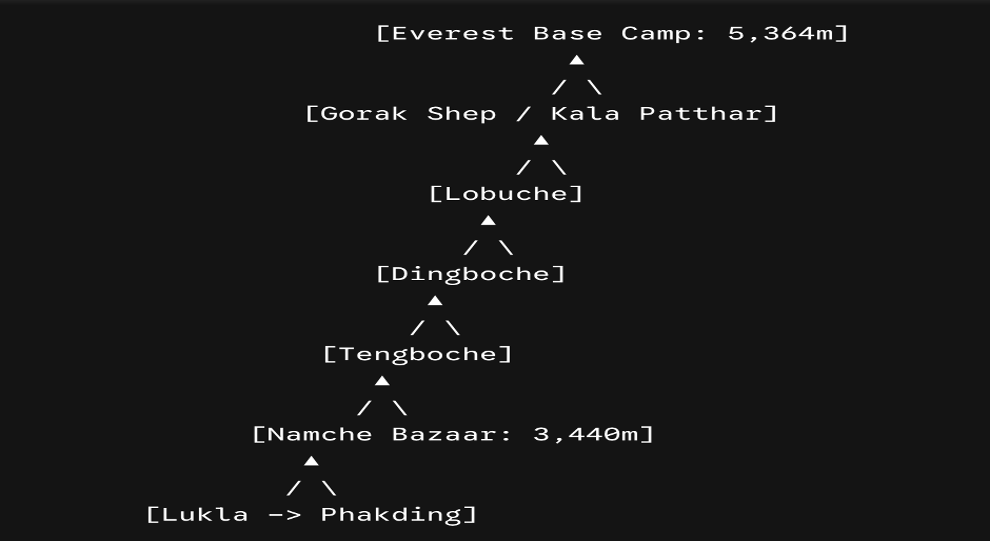
Day 01: Scenic Flight to Lukla (2,840m) & Trek to Phakding (2,610m)
Walking Time: 3–4 hours | Distance: 8 km
Highlights: Thrilling flight into Tenzing-Hillary Airport; descending into the lush Dudh Koshi Valley; first overnight in a traditional Sherpa teahouse.
Day 02: Trek from Phakding to Namche Bazaar (3,440m)
Walking Time: 6–7 hours | Distance: 11 km
Highlights: Entering the UNESCO World Heritage Sagarmatha National Park boundary at Monjo; crossing the high Hillary Suspension Bridge; first glimpse of Mount Everest.
Day 03: Acclimatization Day in Namche Bazaar (3,440m)
Activity Time: 3–4 hours (morning hike)
Highlights: Strategic rest day; panoramic acclimatization hike up to the iconic Hotel Everest View (3,880m) for coffee facing Ama Dablam, Lhotse, and Everest; exploring local Sherpa museums and trading markets.
Day 04: Trek from Namche Bazaar to Tengboche Monastery (3,867m)
Walking Time: 5–6 hours | Distance: 10 km
Highlights: Winding trails through fragrant juniper and rhododendron forests; spotting the Danphe pheasant; attending evening Buddhist chants at the legendary Tengboche Monastery.
Day 05: Trek from Tengboche to Dingboche (4,410m)
Walking Time: 5 hours | Distance: 11 km
Highlights: Crossing the Imja Khola river; traversing alpine meadows past the permanent stone-walled settlement of Pangboche; entering the high alpine tundra zone.
Day 06: Acclimatization Day in Dingboche (4,410m)
Activity Time: 3 hours (morning hike)
Highlights: Essential secondary acclimatization; a steep morning hike up Nagarjung Hill (Nakarjung Peak) for panoramic views of Mt. Makalu (8,485m), Island Peak, and the towering south wall of Lhotse.
Day 07: Trek from Dingboche to Lobuche (4,940m)
Walking Time: 4–5 hours | Distance: 8.5 km
Highlights: Steady climb to Thugla for lunch; passing the emotionally moving stone memorials dedicated to climbers lost on Everest; trekking parallel to the raw spine of the Khumbu Glacier.
Day 08: Trek to Gorak Shep (5,140m) & Ultimate Hike to Everest Base Camp (5,364m)
Walking Time: 7–8 hours | Distance: 15 km
Highlights: Navigating the rocky moraine trail to the final outpost of Gorak Shep; pushing forward to stand directly on the rocky expanse of Everest Base Camp at the foot of the Khumbu Icefall.
Day 09: Sunrise Climb to Kala Patthar (5,545m) & Descend to Pheriche (4,240m)
Walking Time: 7–8 hours | Distance: 16 km
Highlights: Pre-dawn ascent to the highest geographic point of the trek (Kala Patthar); witnessing the sunrise illuminate the peak of Mount Everest in molten gold; rapid descent back down to the richer oxygen levels of Pheriche.
Day 10: Trek from Pheriche back to Namche Bazaar (3,440m)
Walking Time: 6–7 hours | Distance: 20 km
Highlights: Long, steady downward trek retracing steps through the thinning alpine zone back into the vibrant, thick evergreen woodlands and warm cafes of Namche Bazaar.
Day 11: Trek from Namche Bazaar back to Lukla (2,840m)
Walking Time: 6–7 hours | Distance: 18 km
Highlights: Final crossing of the high suspension bridges; a celebratory final evening in Lukla with the team, porters, and fellow international trekkers.
Day 12: Morning Flight from Lukla back to Kathmandu
Flight Time: 35 minutes
Highlights: Early morning flight out of the mountains; arrival in Kathmandu followed by an airport-to-hotel private transfer arranged by Great Nepal Treks.
Package Inclusions (What’s Covered)
To maximize safety, comfort, and seamless operations in the high wilderness, the standard package includes:
Comprehensive emergency first-aid kit and assistance with helicopter evacuation logistics if medically deemed necessary. Upcoming Booking Seasons & Dates (2026) Great Nepal Treks & Expedition maintains fixed-season group departures as well as tailored private booking arrangements. The primary trekking windows are categorised by clear sky visibility and optimized mountain weather patterns: Autumn Peak Season (September – November) Ideal for crystal-clear sky visibility and vibrant festive atmospheres across the high monasteries. • September Openings: Departures departing every Saturday (Sept 5, Sept 12, Sept 19, Sept 26) • October Prime Slots: Peak departures running mid-week and weekends (Oct 3, Oct 10, Oct 17, Oct 24, Oct 31) • November Openings: Late-season crisp mountain view departures (Nov 7, Nov 14, Nov 21) Spring Blooming Season (March – May) Perfect for viewing the massive rhododendron blooms across the lower Sagarmatha forests and witnessing active mountaineering expeditions camping at Base Camp. • Custom Bookings: Private departures can be chartered daily across March, April, and May to match your international flight arrivals. To embed this directly within the company website portal or forward to incoming inquiries, you may append a call-to-action form linking straight to the sales desk at Great Nepal Treks & Expedition Pvt Ltd.
Transportation & Logistics:
All airport arrival pickups and departure drops in premium private vehicles.
Sagarmatha National Park Entry Permit and Khumbu Pasang Lhamu Rural Municipality Regional Permit.
All applicable local government taxes and service fees.
Expert Field Staff:
Government-licensed, English-speaking professional mountain guides (wilderness first-aid and altitude sickness management certified).
Strong Himalayan porter support (standard ratio of 1 porter for every 2 trekkers, carrying up to 20–25 kg total).
Accommodation & Meals:
11 nights of standard mountain lodge/teahouse accommodations along the entire trail.
Full-board meals (Breakfast, Lunch, and Dinner daily) selected from local, fresh teahouse menus during the active trek.
Safety Features:
Daily health check-ups including blood oxygen tracking via digital pulse oximeters.
Comprehensive emergency first-aid kit and assistance with helicopter evacuation logistics if medically deemed necessary.
Upcoming Booking Seasons & Dates (2026)
Great Nepal Treks & Expedition maintains fixed-season group departures as well as tailored private booking arrangements. The primary trekking windows are categorised by clear sky visibility and optimized mountain weather patterns:
Autumn Peak Season (September – November)
Ideal for crystal-clear sky visibility and vibrant festive atmospheres across the high monasteries.
September Openings: Departures departing every Saturday (Sept 5, Sept 12, Sept 19, Sept 26)
October Prime Slots: Peak departures running mid-week and weekends (Oct 3, Oct 10, Oct 17, Oct 24, Oct 31)
November Openings: Late-season crisp mountain view departures (Nov 7, Nov 14, Nov 21)
Spring Blooming Season (March – May)
Perfect for viewing the massive rhododendron blooms across the lower Sagarmatha forests and witnessing active mountaineering expeditions camping at Base Camp.
Custom Bookings: Private departures can be chartered daily across March, April, and May to match your international flight arrivals.
To embed this directly within the company website portal or forward to incoming inquiries, you may append a call-to-action form linking straight to the sales desk at Great Nepal Treks & Expedition Pvt Ltd.