Nepal’s peak-climbing opportunities, the so-called “trekking peaks”, are ideal preparation for Everest and other 8,000m expeditions. These climbs (mostly 5,000–6,500 m) teach technical skills (rope, crampon, and ice axe use) in realistic alpine conditions and build altitude tolerance. Recent government policy has made 97 Himalayan peaks (5,870–7,132m) in western Nepal free to climb (waived permit fees through mid-2027). Alongside the 27 established NMA peaks (e.g., Island, 6,189m; Mera, 6,476m; Lobuche, 6,119m), these open peaks offer practice on glaciers, ridges, and summit pushes. This guide covers an overview of Nepal’s peak-climbing scene; how it builds Everest-readiness (skills, acclimatization, expedition logistics); a detailed table of key peaks (permit status, altitude, difficulty, season, routes, fees, and requirements); safety and gear considerations; the permit process; sample pre-Everest itineraries; a 6–12-month training timeline; and why Great Nepal Treks & Expedition is a top choice for global climbers. Throughout we include SEO-rich headings, meta-description ideas, and CTAs geared to aspiring Everest climbers.
Overview of Peak Climbing in Nepal
Nepal’s “trekking peaks” or “expedition peaks” are smaller Himalayan summits (generally 5,000–7,000 m) approved by the Nepalese government for climbing. Unlike 8,000m giants, they require less technical ascent (though still often glaciated) and cost far less in permits. Climbing these peaks is considered the gateway to higher objectives, an “acclimatization passport” and skill-building platform. The NMA (Nepal Mountaineering Association) currently organizes dozens of these peaks (commonly called Group A/B peaks, e.g., Island, Mera, Lobuche, Pisang, Singu, Tharpu Chuli). In 2025–27, Nepal expanded access by waiving fees on 97 remote peaks (5,870–7,132m in Karnali and Sudurpashchim). These include unexplored giants like Saipal (7,030m) and Api (7,132m), now opened for adventure. For Everest hopefuls, each climbing season offers many training climbs: for example, Great Nepal Treks currently lists popular packages such as Island Peak/EBC (21 days, $2,850) and Mera Peak (17 days, $2,550).
Peak climbing is a goal and a means: climbers get a proud summit and at the same time practise teamwork, high-altitude camp living, fixed-rope climbing, and glacier travel. The varied terrain (rock, ice, and snow) demands use of crampons, ice axes, fixed ropes, and camp logistics, exactly the skills needed higher up. The layers of acclimatisation on successive peaks simulate longer rotation schedules on 8,000m mountains. In short, every 6,000m summit sharpens physical endurance and mental toughness – critical for Everest’s “death zone” summit push.
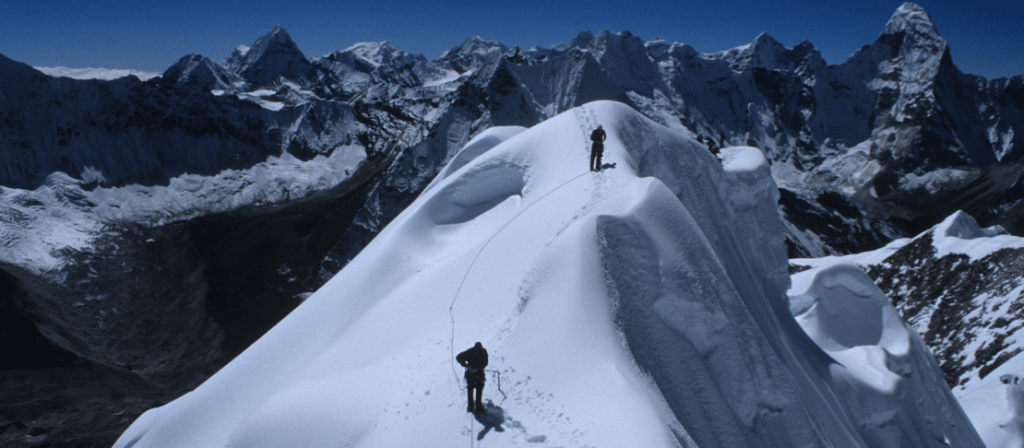
Figure: Climbers on Nepal’s Island Peak (6,189m), a classic intermediate climb. Peak ascents like Island build technical rope-handling skills and altitude readiness for Everest.

How Peak Climbing Prepares You for Everest
Climbing Everest is an extreme mountaineering project requiring meticulous prep. Peak climbing in Nepal contributes in three key ways:
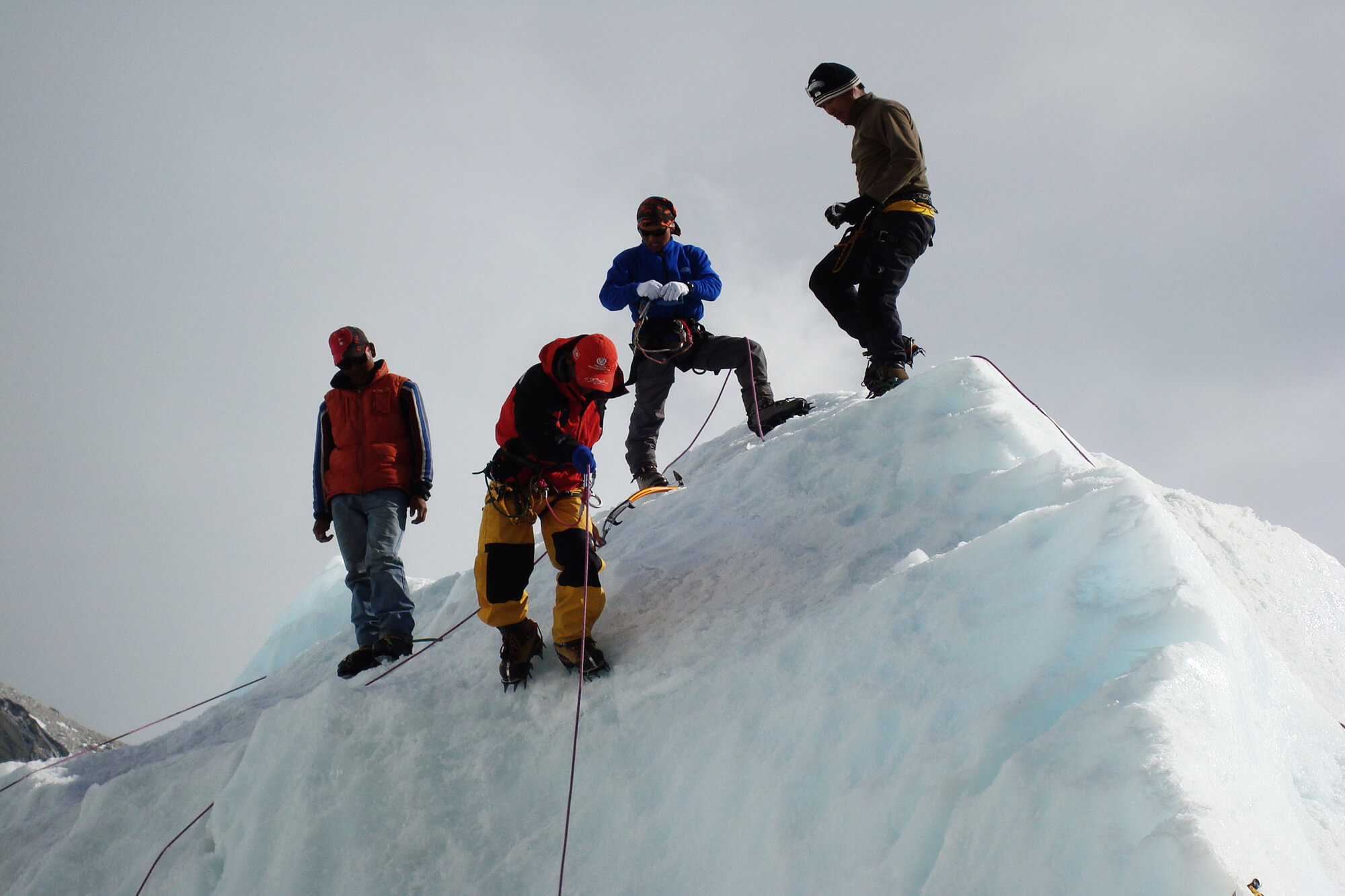
- Skills Development: Smaller peaks allow practice of essential techniques: glacier travel, fixed-rope ascents, ice-axe self-arrest, crevasse rescue, and high-altitude camp routine. For example, trekking peaks often involve steep snow or ice (requiring crampons and harnesses) and installing fixed ropes for support, the same scenarios at Everest’s Camps 2–3.
- Acclimatization & Endurance: Summiting 6,000 to 7,000 m peaks conditions your body to thin air. Each climb improves red blood cell production, cardiac efficiency, and mental acclimatization. As one Everest veteran notes, a 6-to-12-month intensive plan of high-altitude trekking and climbs is standard. A sample timeline might involve multi-day treks (Khumbu/Everest Base Camp, Ama Dablam BC) plus a 6,000m peak climb each season. By gradually extending summit altitude and duration, climbers adapt safely to low oxygen.
- Logistics Experience: Organizing a peak climb (permits, routing, camping above 5,000m, crewmember roles) mirrors many Everest logistics. You learn to plan rotations, manage gatekeepers like weather, and work with Sherpa guides. For example, Great Nepal’s Island Peak package includes a 1:4 Sherpa-to-client ratio on the mountain and professional camp staff, which is a microcosm of an Everest expedition’s support structure.
In practice, many Everest teams incorporate peak climbing into their plan. Modern itineraries often include a climb of Lobuche East (6,119m) or Island Peak as an acclimatization rotation. Climbs like Manaslu (8,163 m, often called “practice 8,000er”) also serve this role before Everest. In short, success on Everest usually begins with successful summits of lower peaks.
Open Peaks in Nepal – Key Routes, Fees, Seasons
The table below summarizes Nepal’s main trekking/extraction peaks currently open to climbers:
| Peak Name | Elevation (m) | Difficulty (grade) | Permit Fee (foreign, $) | Best Season | Normal Route & Notes |
| Island Peak (Imja Tse) | 6,189 | Moderate (snow/ice) | $350 (Group B tariff) | Spring/Autumn | Khumbu Region; glacier climb with fixed ropes. Very popular pre-Everest climb. |
| Mera Peak | 6,476 | Moderate (snow/ice) | $350 | Spring/Autumn | Makalu Region; long approach, snow slopes. Highest trekking peak, often combined with Manaslu trek. |
| Lobuche East | 6,119 | Moderate (snow) | $350 | Spring/Autumn | Khumbu Region; ascent via saddle from Lobuche, used as acclimatization for Everest. |
| Pisang Peak | 6,091 | Moderate (snow/ice) | $350 | Spring/Autumn | Annapurna Region; technical snow/ice pitch near summit. |
| Singu Chuli | 6,501 | Hard (technical) | $500 (Group A tariff) | Spring/Autumn | Annapurna Region; steep ice wall (Alpine grade D). More technical than most trekking peaks. |
| Phari Lapcha | 6,059 | Hard (technical) | $500 | Spring/Autumn | The Gokyo/Langtang area requires steep ice climbing and fixed ropes. |
| Cholatse | 6,440 | Hard (technical) | $500 | Spring/Autumn | Everest Region; ice/rock routes (PD+ Alpine). Often climbed by teams heading to Everest for skills practice. |
| Chulu East | 6,584 | Moderate (snow/ice) | $500 | Spring/Autumn | Manang District; glacier approach with steep summit snow. |
| Tharpu Chuli | 5,663 | Easy (snow/ice) | $350 | Spring/Autumn | Annapurna Region, often paired with the Mardi Himal trek. |
| Pokalde Peak | 5,806 | Easy | $350 | Spring/Autumn | Everest Region; straightforward climb, good for first peak. |
| Yala Peak | 5,732 | Easy | $350 in peak season (free off-season) | Spring/Autumn | Langtang, often used by trekking agencies for guided climbs. Free in some months per new rules. |
| Nirekha Peak | 6,059 | Moderate | $500 (Group A) | Spring/Autumn | Everest Region: small glacier climb, easy summit ridge. |
| Langsisa RI | 6,427 | Hard (technical) | $500 (Group A) | Spring/Autumn | Rollwaling: steep snow/ice, not frequently attempted. |
| Newly Open “Free” Peaks (not NMA) | 5,870–7,132 | Varies – mostly moderate | $0 (free permit by gov’t 2025–27) | Spring/Autumn | 97 peaks in remote Karnali/Sudurpaschim. Includes Saipal (7,030 m) and Api (7,132 m) – prime training peaks. Notable: Saipal’s north face is steep ice, and Api’s west (7,076 m) is technical, but routes may be undeveloped. Single aggregated permit (registration). |
All climbing permits require applying through Nepal’s Department of Tourism (often via a licensed trekking agency). For NMA peaks, a licensed Sherpa Guide or Sirdar is mandatory. Groups are limited to 12 climbers. In addition to the royalty above, all NMA climbs carry a $250 “garbage deposit” per team (refundable on clean-up). Media or foreign-language recording requires extra filming permits.
Notable ascents: Many peaks like Island, Mera, Singu and Cholatse have well-documented climbs in mountaineering literature. Lower peaks such as Tharpu, Pisang and Pokalde see hundreds of ascents by trekking groups each spring. The newly opened Western peaks had only 68 permit holders (total) in 2023–25, so ascents are still pioneering.
Safety, Training & Gear Considerations
Acute Mountain Sickness (AMS) is the top danger above 5,500m. Climbers must ascend slowly, hydrate, and be ready to descend if symptoms (headache, nausea, disorientation) arise. Training peaks allow you to practice AMS self-management: know your limits, use Diamox (acetazolamide) prophylaxis as advised, and recognize HAPE/HACE signs. Frostbite, snow blindness, and hypothermia are also major hazards at high altitude; quality down suits, layered clothing, glacier goggles, and peak-appropriate boots are essential.
Rescue infrastructure in Nepal’s high mountains is improving but remains limited. Global Rescue notes that spring climbing seasons can see multiple helicopter evacuations per day, with peak demands during summit windows. Crowding on Everest or Ama Dablam can amplify rescue needs. However, helicopters have restricted flying hours (and no service above certain altitudes). Climbers must carry personal emergency satellite communication (many agencies rent sat phones at base camp). Training to self-rescue (rope techniques) and carrying a personal locator beacon can save lives.
Great Nepal Treks emphasizes safety with professional staff and equipment. For example, their Island Peak package provides a satellite phone in camp and full group climbing gear (fixed lines, ropes, high-alt tents). Participants also receive first-aid kits and guidance on altitude safety. International standards suggest climbers get Wilderness First Aid or Wilderness Medicine training beforehand; the timeline below includes optional medical training milestones.
Gear Checklist (summit-peak climbing): Crampons, mountaineering boots, ice axe, helmet, harness, prusiks/jumars, carabiners, rappel device, fixed rope ascenders, snow goggles, high-alt down jacket, down overpants, insulated sleeping bag (-20°C min), layered clothing (base, mid, shell), gloves (and liners), UV-blocking sunglasses, sunscreen. Also: personal medical kit (incl. altitude meds), hydration system, water purification.
Training: Follow a 6–12-month regimen focusing on cardio (running, cycling, stairmaster), strength (legs/back/core), and progressively harder hikes with weight. Include technical practice: enroll in an ice-climbing or crevasse-rescue course if possible. Many climbers build mileage by hiking Colorado 14ers (U.S.) or similar peaks with a 20–40 lb pack. The key is gradual progression, as one guide notes, a 6–12-month plan emphasizing endurance, strength, and altitude work is “standard for Everest climbers”. We provide a suggested timeline (see below).
Nepal Permit Process and Costs
To climb any peak in Nepal, foreign climbers must obtain permits from the Nepal Department of Tourism or through a registered agency. Permits typically require full payment in advance, proof of a licensed guide, and a refundable environmental deposit. Key points:
- Everest (8,848m): Spring permits $15,000 per climber (autumn $11,000).
- 8000m peaks (e.g., Manaslu 8,163m): Spring $3,500–4,000 (often in package rate).
- Nepal “Trekking Peaks” (6,000m peaks): NMA Group A peaks (more technical) have a royalty of $500 per team (up to 7 members); Group B peaks are $350 per team of up to 4. (Larger teams pay a small extra per person beyond 4.) For simplicity, many agencies quote $350 per person for smaller teams. New 2026 policy: base rates halved in off-season (e.g., $175 other seasons). Some minor peaks (e.g., Yala, Chhukung) are free of royalty in certain periods.
- Western Free Peaks: Currently no royalty fee, just register each climber’s name. (Foreign climbers still pay agency service fees; these peaks are very remote.)
- Additional Fees: All Himalayan climbs require two-way radio (SAT phone) permits, an “environment/insurance deposit” (garbage fee $250 per team, returned after clean exit), and border area permits for some regions (e.g., Mustang).
To apply, climbers usually work through a Nepali company (like Great Nepal Treks) which submits documents to Tourism or NMA. The operator arranges the licensed guide/Sherpa and takes care of paperwork. Always allow 1–2 months lead time for expedition permit approval.
Sample Itineraries (EBC & Peak Combinations)
Short (2–3 weeks): Everest Base Camp Trek (14–16 days). Typical intro: Kathmandu – Lukla – Namche – Tengboche – Dingboche – Lobuche – EBC – Kalapatthar – Back via Pheriche – Namche – Lukla.
No summit, but primes you. With Great Nepal Treks: 14-day EBC trek from $1,950; add-on short climbs like Chhukung RI (5,550m) or Khumjung peak for an extra challenge.
Medium (3–4 weeks): Everest Base Camp + Island Peak (21 days). Standard EBC trek plus a summit push on Island (6,189m). For example, fly Kathmandu–Lukla, trek to Base Camp, spend a night at Island Peak Base Camp (5,200m), climb, then descend same route. Great Nepal’s 21-day package (Island+EBC) covers all permits, guides, and ends back in Kathmandu.
Long (6–8 weeks): Extended Everest Prep/Reconnaissance. E.g., Trek to Everest, climb Lobuche East (6,119m) for acclimatization, descend, rest, then re-trek to Camp 2/3 on Everest without oxygen as a practice rotation, or even undertake a small 6,000m peak elsewhere first (like Pisang or Yala) to build fitness. Alternately, an extended package might include climbing a high Nepali peak such as Manaslu (8,163m) or Ama Dablam (6,812m) before attempting Everest, giving true high-altitude experience.
Example Itinerary (28 days):
- Days 1–3: Kathmandu arrival, gear check, flight to Lukla, trek to Namche (3,440m).
- Days 4–6: Acclimatization in Namche (day hikes to Khumjung/Everest View), trek to Tengboche (3,860m), Pangboche.
- Days 7–9: Trek to Lobuche (4,940m) via Dingboche, acclimatize, then summit Lobuche East (6,119m) on Day 10 (camp at 5,500m).
- Days 11–16: Descend to Pangboche, rest, then trek to Everest Base Camp (5,364m) and up to Kalapatthar (5,545m) for view. Return to Lukla.
- Days 17–28: Optionally, recover in Pokhara, then head to another region (e.g., Annapurna) to climb an additional peak (e.g., Pisang 6,091m or Singu Chuli 6,501m) before returning to Kathmandu.
CTA: Ask your Great Nepal Treks guide to tailor these itineraries; they handle all logistics from flights to camp.
Why Choose Great Nepal Treks & Expedition?
Great Nepal Treks (GNT) is a Kathmandu-based DMC (Destination Management Company) with 25+ years of peak-climbing experience. They hold government accreditation and TAAN membership, and emphasize safety: “100% success rate on peak climbs and expeditions” Their peak-climb packages include all necessary logistics: domestic flights (Kathmandu–Lukla), hotel nights in Kathmandu, all mountain permits, professional Sherpa guides and porters, teahouse lodging (and high-altitude tents), meals, group climbing gear, and emergency satellite phones. For example, GNT’s Island Peak/EBC trip ($2,850) covers domestic airfare, permits, lodging, meals on trek, guides, and rescue insurance.
Client trust: GNT notes “thousands of travelers” have entrusted them for Himalayan adventures. On TAAN’s platform, GNT boasts dozens of reviews praising their service. (TripAdvisor reviews average 4.9/5 from 30+ clients.)
Local knowledge is strong: company principals are Nepali Sherpas and expedition veterans, ensuring authentic, safety-focused guiding. GNT also supports sustainable tourism: they hire local staff, minimize waste, and even donate 10% of profits to community education projects.
Pricing example (per person) from public sources:
- 21-day Island Peak/EBC climb: $2,850 (single person base price).
- 17-day Mera Peak climb: $2,550.
- 16-day Lobuche/EBC climb: $2,500.
These “all-inclusive” prices (shown on GNT’s site) cover everything listed above. (International flights, visa fees, climbing boots/gear, personal insurance and tips are extra.)
Testimonials (summary): Travelers praise GNT’s professionalism. Testimonials note “excellent Sherpas and 1:1 guiding support”, “flawless logistics and safe climbs”, and “cultural immersion” via home-stays arranged on their treks. TripAdvisor rank is among top Nepal outfitters for treks and climbs.
Figure: Everest Base Camp (5,364m) – classic training ground. Great Nepal Treks offers EBC treks and subsequent peak climbs to build Everest readiness.

Frequently Asked Questions (FAQs)
1. What is peak climbing in Nepal?
Peak climbing in Nepal refers to ascending trekking peaks and climbing peaks in the Himalayan region. These peaks are ideal for adventurers seeking mountaineering experience before attempting higher mountains such as Everest.
2. Why is peak climbing considered a preparation for Mount Everest?
Peak climbing helps climbers develop essential skills, including high-altitude acclimatization, use of climbing equipment, rope techniques, glacier travel, and physical endurance, all of which are crucial for a successful Everest expedition.
3. Which is the best beginner peak to climb in Nepal?
Popular beginner-friendly peaks include:
- Island Peak (6,189m)
- Mera Peak (6,476m)
- Yala Peak (5,500m)
- Pisang Peak (6,091m)
These peaks provide excellent introductory mountaineering experiences.
4. What are the most popular climbing peaks in Nepal?
Some of Nepal’s most sought-after trekking peaks include:
- Island Peak
- Mera Peak
- Lobuche East Peak
- Chulu East Peak
- Chulu West Peak
- Pisang Peak
- Tent Peak (Tharpu Chuli)
- Naya Kanga Peak
- Yala Peak
5. Do I need previous climbing experience for peak climbing in Nepal?
Not necessarily. Many trekking peaks are suitable for beginners with good physical fitness. Professional guides and pre-climb training can help first-time climbers achieve their summit goals safely.
6. What is the best season for peak climbing in Nepal?
The two main climbing seasons are:
- Spring (March to May)
- Autumn (September to November)
These seasons offer stable weather, clear mountain views, and favorable climbing conditions.
7. How physically fit do I need to be for peak climbing?
Climbers should have good cardiovascular fitness, stamina, and the ability to trek for several hours daily at high altitude. Regular hiking, running, cycling, and strength training are highly recommended.
8. What permits are required for peak climbing in Nepal?
Depending on the peak and region, climbers may require:
- Nepal Mountaineering Association (NMA) Peak Permit
- National Park Entry Permit
- TIMS Card (where applicable)
- Local Government or Conservation Area Permit
9. How long does a peak climbing expedition in Nepal take?
Most peak climbing expeditions range from:
- 12–18 days for Island Peak
- 14–20 days for Mera Peak
- 16–22 days for Lobuche East Peak
Duration depends on the itinerary and acclimatization schedule.
10. Is Sherpa support available during peak climbing?
Yes. Professional Sherpa guides provide route guidance, technical assistance, safety support, and cultural insights, significantly enhancing the climbing experience.
11. What equipment is required for peak climbing in Nepal?
Typical climbing equipment includes:
- Mountaineering boots
- Crampons
- Ice axe
- Climbing harness
- Helmet
- Sleeping bag
- Down jacket
- Trekking poles
Most technical gear can be rented in Kathmandu.
12. Why choose Great Nepal Treks and Expedition for peak climbing?
Great Nepal Treks and Expedition offers:
- Experienced climbing guides and Sherpas
- Government-licensed operations
- Customized itineraries
- Safety-focused expeditions
- High summit success rates
- Comprehensive logistics and permit management
- Sustainable and responsible tourism practices
13. Can I combine Everest Base Camp Trek with peak climbing?
Yes. Many climbers combine the Everest Base Camp Trek with the following:
- Island Peak Climbing
- Lobuche East Peak Climbing
This combination provides excellent acclimatization and a complete Himalayan experience.
14. What is the highest trekking peak in Nepal?
Mera Peak (6,476m) is the highest officially designated trekking peak in Nepal and offers spectacular views of Everest, Lhotse, Makalu, Cho Oyu, and Kanchenjunga.
15. Is peak climbing in Nepal safe?
Peak climbing is generally safe when conducted with experienced guides, proper acclimatization, quality equipment, and adherence to safety protocols. Choosing a reputable operator significantly reduces risks.
16. How much does peak climbing in Nepal cost?
Costs vary depending on the peak, duration, services, and group size. Typical packages range from USD 1,500 to USD 5,000+ per person.
17. What makes Nepal the world’s premier destination for peak climbing?
Nepal offers:
- Eight of the world’s fourteen 8,000-meter mountains
- Over 300 climbing peaks
- Rich Sherpa culture
- Diverse landscapes
- Well-established mountaineering infrastructure
- Unparalleled Himalayan scenery
18. Can peak climbing help me achieve my dream of climbing Mount Everest?
Absolutely. Peak climbing is widely regarded as the best stepping stone toward Everest. It provides the technical skills, confidence, and high-altitude experience necessary for tackling the world’s highest mountain.