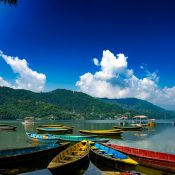
Why Nepal for Your Travel Destination?
The best answer for Why Nepal for Your Travel Destination? is simple “Nepal: Where Myth Meets Mountain”. The Unique Geography & Mountain Majesty.
Dear readers, it is my honor and privilege to introduce you to the rich, diverse, and extraordinary tourism landscape of Nepal, a small country by size but a giant in natural wealth, ecological variety, cultural heritage, and adventure potential. I hope by reaching the end of this article, you will trust Nepal not just as a Himalayan haven but as a holistic destination for global travelers seeking nature, culture, adventure, and spiritual grounding.
Why Nepal for your Travel destination? The Unique Geography & Mountain Majesty
- Nepal is home to eight of the world’s ten tallest mountains.
- The highest point on Earth, Mount Everest, 8,848 metres above sea level, lies here.
- Overall, Nepal hosts as many as 1,792 peaks; among them, about 1,310 stand above 6,000 metres, attracting mountaineers and trekkers from around the world.
- Within a relatively small horizontal distance, the country presents extreme vertical variation, from lowland plains to arctic Himalayan altitudes, offering a unique diversity of terrain and climate zones.
- This dramatic topographic variation makes Nepal exceptional: travellers can experience subtropical plains, mid-hills, alpine zones, and glaciated peaks, sometimes all within just a few days of travel.
Tourism Products: What Nepal Offers – Mountains, Adventure & Beyond
The tourism of Nepal is not monolithic, offering a wide array of experiences like:
- Mountaineering & High-Altitude Expeditions
Nepal remains a global centre for high-altitude climbing. In 2023 alone, the total number of expedition permits issued reached 2,253 teams.
Among the peaks drawing the highest expedition interest are Mount Manaslu and Mount Lhotse, along with Mount Everest , providing serious challenge and prestige for climbers. - Trekking & Himalayan Trails
For the many who prefer trekking over technical climbing, Nepal offers legendary trekking routes: from shorter treks to extended Himalayan circuits. High Himalayan trekking, mid-hill treks, and cultural treks converging mountain, forest, and village landscapes are all possible due to Nepal’s geography. The variation in altitude over short distances allows for rapid transitions of scenery and climate, a feature few places in the world can match. - Wildlife and Jungle Safaris
Nepal is not only mountains; its lowland jungles and subtropical forests host dense biodiversity. Through national parks, reserves, and conservation areas, visitors can enjoy jungle safaris, bird watching, wetlands, and riverine forests, a profound contrast to the alpine zones. - Nature & Biodiversity Tourism
The huge variation in bio-climatic zones, from Terai plains to alpine zones, allows for diverse ecosystems. This makes Nepal ideal for eco-tourism, botanical tours, biodiversity research, bird-watching, wildlife photography, and conservation-orientated travel. - Cultural, Heritage & Spiritual Tourism
Beyond nature, Nepal’s cultural heritage, ancient temples, monasteries, traditional villages, and the living culture of many ethnic groups offer a deeply enriching dimension. Guests can explore age-old traditions, spirituality, arts, and cultural landscapes interwoven with nature.
"To journey through Nepal is to walk through a living story. It is the one place on Earth where myth and mountain authentically converge, where the Himalayas are not just rock and ice, but deities in stone; where ancient culture flows as powerfully as the rivers carving through the hills."Thus Nepal is a complete tourism package: mountains + jungle + culture + biodiversity + spirituality.
Rich Flora and Fauna in Nepal: Biodiversity as a Tourism Magnet
Nepal’s biological diversity is disproportionately large relative to its area.
Nepal’s flora includes thousands of species: roughly 6,973 species of flowering plants (angiosperms), along with gymnosperms, ferns, mosses, algae, fungi, lichens, etc. There are hundreds of endemic flowering plants, many found in high-mountain zones. As altitude increases, plant communities change dramatically, offering alpine flora spectacles rarely found elsewhere.
- Regarding fauna: Nepal hosts around 208 species of mammals, 867 species of birds, 123 species of reptiles, 55 species of amphibians, and 230 species of freshwater fish.
- Nepal is home to globally endangered and charismatic species: for example, the majestic snow leopard in the high Himalayas; the iconic Royal Bengal tiger and the rare one‑horned rhinoceros in subtropical jungles; the elusive red panda; Himalayan musk deer; Himalayan tahr; clouded leopards; many species of deer and antelope; and a vast variety of birds, reptiles, fish, butterflies, and other wildlife.
- Because of the altitudinal variation and climatic diversity, Nepal’s protected areas span subtropical jungles to arctic-alpine zones, offering travellers the rare opportunity to see tropical biodiversity and high-altitude fauna and flora in one country. Protected areas cover approximately 23 to 24 percent of Nepal’s land area. This indicates strong institutional commitment to conservation, which is itself a selling point for ecotourism, scientific tourism, and travellers who value sustainability.
Narrating Nepal to the World: How is Nepal? Why Nepal?
Nepal is a land where nature, culture, and adventure come together in a rare and harmonious blend. It is a country that rises from the lush subtropical jungles of the Terai to the highest point on Earth, Mount Everest, within just 200 kilometres, creating one of the world’s most dramatic geographic transitions. Nepal is home to eight of the ten tallest mountains, extraordinary biodiversity, centuries-old cultural heritage, and living traditions that continue to shape its identity today. But Nepal is more than just statistics, it is an experience. It is the warmth of local communities, the serenity of Himalayan landscapes, the thrill of trekking and wildlife encounters, and the spiritual depth found in ancient temples and monasteries. Why Nepal? Because Nepal offers the world an unparalleled spectrum of travel experiences, from adventure to spirituality, from nature to culture, all within a single small but remarkably rich nation. It is a destination where every visitor can find meaning, inspiration, and wonder.
To make you understand and appreciate Nepal’s tourism potential, we have these options:
- Visual Storytelling (Mountains + Biodiversity + Culture):
We satisfy you with high-quality visuals, Himalayan panoramas, dense jungle safaris, images of endangered wildlife, alpine flora, Himalayan villages, cultural festivals, Buddhist stupas and monasteries. Visual contrast, from Terai jungles to snow-capped peaks, conveys the geographic and ecological diversity dramatically. - Data & Numbers to Ground the Narrative:
Present hard data: number of peaks and their altitudes; biodiversity statistics (flora species, bird species, mammals, endemic species); number of protected areas; annual tourist arrivals; proportion drawn to trekking/mountaineering, etc. Numbers help build credibility and showcase the scale of what Nepal offers. - Diverse Tourism Products for Different Segments:
Nepal is not only for high-end mountaineers. There are gentle treks, jungle safaris, eco-tours, cultural heritage tours, religious/spiritual routes, wildlife & bird-watching, and scientific/ecological tourism. This multi-segment offering widens appeal across adventure seekers, nature lovers, cultural tourists, families, spiritual tourists, researchers, etc. - Sustainability and Conservation Story:
Nearly a quarter of land is under protected areas; many species are endemic or endangered; Nepal plays a role in global biodiversity. By showing commitment to conservation and responsible tourism, Nepal appeals to environmentally conscious travellers. - Cultural & Spiritual Depth:
Nepal’s living cultural heritage, ethnic diversity, ancient temples and monasteries, traditional communities, and historic sites, combined with natural beauty, offer a holistic human + nature experience. This resonates with travellers looking for meaning, roots, spirituality, or cultural immersion. - Adventure + Accessibility Combined:
The geographic compactness means that within a limited travel time one can experience multiple zones, e.g., start with a jungle safari in Terai, and within a day or two fly or drive to mountain regions. Such accessibility + diversity can be a strong selling point. - Personal/Emotional Narratives
Including stories of travellers: the awe of seeing the first Himalayan sunrise, the jungle safari with rhinos and tigers, quiet meditation by monasteries, local community interaction, and traditional hospitality. Emotional storytelling alongside facts nurtures deeper interest and connection.
Nepal in Glimpse:
| Indicator / Feature | Value / Info |
| Number of international tourists in 2024 | 1,147,567 |
| Share of travellers for trekking/mountaineering (2024) | 15 to 20 % (154,262) |
| Number of peaks in Nepal | 1,792 total; 1,310 peaks above 6,000 m |
| Highest peak | Mount Everest – 8,848 m |
| Protected areas (national parks, reserves, conservation areas, hunting reserve) | 20 protected areas covering 23-24% of land |
| Flora (flowering plants / angiosperms) | 6,973 species |
| Fauna , mammals, birds, reptiles, amphibians, fish | 208 mammals, 867 birds, 123 reptiles, 55 amphibians, 230 freshwater fish |

All Categories
- Adventure
- Adventure in Nepal
- Annapurna Region
- Blogs
- Everest Region
- Hiking In Nepal
- kailash mansarovar
- Kanchenjunga Region
- Langtang Region
- Life Style
- Manaslu region
- Nepal Tour
- Nepali Festival
- News
- Peak Climbing in Nepal
- Rafting in Nepal
- Religion in Nepal
- Tibet
- Tibet Travel
- Tibet Travel
- Travel Guide
- Trekking in Nepal
- Tsum valley trek
- Uncategorized
- Wild Camping
- Yoga & Meditation in Nepal
Recent Posts


How Much Does It Cost to Travel to Nepal in 2026?