Great Nepal Treks & Expeditions, An Ancient, Perilous Tradition of the Himalayan Foothills
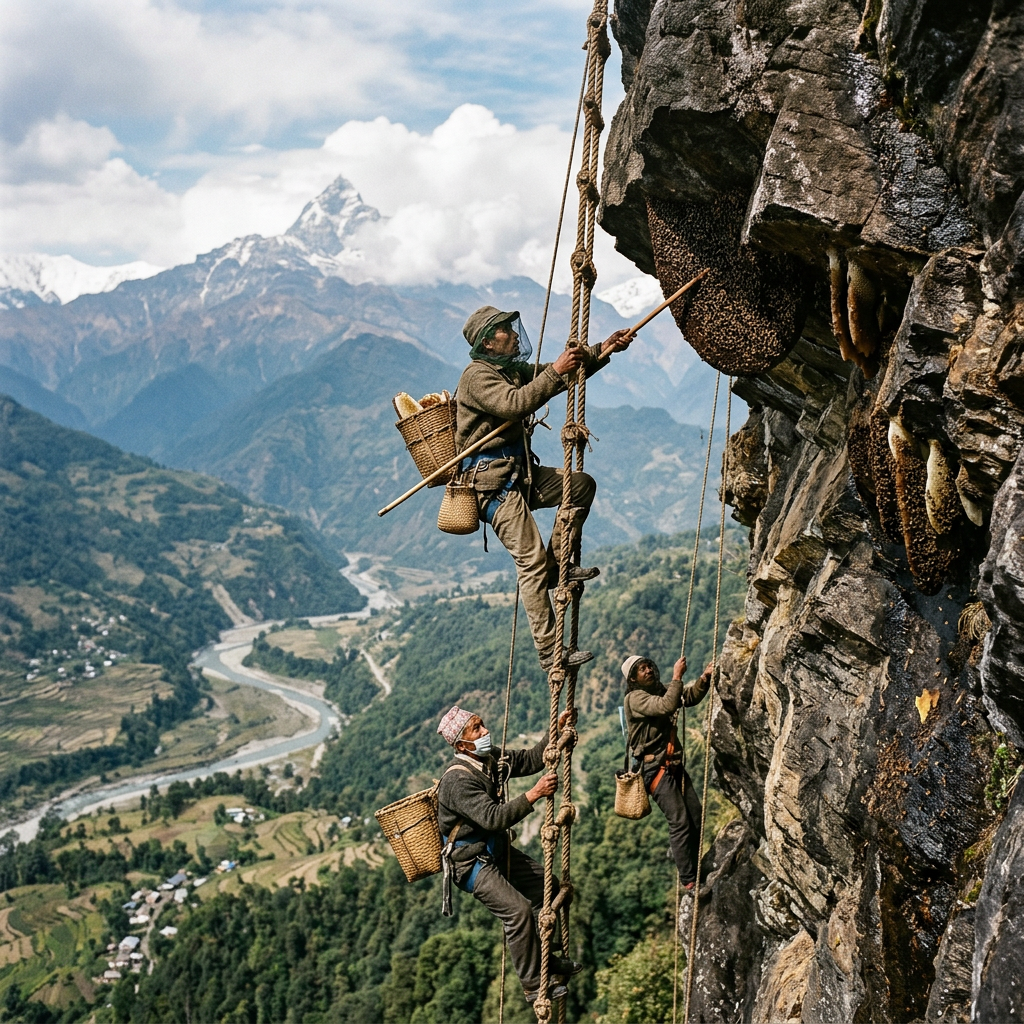
Deep within the rugged valleys of Nepal, suspended on fragile hand-woven ladders against sheer, vertical cliffs, native hunters risk their lives to harvest one of nature’s most elusive treasures: Mad Honey. This ancient tradition, spanning thousands of years, is far more than a harvest; it is a spiritual negotiation between humanity, nature, and the wrath of the world’s largest honeybees.
🍯 Fast Facts: Expedition Overview
• Activity: Wild / “Mad” Honey Hunting, Cultural Wilderness Trekking, and Local Homestay Experiences
• Target Bee Species: Apis Laboriosa (Himalayan Giant Honey Bee) & Apis Dorsata
• Altitude Range: 3,000 to 10,000 feet (915 to 3,050 meters)
• Harvesting Seasons: Spring (late April – late May), yielding the highly potent, psychotropic “Mad Honey” from Rhododendron blossoms.
o Autumn (Late October – Late November): Yields clean, clear medicinal honey.
• Hunting Duration: 8 to 10 hours of highly intense cliff and ground operations per site.
• Native Hunters: Indigenous Gurung, Rai, and Magar communities.
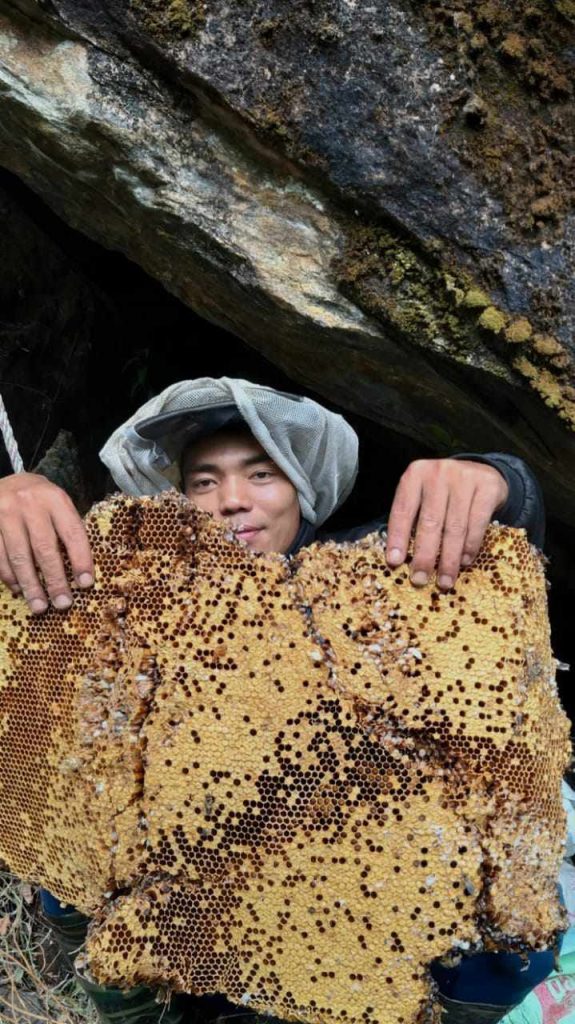
🗺️ Major Hunting Locations Across Nepal
The geography of honey hunting is dictated by the nesting preferences of the giant bees, who seek south-facing vertical overhangs to avoid predators and heavy rains. Great Nepal Treks organises cultural expeditions to the primary regions where this tradition survives:
• Lamjung & Kaski: The iconic Gurung heartlands near the Annapurna range, famous for pioneering cultural ecotourism around the hunt.
• Gorkha & Myagdi: Rugged, steep valleys where isolated cliffs yield highly potent spring honey.
• Baglung & Rolpa: Remote western districts where hunting remains purely local, deeply ritualistic, and largely untouched by commercial tourism.
• Khotang: The eastern stronghold where the indigenous Rai people practise distinct harvesting rituals.
🔄 The Step-by-Step Anatomy of a Hunt
A honey hunt is an elaborate, highly synchronized group activity. It requires absolute trust and sharp coordination between the cliff-hanger and the ground crew:
- Worship and Ritual (Pooja): Before touching the ropes, hunters offer food, flowers, and sacrifices to the cliff gods (Bhume) to seek permission and safety.
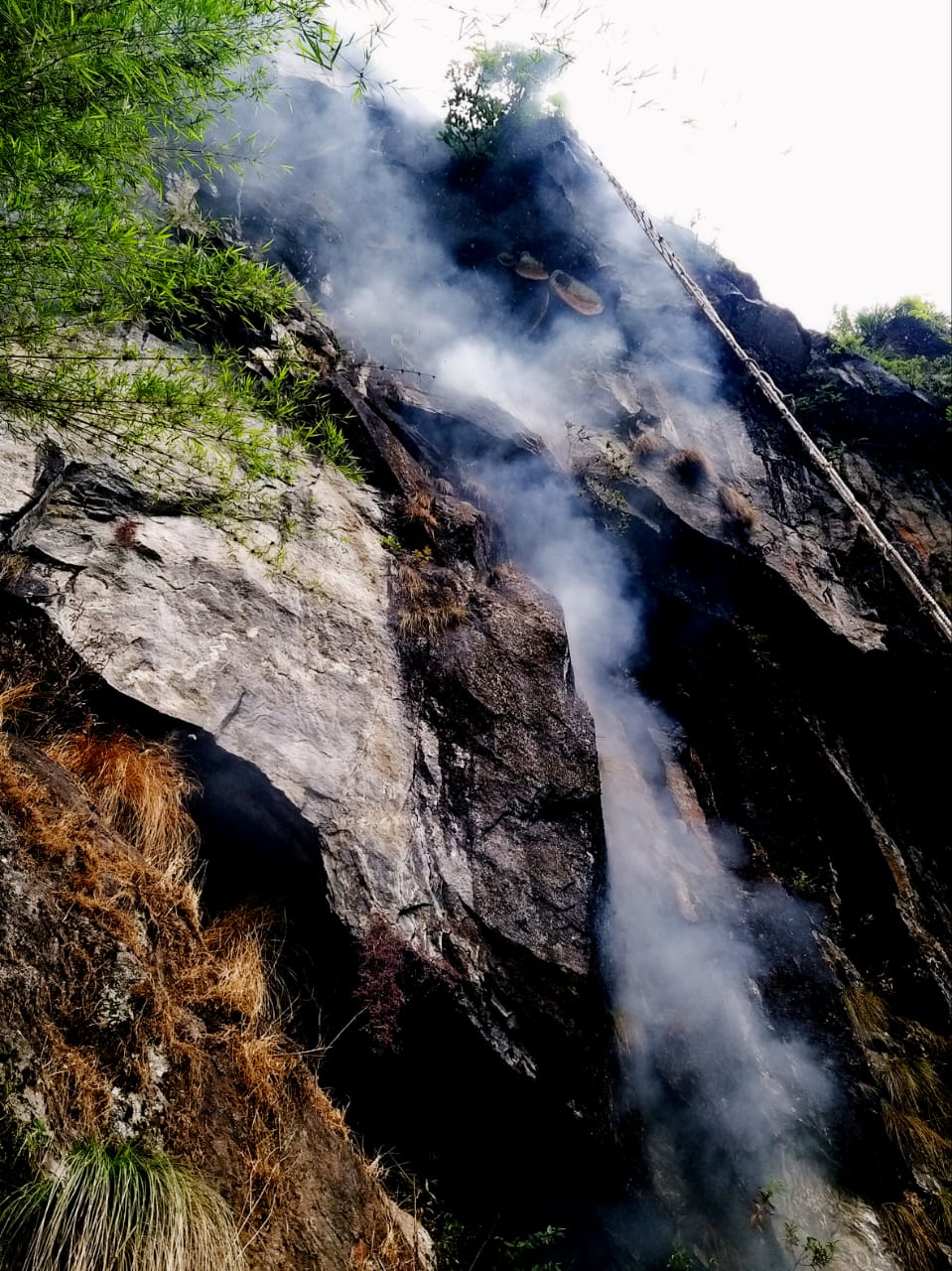
- Smoke Generation: The ground crew builds fires using green wood and leaves directly beneath the nests. The thick smoke rises up the cliff, blinding and calming the aggressive Apis Laboriosa bees.
- The Descent: The lead hunter, secured only by handmade bamboo ropes, climbs down the face of the cliff into a cloud of angry bees.
- The Harvest: Balancing on the swaying ladder, the hunter uses a long bamboo stick with a knife attached to cut the honeycomb, maneuvering it expertly into a lowered bamboo basket.
🛠️ Traditional & Protective Gear Utilized
Despite the terrifying stakes, modern industrial climbing gear is traditionally eschewed out of respect for ancestral methods. The gear relies heavily on forest resources:
• Bamboo Fibre Ropes (Ladder): Hand-woven from local bamboo, checked meticulously before every climb for structural integrity.
• Bamboo Stick with Knife (Tangos): Used to cut the massive combs from the rock from a delicate distance.
• Bamboo Basket: Lined with skin or cloth to catch the falling chunks of raw honeycomb.
• Beekeeping Hat & Protective Gloves: Simple additions to prevent hundreds of potentially blinding stings.
🥾 Experience Honey Hunting with Great Nepal Treks
For travellers seeking an authentic, raw glimpse into the ancient traditions of the Himalayas, our tailored honey hunting itineraries offer a rare window. We prioritise community-led tourism, ensuring that local communities are fairly compensated and that the bee populations are harvested sustainably without destroying entire colonies.
Contact our travel desk today to book your place on the upcoming Autumn harvest expedition!
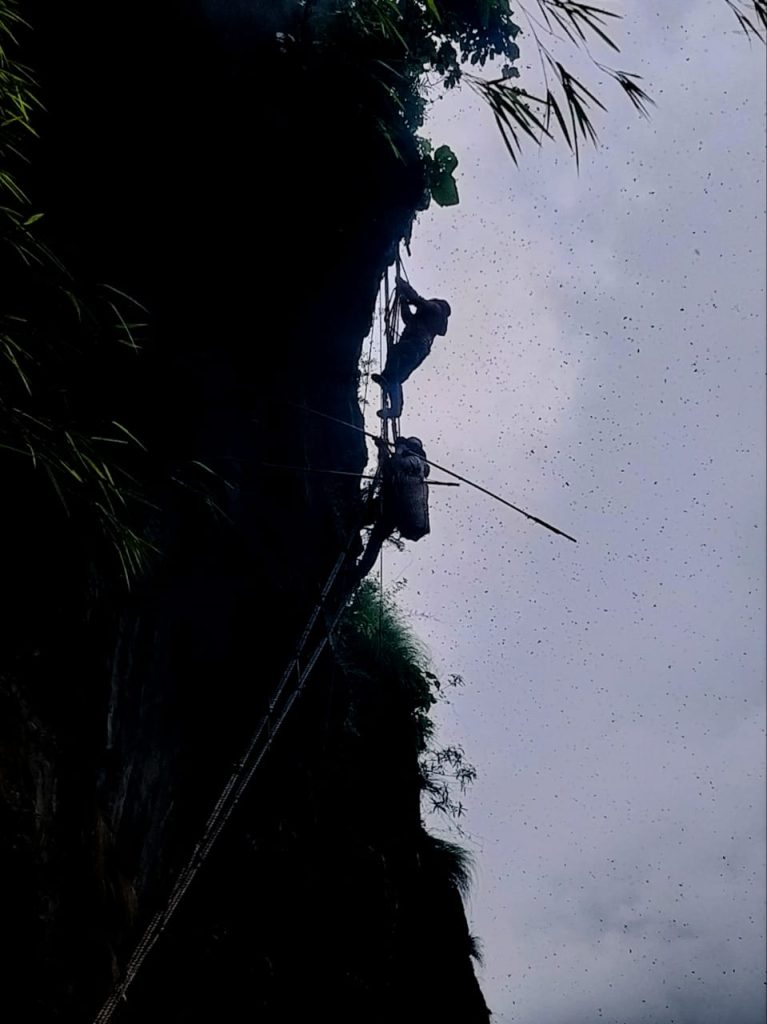
Frequently Asked Questions regarding the ancient tradition of wild honey hunting in Nepal with Great Nepal Treks.
🍯 The Core Experience
1. What exactly is “Mad Honey” and why is it special?
Unlike commercial honey, Mad Honey (Cliff Honey or Wild Honey) contains grayanotoxins. This occurs during the spring when the world’s largest honeybees (Apis Laboriosa) harvest nectar from specific rhododendron species (Rhododendron luteum and Rhododendron ponticum) blooming in the high altitudes. The resulting honey possesses distinct medicinal, psychotropic, and mildly hallucinogenic properties.
2. Can travelers physically participate in the cliff climb?
Absolutely not. Reputable Destination Management Companies (DMCs) enforce a strict observation-only safety protocol. Scaling the hundreds-of-feet vertical drops on swaying bamboo fiber ropes while surrounded by over 100,000 angry giant bees requires decades of ancestral mastery passed down through generations. Travelers stay at a safe distance on opposing ridges or at the cliff base to observe the spectacle and support the ground crew with smoke generation.
3. What is the step-by-step process of a traditional hunt?
An authentic hunt is deeply ritualistic and follows precise stages:
- The Pooja (Ritual): Hunters offer food, prayers, and sometimes sacrifices to the cliff gods (Bhume) to ask for safe passage.
- Smoke Generation: The ground crew lights fires using green wood beneath the cliffs. The rising smoke temporarily blinds and subdues the bees.
- The Descent: The lead hunter descends a hand-woven bamboo ladder lowered over the edge.
- The Harvest: Using two long bamboo poles (one with a blade to cut, one with a basket to catch), the hunter cleanly slices the comb away.
📅 Planning & Logistics
4. When is the best time to book a Honey Hunting expedition?
There are only two narrow harvesting seasons each year:
- Spring (Late April – Late May): The most popular season for travelers. This is when the rhododendrons bloom, yielding the potent “Mad Honey”.
- Autumn (Late October – Late November): A secondary harvest window offering clear skies and stable weather, yielding honey primarily used for traditional winter medicine.
5. Where do these hunts take place?
The cliffs must be remote, south-facing, and high enough to protect the hives. Major regions include:
- Lamjung (Bhujung & Ghalegaun): The historic epicenter of Gurung honey hunting.
- Kaski & Myagdi: Highly accessible foothill options near Pokhara.
- Gorkha, Rolpa, & Khotang: Off-the-beaten-path regions where the traditions remain deeply localized and un-commercialized.
6. How long does a typical tour last?
Depending on the remoteness of the cliff site, itineraries generally range from 4 to 10 days. A short tour to Lamjung via private jeep can take 4 days, while deep wilderness immersion treks into the Annapurna or mid-hill regions require 7 to 10 days of foot travel and village homestays.
🛑 Safety, Health, & Ethics
7. Is eating Mad Honey safe? What happens if you take too much?
It is safe only in tiny, strictly regulated amounts (typically less than a teaspoon). Exceeding this can lead to Mad Honey Poisoning, characterized by low blood pressure, severe dizziness, nausea, blurred vision, and temporary paralysis or hallucinations. Local guides will always supervise the tasting of the fresh harvest to prevent overconsumption.
8. How do responsible operators ensure the bees are not wiped out?
Ethical honey hunting relies entirely on sustainable harvesting. Indigenous hunters intentionally leave a portion of the honeycomb attached to the rock face, allowing the colony to rebuild and survive for the next season rather than completely destroying the hive. Travelers should ensure their chosen operator works directly with local community cooperatives to prevent commercial over-exploitation.
9. What are the accommodations like on this trek?
Because the hunting grounds are tucked away in rural cliffsides, accommodation consists almost exclusively of local village homestays or basic community tea houses. This offers an incredible secondary benefit: deep immersion into the traditional food, folklore, and evening hospitality (Rodhi gatherings) of the Gurung, Magar, or Rai hosts.
“Where ancient tradition hangs by a single bamboo thread, and the world’s most dangerous harvest yields the ultimate natural high.”