Exposing Fake Rescue Scam and Unethical Practices in Nepal’s Mountain Tourism
Understanding the Fake Rescue Scam and Unethical Practices in Nepal’s Mountain Tourism
The Fake Rescue Scam and Unethical Practices in Nepal’s Mountain Tourism highlight significant issues within the trekking sector. Understanding these practices is crucial for informed travel decisions.
The Fake Rescue Scam and Unethical Practices in Nepal’s Mountain Tourism is a growing concern for many trekkers. Awareness is key to avoiding these pitfalls.
Our focus on the Fake Rescue Scam and Unethical Practices in Nepal’s Mountain Tourism aims to empower trekkers with knowledge and resources.
Exploring the Fake Rescue Scam and Unethical Practices in Nepal’s Mountain Tourism is essential for ensuring ethical travel experiences.
Nepal’s Himalayan trekking industry, vital to its economy (tourism 8% of GDP), has been rocked by recent scandals. Investigations reveal that some “adventure” operators have colluded with helicopter companies, guides and even hospitals to stage fake emergency evacuations, bilking foreign insurers for millions. In January 2026, Nepal’s police arrested top executives of three rescue companies after uncovering a network of fraudulent rescues and forged medical reports. These schemes siphoned roughly $19.7 million in bogus insurance claims (e.g. one Kathmandu–Lukla flight worth $2,500 was fraudulently invoiced for $31,000. This article traces the history of the scam, explains how trekkers are ensnared, surveys other frauds in mountain tourism, and shows how travellers can protect themselves, including why choosing a reputable agency like Great Nepal Treks & Expedition keeps you safe and ethical.
The Fake Rescue Scam and Unethical Practices in Nepal’s Mountain Tourism have led to significant changes in industry regulations.
Understanding the Fake Rescue Scam and Unethical Practices in Nepal’s Mountain Tourism is critical to prevent falling victim to fraud.
Tourists must be vigilant about the Fake Rescue Scam and Unethical Practices in Nepal’s Mountain Tourism to enjoy a safe trekking experience.
The Fake Rescue Scam and Unethical Practices in Nepal’s Mountain Tourism often catch unsuspecting tourists off guard.
Many travelers are unaware of the Fake Rescue Scam and Unethical Practices in Nepal’s Mountain Tourism that plague the industry.
Investigating the Fake Rescue Scam and Unethical Practices in Nepal’s Mountain Tourism is essential for every trekkers’ safety.
Trekkers must be aware of the Fake Rescue Scam and Unethical Practices in Nepal’s Mountain Tourism that can lead to financial loss.
The prevalence of the Fake Rescue Scam and Unethical Practices in Nepal’s Mountain Tourism has raised concerns among travelers.
The Fake Rescue Scam and Unethical Practices in Nepal’s Mountain Tourism are not isolated incidents, but part of a larger issue.
This article examines the Fake Rescue Scam and Unethical Practices in Nepal’s Mountain Tourism that threaten the integrity of the trekking experience.
This article discusses the Fake Rescue Scam and Unethical Practices in Nepal’s Mountain Tourism that have impacted trekkers and the industry’s reputation.
In this article, we delve deep into the Fake Rescue Scam and Unethical Practices in Nepal’s Mountain Tourism that have tarnished the industry.
History of the Fake Rescue Scam and Unethical Practices in Nepal’s Mountain Tourism
Reports of fraudulent helicopter rescues date back years. As early as 2017 one travel-assistance firm estimated that about 35% of helicopter evacuations in Nepal were fake, often involving clients made ill on purpos. In 2018 a government fact-finding committee issued a 700-page report exposing elaborate fraud: multiple insurance claims for single chopper rides, pressure on trekkers to accept rescue for minor ailments, even contaminating food to induce sickness. That year the Nepalese government launched new guidelines, requiring all rescue flights, hospital bills and insurance claims to be logged with authorities. Under pressure from international insurers, it vowed to prosecute offenders.
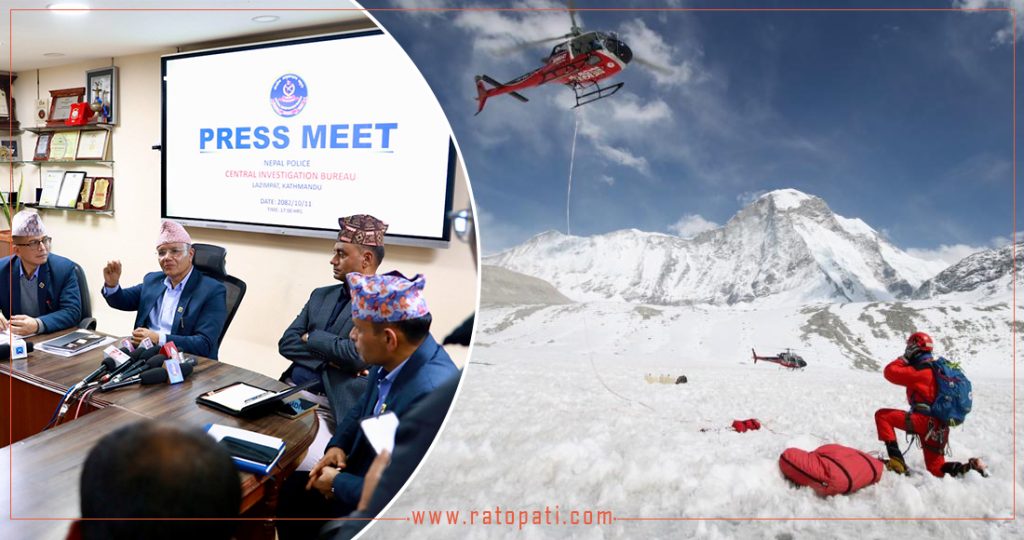
Despite these promises, enforcement was weak. “When there is no action against crime, it flourishes,” admitted a police chief in January 2026. Indeed, post-2018 insurers continued receiving suspicious claims. For example, Australia-based assistance firm Traveller Assist repeatedly warned Kathmandu that if fraud continued, major insurers would stop covering Nepal trips. (Its director even wrote ultimatums to the tourism minister, though his efforts were later discredited.) In late 2019 Nepal’s tourism minister Rabindra Adhikari pledged to hold scammers to account, but he tragically died in an unrelated helicopter crash that February, and the fraud inquiry stalled. Only in 2022 did Nepal’s Central Investigation Bureau (CIB) reopen the case. After two-and-a-half years of investigation, police on January 25, 2026 announced the arrest of six suspects from three major rescue companies. This confirmed that the multi-million-dollar fraud had quietly continued despite earlier reforms.
How Trekkers Are Tricked by Scammers
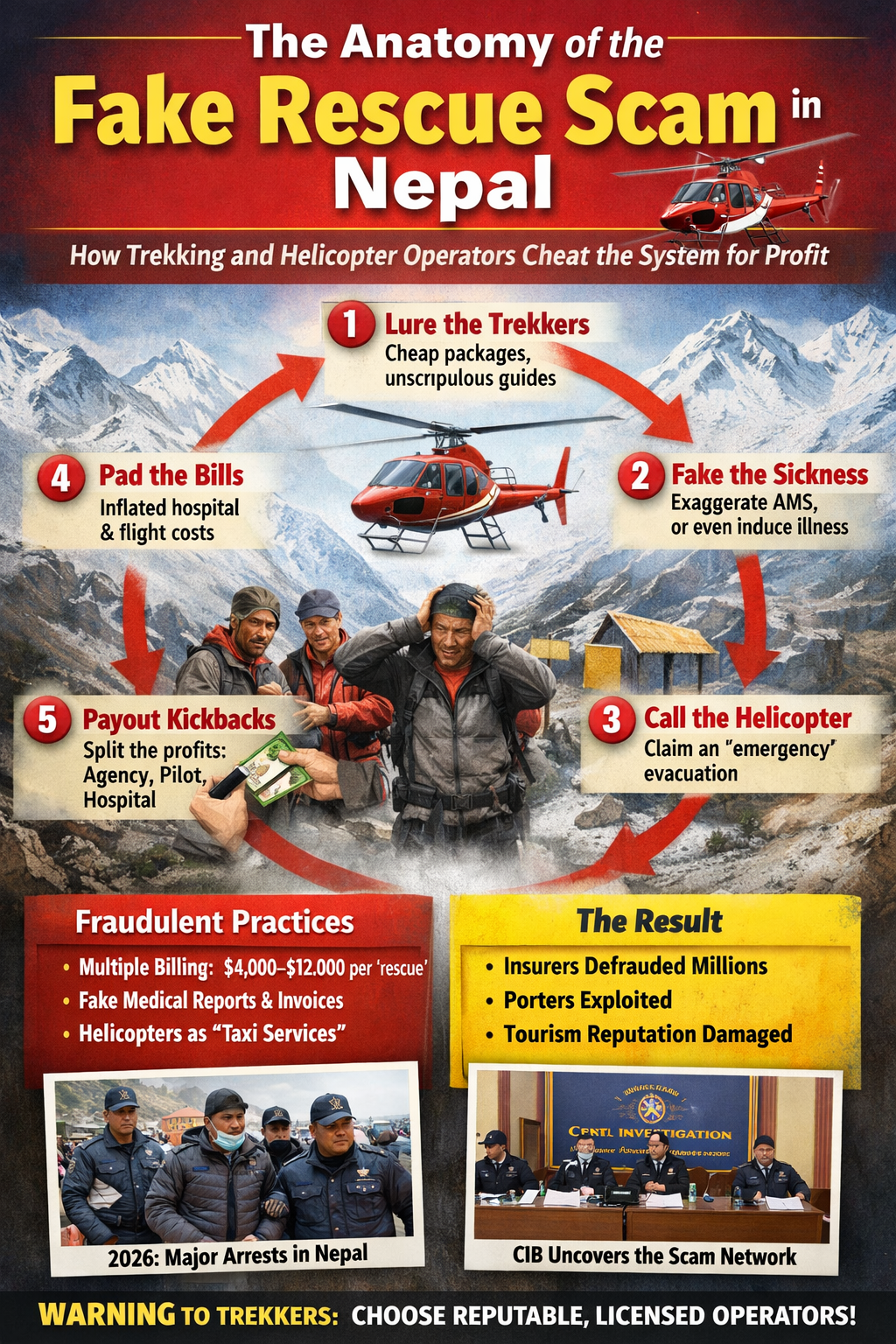
The modus operandi of the scam is a well-oiled chain of collusion. According to investigators, it often starts with the trekking guide or agency. They convince exhausted or eager clients that a mild headache, nausea or dizziness is life-threatening altitude sickness. Trekkers, already fatigued after Everest Base Camp or similar treks, may be led to believe only a helicopter evacuation can save them. In one example, a Swedish trekker reports her guide insisted they both take a heli at Gorek Shep, demanding they claim severe sickness or face a 10,000 € flight fee; fortunately, she refused. Less fortunate trekkers often “give consent” under pressure.
Once a helicopter is dispatched, the fraud multiplies. It is common for several tourists to be flown together on one chopper but billed separately to different insurance policies. Police found cases where a single flight carrying four people was invoiced four times as if four emergency evacuations. The rescue companies then work with private hospitals to “validate” the claim: fake patient manifests are prepared, medical reports are fabricated or padded, and even hospital admission/discharge papers are forged. In short, charter flights are misrepresented as life-or-death rescue flights with bogus paperwork. A press briefing confirmed operators had falsified hundreds of documents (passenger lists, invoices, “medical emergencies”), then submitted them to insurers. One crime syndicate’s trail even included forged Kathmandu hospital bills and repeated ambulance rides to make a minor problem look serious.
A particularly egregious trick is the phantom invoice. As noted by ExplorersWeb, “a single helicopter trip was billed multiple times under different emergency pretexts”. In one instance a routine Kathmandu–Lukla charter (roughly $2,500) was invoiced up to $31,000 by recycling false invoices. Staged rescues frequently involve commissions: the guide or agency that “reports” the emergency gets a cut of the helicopter company’s insurance payout. Indeed, industry insiders say many tours are priced deceptively low (often below cost) because the operator plans to recover profits by coercing a helicopter rescue.
Other Unethical Practices in Nepali Trekking
- Ghost Agencies: Online-only companies with no physical office, vanishing after payment.
- Permit Fraud: Forging or reusing trekking permits (TIMS, park entry).
- Underpaying Staff: Porters and guides paid below government-stipulated wages, without insurance.
- Substandard Equipment: Providing faulty gear (like old oxygen cylinders) to cut costs.
- Bait-and-Switch: Promising experienced guides but providing untrained ones.
- False Itineraries: Overpromising itineraries that are logistically impossible, leading to rushed, dangerous trekking.
The Fake Rescue Scam and Unethical Practices in Nepal’s Mountain Tourism expose the importance of safety and ethics in trekking.
Summary at a glance: Trekkers are lured into faking or exaggerating ailments, flown out by chopper, and the whole event is billing fraud. Devices include food tampering (some guides were reported to adulterate meals so clients “fall sick” and need medevac) and outright document forgery. Each stage – guide, helicopter company, hospital, takes its cut from the insurance claim. Investigators estimate that out of thousands of rescues conducted by the three suspect companies, hundreds were fake: All of this was done under the guise of “protecting” tourists, making the scam especially insidious.
The Fraudulent Network (Nexus of fake rescue in Nepal)
The arrests in 2026 implicated high-level executives at the top rescue agencies in Nepal. According to Nepal Police, the scam “involved collusion among trekking guides, helicopter operators and medical facilities”.
Outside Nepal, international insurers took note long ago. In early 2019 a United Kingdom insurance executive bluntly explained that guides often pressure hikers to feign illness just to trigger helicopter lifts, split commissions raked in after the insurance pay-out. Behind the scenes, a foreign assistance company (Traveller Assist) was pressing Kathmandu with email ultimatums (demanding investigations or insurers would quit Nepal). (Traveller Assist later withdrew when its own claims proved false.) Still, media coverage abroad raised red flags: AFP and France24 ran exposés in 2018–19 titled “Nepal: scam on the roof of the world” and “insurers give ultimatum to end tourist rescue fraud.”
Other frauds have occurred in Nepal’s mountain sector. For example, in 2018 officials uncovered a plot where Everest climbing permits were forged: two climbers paid $11,000 each for permits that turned out to be counterfeit. Unlicensed agents have been known to sell illegal trek packages (without valid company licenses), undercutting legit companies and leaving porters without insurance. In all these cases, the core issue is the same: short-term profit at the expense of honest service, and a tarnished reputation for Nepal.
The Toll on Tourists and Nepal’s Reputation
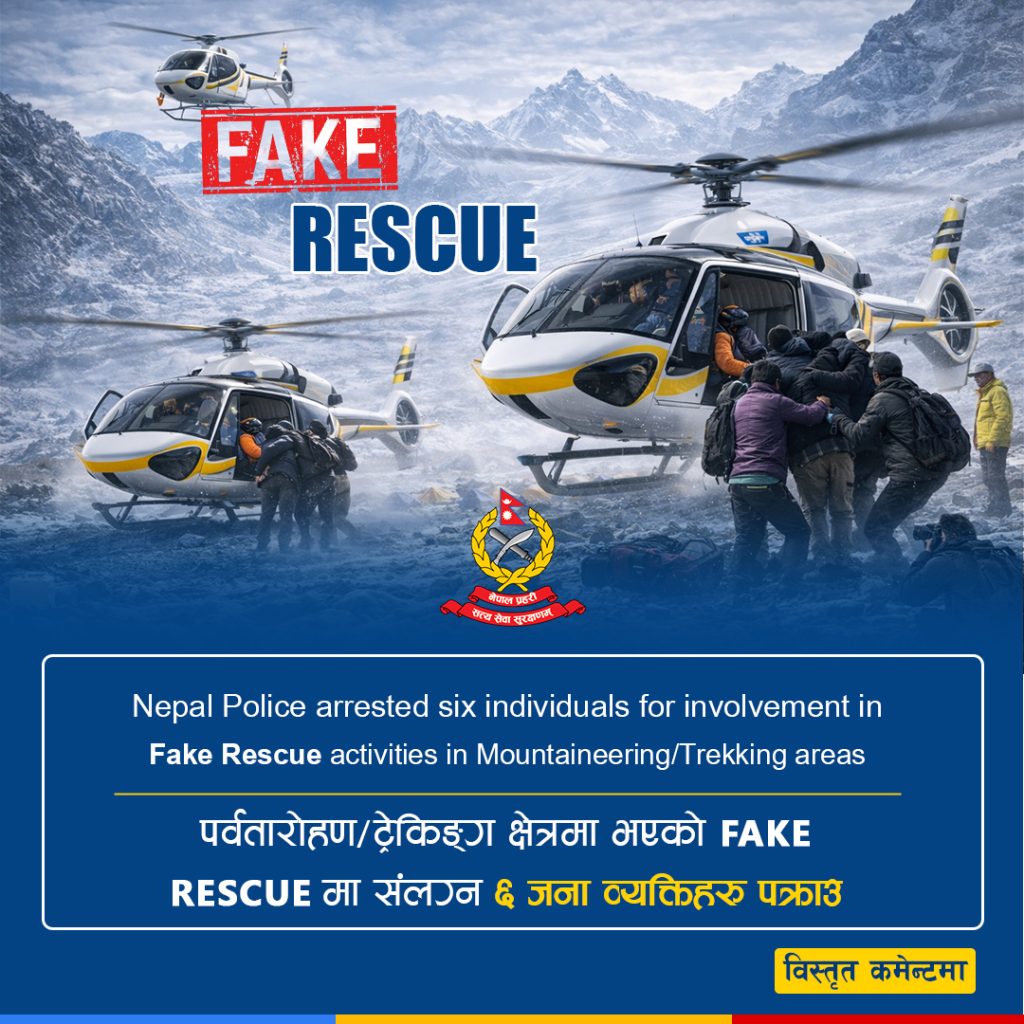
These scams carry serious consequences. Trekkers who fall prey may end up needing to pay thousands in “emergency” costs (sometimes advanced by the operator), or have their insurance voided once fraud is exposed. In genuine emergencies, insurers and officials must now scrutinize every claim, potentially delaying real rescues. For instance, one pilot noted that only 2 of 24 “rescue” flights he flew last season had passengers who truly needed help; an underwriter even said many tourists spent minutes in the hospital, not hours.
On a national level, the image of Nepal as an honest, safe destination has suffered. International media and insurers circulated warnings that Nepal could become a “no-go area” if the fraud continued. Police lamented that fraudsters turned Nepal into a subject of headlines like “fake rescue scam on Mount Everest,” harming “Nepal’s national image, dignity… and international reputation.”. Tourism officials, including the Nepal Tourism Board, now openly support the crackdown. As the NTB chief said, rooting out corruption will ultimately “increase visitors’ confidence,” since Nepal’s image is one of “pure spirit and honest people”.
Protecting Yourself: Tips for Trekkers
Tourists can take practical steps to avoid scams and choose ethical providers. Industry experts recommend the following:
• Verify the agency’s credentials. Ensure the tour operator is officially registered with the Government of Nepal (Ministry of Tourism) and ideally a member of the Trekkers’ Association of Nepal (TAAN). Reputable firms make this easy to check (TAAN’s website lists members).
• Check reviews and track record. Read feedback from past clients. A long-established agency with many positive testimonials is far likelier to follow rules.
• Ask about insurance. Before booking, confirm what medical/evacuation insurance is included. A trustworthy agency will clarify whether helicopter evacuations are covered and under what conditions. Don’t assume “free” helicopter is good, get details.
• Focus on value, not just price. Be wary of offers that seem too cheap. “Bargain” treks often cut legal costs: in this industry, unrealistically low rates can mean corners were cut (like unreported rescues). It’s safer to choose an honest operator that charges fair rates for quality service.
• Know basic health risks. Altitude sickness is real, but guides shouldn’t pressure mild symptoms. Take a pre-trip checkup and learn about acclimatization. If a guide suddenly declares an emergency when you feel okay, ask questions or request a second opinion.
• Stay in touch. Carry copies of your insurance policy and emergency contacts. Let family or a friend know your detailed itinerary. If something unusual happens, having outside contacts can provide a safety net independent of the trek operator.
By following these tips, clients greatly reduce the chance of falling victim to deceit. In fact, Great Nepal Treks & Expedition has long advocated exactly this approach: operating with transparency and integrity while educating clients about safe travel.
Choosing an Ethical Trekking Partner
Opting for a fully compliant, ethical agency makes all the difference. At Great Nepal Treks & Expedition, we take our responsibilities seriously: we are licensed by the Government of Nepal, registered with Trekking Agencies’ Association of Nepal (TAAN), and carry comprehensive insurance for our clients, guides and porters. Unlike rogue operators, we have no hidden commissions or need to trick clients into rescues. All emergency evacuations we arrange are genuine, and only when absolutely necessary.
We follow industry best-practices: our guides are certified and experienced, our mountain protocols follow government guidelines, and we maintain clear records of every permit, flight and medical bill. In line with tourism-industry recommendations, we emphasize fair pricing and full disclosure. Our clients know that when they book with Great Nepal Treks, they are choosing safety, honesty, and quality, not cutting corners.
Supporting ethical agencies also helps the wider tourism community. Every honest business that thrives pressures others to do the right thing. As one Nepalese travel expert put it, finally tackling this fraud and highlighting honest operators “will do good things” for the country’s image and “increase visitors’ confidence”. By choosing Great Nepal Treks, you join that positive movement. You help ensure Nepal’s spectacular mountains remain open and welcoming to all, untainted by scams.
Why Choose Great Nepal Treks & Expedition? Our Ethical Pledge
At Great Nepal Treks, we believe the mountains deserve respect and trekkers deserve honesty. Here is how we ensure integrity:
- Transparency in Operations
• Official Recognition: We are registered with the Nepal Tourism Board (NTB), TAAN, and hold all required licenses.
• Public Pricing: Detailed breakdowns of costs—no hidden fees.
• Real Offices: Visit us in Kathmandu and Pokhara—we are physically present and accountable. - Ethical Staff Policy
• Fair Wages: We pay above the government minimum wage and provide insurance for all staff.
• Training: Guides are certified by the Government of Nepal Mountaineering Institute, trained in wilderness first aid, altitude sickness management, and ethical conduct.
• Porter Protection: Strict adherence to International Porter Protection Group (IPPG) guidelines—weight limits, proper clothing, and accommodation. - Genuine Safety Protocols
• Acclimatization-Focused Itineraries: Scientifically designed schedules to prevent AMS.
• Emergency Preparedness: Legitimate evacuation partnerships with certified helicopter services (like Fishtail Air or Simrik Air) only for real emergencies.
• Communication: All treks carry satellite phones and GPS trackers—families can follow your journey securely. - Client Empowerment
• Pre-Trek Briefing: We educate clients on altitude symptoms, scam awareness, and their rights.
• Direct Communication: We provide direct contacts to our management—clients can report any concerns immediately.
• Insurance Guidance: We recommend reputable insurance providers and assist with legitimate claims only. - Sustainability Commitment
• Leave No Trace: We enforce eco-friendly practices.
• Support Local: We source supplies locally and contribute to community projects.
Policy Recommendations to the Government of Nepal
To eradicate scams and restore global confidence, we urge:
- Centralized Digital Monitoring:
• Implement a real-time GPS tracking system for all trekking guides with mandatory check-ins.
• Digital TIMS linked to individual trekkers and agencies to prevent reuse. - Strict Helicopter Evacuation Protocols:
• Mandate that all evacuation requests require independent medical verification via government telemedicine before helicopter dispatch.
• Blacklist helicopter companies involved in fraud. - Enhanced Licensing:
• Annual audits of trekking agencies’ financial and operational records.
• Public database of blacklisted agencies/guides. - Insurance Industry Collaboration:
• Establish a government-approved panel of medical evaluators for insurance claims.
• Require insurance companies to directly pay hospitals/helicopter services, not agencies. - Trekkers’ Awareness Campaign:
• NTB to run arrival briefings (at airports/hotels) on ethical trekking and scam alerts.
• Create a hotline/WatSApp number for trekkers to report suspicious activities. - Severe Penalties:
• Criminal charges for fraud, not just fines or license suspensions.
• Reward whistleblowers within the industry.
Sources: Nepal police reports and news investigations have detailed these scams and arrests. Industry guides and the company’s own ethics page also advise travelers on how to spot fraud and select reputable agencies.
At Great Nepal Treks & Expedition, we don’t just sell trips, we build trust. We invite you to experience Nepal’s wonders with the assurance that every step is guided by responsibility, transparency, and deep respect for these sacred mountains.
Choose wisely. Trek ethically. Let’s honor the mountains together.
Trek with Integrity, Trek with Great Nepal TreksFrequently Asked Questions (FAQs): Traveling to Nepal After the Helicopter Rescue Scam Issue
1. Is it true that helicopter rescue scams occurred in Nepal?
Yes, the incidents were real and have been reported in international media. A few unethical actors misused rescue systems for financial gain. However, these cases are being taken seriously by authorities and industry stakeholders.
2. How widespread is this issue?
No, it is not widespread. The vast majority of trekking agencies, guides, and operators in Nepal follow ethical practices and prioritize traveler safety. These incidents involved only a small fraction of the industry.
3. What actions has the government taken?
The Government of Nepal has initiated strict investigations, leading to arrests and regulatory reforms. Monitoring mechanisms, rescue protocols, and insurance verification systems are being strengthened to prevent future misuse.
4. Are helicopter rescues still safe and necessary?
Absolutely. Helicopter rescues are a critical part of Nepal’s mountain tourism infrastructure. In high-altitude and remote regions like Mount Everest and the Annapurna Circuit, they save lives and provide emergency access where no roads exist.
The issue was never the helicopters, it was their misuse, which is now being addressed.
5. Should I cancel my trip to Nepal because of this issue?
No, there is no reason to cancel your trip. Nepal remains one of the safest and most rewarding destinations for trekking and mountaineering. Millions of travelers continue to visit safely every year.
6. How can I ensure I book with a trustworthy trekking company?
Before booking, ask the following:
- What are your emergency and rescue protocols?
- Under what conditions is a helicopter evacuation recommended?
- How do you coordinate with insurance providers?
- Are your guides and staff insured and trained in high-altitude safety?
Choose companies with transparent communication, verified credentials, and strong track records.
7. Is travel insurance necessary for trekking in Nepal?
Yes, it is essential. Ensure your insurance covers:
- High-altitude trekking (above 4,000–6,000 meters)
- Emergency helicopter evacuation
- Medical treatment and trip interruptions
Proper insurance protects both travelers and ethical operators.
8. Are trekking routes in Nepal still safe?
Yes. Popular trekking regions such as Everest Base Camp, Langtang Valley, and Manaslu Circuit remain safe, well-managed, and supported by experienced local guides and infrastructure.
9. Has Nepal’s tourism industry improved after this issue?
Yes, significantly. This situation has accelerated reforms, increased transparency, and strengthened accountability across the industry. It is pushing Nepal toward a more professional and globally competitive tourism system.
10. Why should I still choose Nepal for trekking and climbing?
Nepal offers:
- The world’s highest peaks, including Mount Everest
- Diverse trekking experiences from beginner to extreme
- Rich cultural heritage and Himalayan communities
- Affordable yet high-value adventure experiences
Despite isolated challenges, Nepal continues to stand as a premier global destination for mountain tourism.
11. Is choosing a cheaper trekking package risky?
Often, yes. Extremely low prices may indicate compromised safety standards, underpaid staff, or lack of proper insurance. In adventure travel, quality and safety should always come before cost.
12. What role do travelers play in preventing such issues?
Travelers play an important role by:
- Choosing responsible operators
- Asking informed questions
- Avoiding suspiciously cheap offers
- Reporting unethical practices
An informed traveler helps build a stronger and more ethical tourism ecosystem.
13. What is the current outlook for Nepal’s adventure tourism?
The outlook is positive. Nepal is actively correcting past weaknesses and reinforcing its global reputation. With stronger governance and responsible operators, the future of trekking and mountaineering in Nepal is more reliable and sustainable than ever.
Final Thought
Nepal’s mountains have always been a symbol of adventure, resilience, and trust. While challenges like the helicopter rescue scam have surfaced, they are being addressed with urgency and seriousness.
The message is clear:
Nepal is open, improving, and ready to welcome trekkers and climbers with greater transparency, safety, and accountability.
As the Fake Rescue Scam and Unethical Practices in Nepal’s Mountain Tourism continue, it is vital to stay informed and cautious.
Ultimately, understanding the Fake Rescue Scam and Unethical Practices in Nepal’s Mountain Tourism is crucial for a responsible trekking experience.