

Shivapuri National Park Photography Tour (1N/2D)
Duration
Tour Type
Explore Tours
Country
Nepal
Duration
2
Trip Grade
Easy to Moderate
Best Season
Spring (March-May), Autumn (October-November)
Altitude
2,732 meters (8,963 feet)
Group Size
1-15
Accomodation
Eco Lodge
Activity
Wildlife Photography, Birding
Transportation
Private Transport
Culture
Tamang
Himalayan Sight
Langtang range
Shivapuri National Park Photography Tour (1N/2D) – Capture Nepal’s Wild Side
For wildlife and nature photographers, this 1-night/2-day guided tour into Shivapuri National Park is a dream escape just 12km from Kathmandu. This compact yet immersive experience takes you deep into a biodiversity hotspot where the Himalayan foothills meet subtropical forests, offering unparalleled opportunities to photograph rare mammals like the Himalayan black bear and leopard, Nepal’s only endemic bird (spiny babbler), and exotic flora like orchids and rhododendrons.
Shivapuri National Park Photography Tour Highlights
Wildlife Photography Highlights
Rare Mammals: Spot & photograph the elusive Himalayan black bear, leopard, yellow-throated marten, and Indian pangolin.
Birding Paradise: Over 300 species, including spiny babbler (endemic), kalij pheasant, Himalayan monal, and warblers.
Macro Magic: Capture orchids, butterflies, and fungi in the park’s lush undergrowth.
Scenic & Cultural Frames
Baghdwar Sunrise: Misty mornings at the sacred spring of the Bagmati River.
Tamang Villages: Authentic shots of local herders with goats/sheep against mountain backdrops.
Waterfalls & Streams: Long-exposure shots at Buddha Ganga or Jhor waterfall.
Exclusive Tour Perks
Guided Night Walk: Use low-light cameras for nocturnal species (civets, owls).
Hide Photography: Pre-set hides near salt licks for undisturbed wildlife shots.
Local Experts: Guides share animal movement patterns and best angles for lighting.
Practical Advantages
Closest Wilderness to Kathmandu (30-min drive).
No heavy camping gear—stay in a forest eco-lodge.
Customize the tour for birds, mammals, or landscapes.
Shivapuri National Park Photography Tour is a very popular tourism activity chosen by most amateur Photographers to get the best of Photography Tour in Nepal. Whether you are a professional or a beginner, the Shivapuri National Park Photography tour offers you the best exposure to your thirstiness for photography.
Shivapuri National Park is the Second Highest hill around Kathmandu Valley after Fulchoki with the elevation of 2,563 is the ninth National Park in Nepal which was established in 2002. It is very easy to reach and comfortable to explore since it is located very close to the capital city, Kathmandu. Shivapuri Village is the ultimate spot for exploring nature and culture very closely. Meeting various ethnic people with different cultures & traditions is another interesting phenomenon of Shivapuri village. Share your experience with the villagers and capture their amazing livelihood along with the exposure of several flora and fauna.
Why Shivapuri National Park is a Paradise for Wildlife Photographers
Shivapuri National Park, just 12 km from Kathmandu, offers wildlife photographers an unmatched blend of biodiversity, accessibility, and pristine Himalayan landscapes. As Nepal’s closest protected forest, it’s a haven for rare species like the Himalayan black bear, leopard, pangolin, and over 300 bird species, including the spiny babbler (Nepal’s only endemic bird). The park’s elevation range (1,400m–2,732m) creates diverse microhabitats—from subtropical forests to alpine meadows—perfect for capturing mammals, birds, and macro subjects like orchids and butterflies.
Tour Plan
6:00 AM: Pickup from Kathmandu hotel, short drive (30 mins) to Shivapuri entry gate.
6:30 AM: Sunrise shoot at Baghdwar – Capture misty forests, Himalayan langurs, and the sacred Bagmati River source.
8:00 AM: Breakfast at park café (local tea, eggs, fresh fruits).
9:00 AM – 12:00 PM: Birding & Mammal Tracking
Explore subtropical trails for Himalayan monal, kalij pheasant, and warblers.
Set up near natural salt licks for candid shots of deer or yellow-throated martens.
12:30 PM: Lunch at a Tamang village home (authentic Nepali thali).
2:00 PM – 5:00 PM: Landscape & Macro Focus
Hike to Jhor Waterfall for long-exposure shots.
Macro photography of orchids, ferns, and butterflies in shaded glades.
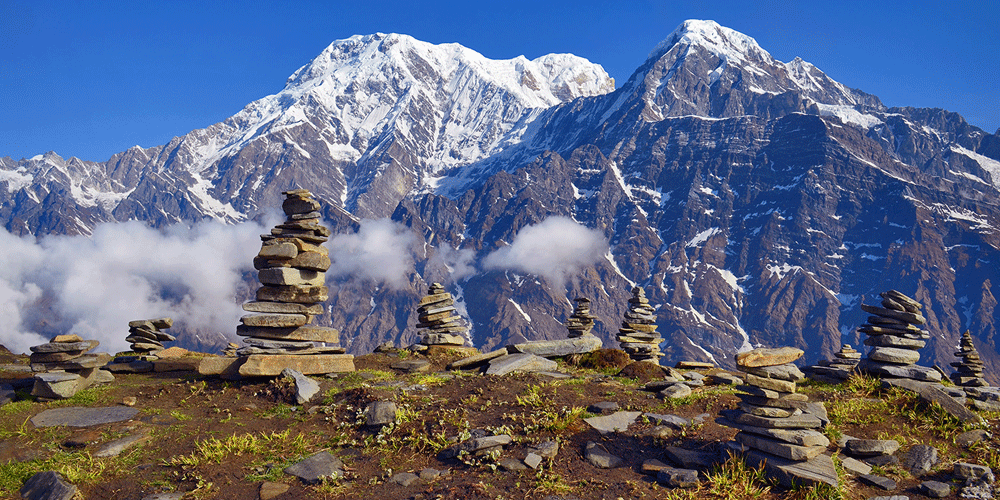
6:00 PM: Sunset at Nagigumba Hill – Panoramic Himalayan views (Langtang range).
7:30 PM: Dinner at forest eco-lodge, followed by optional night walk (civets, owls).
5:30 AM: Pre-dawn hide setup near wildlife trails for Himalayan black bear/leopard (seasonal).
7:30 AM: Breakfast at lodge.
8:30 AM – 11:30 AM: Village & Documentary Shoots
Visit Tamang herders for portraits with livestock.
Capture traditional pottery-making in clay workshops.
12:00 PM: Lunch at a riverside spot.
1:00 PM – 3:00 PM: Final Forest Session
Revisit prime birding spots or waterfalls for missed shots.
3:30 PM: Return to Kathmandu with a photo review session en route.
4:30 PM: Hotel drop-off.
Included
- Transportation: Private transport from your Hotel in Kathmandu to Shivapuri National Park and back
- Meals: Lunch and dinner on day 1 and Breakfast and Lunch on day 2 (Authentic Nepalese cuisine)
- Mineral Water: 5 Bottle of Mineral water per person per day for 2 days
- Entrance Fees: Necessary entrance and National Park fee, photography and videography fees applied by Government inside National Park
- Great Nepal Treks Tshirt (Yours to Keep)
- Government Licensed, Skilled English-speaking guide
- Tour completion certificate
- Service charge and Government Tax
Excluded
- Any packed food/snacks, aerated drinks, energy drinks, mineral water, alcohol, cigarettes, chocolates, nutria-bars or any other food consumed beyond the prescribed breakfast, lunch and dinner, etc
- Items of personal nature, Laundry Expenses, Tips
- Expenses incurred towards usage of landlines, mobiles, walkie-talkies or satellite phone And Internet expenses
- Clothing, Packing Items or Bags, Personal Medical Kit, Camera/Video Fees or Trekking Gears
- Any extra expenses arising out of various/unforeseen situations like natural calamities, landslides, political disturbances, strikes, changes in Government regulations, etc that is beyond our control
- Transportation is not on disposal basis. It is strictly as per the itinerary
- Any extra distance traveled will be charged extra
- Any additional staff other than specified
- Travel Insurance (Compulsory)
- Tips, gifts, souvenirs.
- Airfare of international flights Nepal entry visa fee
- Any extra services or products or offers or activities which are not mentioned in the itinerary
Location
Find a route from your location
Frequently Asked Question (FAQ)
What Safety Measures Does Great Nepal Treks Provide?
We prioritize safety with:
- Pulse oximeters & daily health checks.
- Emergency oxygen and portable hyperbaric chambers on high-altitude climbs.
- Helicopter evacuation protocols and satellite communication in remote areas.
- Small groups for better guide-to-client attention.
What makes Nepal a great destination for photography tours?
Nepal offers diverse ecosystems—from Himalayan peaks and rhododendron forests to wildlife-rich jungles (Chitwan/Bardia) and ancient cultural sites (Kathmandu Valley, Mustang). It’s a paradise for wildlife, landscape, and documentary photography.
Are permits required for photography in national parks?
Yes. National park entry fees + camera permits (extra for professional gear) are required. Our tours include these.
What’s the best season for photography tours?
Spring (March-May): Rhododendron blooms, bird activity.
Autumn (Oct-Nov): Clear skies, wildlife sightings.
Winter (Dec-Feb): Snow landscapes in high-altitude regions.
Is drone photography allowed?
Restricted in national parks without special permits. In cultural sites (e.g., Bhaktapur), drones may require fees.
Why find us and get our tour?
Lorem ipsum dolor sit amet, utinam munere antiopam vel ad. Qui eros iusto te. Nec ad feugiat honestatis. Quo illum detraxit an. Ius eius quodsi molestiae at, nostrum definitiones his cu. Discere referrentur mea id, an pri novum possim deterruisset. Eum oratio reprehendunt cu. Nec te quem assum postea.
How much price about tour & travels?
Lorem ipsum dolor sit amet, utinam munere antiopam vel ad. Qui eros iusto te. Nec ad feugiat honestatis. Quo illum detraxit an. Ius eius quodsi molestiae at, nostrum definitiones his cu. Discere referrentur mea id, an pri novum possim deterruisset. Eum oratio reprehendunt cu. Nec te quem assum postea.
Best experience travel agency?
Lorem ipsum dolor sit amet, utinam munere antiopam vel ad. Qui eros iusto te. Nec ad feugiat honestatis. Quo illum detraxit an. Ius eius quodsi molestiae at, nostrum definitiones his cu. Discere referrentur mea id, an pri novum possim deterruisset. Eum oratio reprehendunt cu. Nec te quem assum postea.
How GNTE handle you during the case of emergency?
You never know when the unexpected situation comes and put you in hearse condition whether you are professional or beginners. Our professional guides do their best to make you well with first aid support. If the situation goes worse, you will be evacuated by Helicopter. You are entirely liable for all the expenses incurred in evacuation. So, before coming to Nepal, please make your travel insurance. Ask your guide to arrange a runner to the nearest communication point and inform office about requirement of a helicopter. For evacuation, we require the name of the sick person and the exact location from where helicopter can airlift you. You should not leave the place after calling Helicopter for evacuation though you are feeling better than before.
Are we safe with Great Nepal Treks during our trekking or expedition journey?
Security and a safe journey is our core objective of trekking. Our guide holds licenses issued by the Nepal Government and our staffs are local, honest, kind and genuine. But we also insist you to take care of your own personal belongings. If you are on ‘camping trek’ please take your main bag inside the tent once you reach campsite and put all bags and belongings in the middle of the tent when you feel sleepy. Your guide assigns a Sherpa on turn wise basis to guard the campsite throughout the night. If you are on ‘Tea house arrangement, never leave your baggage unattended and keep your lodge room locked when you go out. Feel safe since you are in the hands of ethical trekking company in Nepal.
Is travel insurance required?
Yes, insurance covering high-altitude climbing (up to 6,500m+) and emergency evacuation is mandatory for all expeditions.
What is Village Tourism and Homestay Trekking in Nepal?
Village tourism and homestay trekking in Nepal offer travelers a deeply immersive cultural experience by allowing them to stay with local families in traditional villages. Unlike conventional hotel stays, these experiences provide an authentic glimpse into rural Nepali life, where guests participate in daily activities such as farming, cooking traditional meals, and even joining local festivals. Popular destinations include the Gurung villages of Ghandruk and Sikles near Pokhara, where visitors can learn about indigenous traditions, music, and dance. In the Tsum Valley, a remote Himalayan region influenced by Tibetan Buddhism, homestays allow trekkers to engage with monks, explore ancient monasteries, and witness unique customs. Meanwhile, in the Lumbini region, Tharu homestays showcase indigenous crafts, jungle walks, and organic farming. These treks are ideal for travelers seeking meaningful connections with local communities while enjoying Nepal’s stunning landscapes at a slower, more sustainable pace.
How Safe and Comfortable Are Homestays in Nepal?
Homestays in Nepal are generally very safe, with welcoming hosts who take pride in sharing their culture. Accommodations are basic but comfortable, often featuring clean beds, warm blankets, and shared bathrooms (some with hot showers). Meals are freshly prepared using local ingredients, with staples like dal bhat (rice and lentils), homemade pickles, and seasonal vegetables. Since many villages are off the beaten path, amenities like Wi-Fi and electricity may be limited, so packing essentials like a power bank and toiletries is recommended. Culturally, guests are expected to dress modestly, remove shoes before entering homes, and ask permission before taking photos of religious ceremonies. For those concerned about health, sticking to cooked food and bottled water minimizes risks. Reputable homestay programs work closely with local families to ensure hygiene and security, making this a rewarding and worry-free experience.
What Makes Great Nepal Treks Different from Other Companies?
Great Nepal Treks stands out for its personalized service, expert local guides, and commitment to safety and sustainability. Unlike larger commercial operators, we specialize in small-group treks (max 10 people), ensuring individual attention and a more immersive experience. Our 1:1 Sherpa support on high-altitude climbs, luxury base camp setups (heated tents, gourmet meals), and 95% summit success rate on Everest expeditions make us a trusted choice. Additionally, we prioritize eco-friendly practices, support local communities, and provide transparent pricing—no hidden costs.
Travel For Cause
At Great Nepal Trek, your adventure directly fuels positive change. We are proud to allocate 10% from every tour booked with us to our Initiative Inclusion Development Forum Nepal. This dedicated commitment channels vital funds directly into supporting education and healthcare for underprivileged children from the Himalayan communities we explore. By trekking with us, you're not just witnessing the majestic mountains—you're actively helping to build a brighter, healthier future for its next generation.
What makes us different?
Changing Community Through Tourism
Travel for Cause - 10% of every booking amount goes to our CSR initiative, Inclusive Women Development Forum (IWDFN), educating and provide lively hood training to the women and children from Under preveliged society in Rural Nepal.
Sustainable Tourism
At Great Nepal Treks, we believe adventure should protect and empower. Our treks are designed to minimize environmental impact (zero-waste policies, solar-powered teahouses) and maximize community benefits—hiring local guides, sourcing supplies from village cooperatives, and funding education projects. When you travel with us, your journey supports conservation and cultural preservation across the Himalayas.
Related Information
Review Scores
2 thoughts on “Shivapuri National Park Photography Tour (1N/2D)”
Add a Comment Cancel reply
Related Tours

- Quality4
- Location4.5
- Amenities4
- Services5
- Price4.5
Honey Hunting Tour In Nepal – 11 Days

- Quality4
- Location4
- Amenities4
- Services4.67
- Price3.33




4
We always stay at here when in town. The location is great, staff is wonderful and we love the overall feel. Beautiful view from the here.
4.4
This is the best tour on the east coast! It was amazing how many places we visited and what great memories we made!