


Bhutan Cultural Holiday Tour – 5 Days
Duration
Tour Type
Explore Tours
Country
Bhutan
Duration
5
Trip Grade
Easy
Best Season
Spring & Autumn
Altitude
2350m/7710ft
Group Size
1-12 PAX
Accomodation
3 Star Hotel
Activity
Cultural Tour, Hiking
Trek Style
Hotel Accomodation
Transportation
Private
Culture
Bhutanese
Himalayan Sight
Chomolhari
Airport
Paro
Bhutan Cultural Holiday Tour is a 5-day tour that revolves around the historical and cultural highlights of central Bhutan. Paro beckons you with promises of breathtaking natural sights with cultural richness and good accommodation; you can view Mount Chomolhari from Drugyel Dzong, capture Paro’s incredible landscapes from Ta-Dzong and visit Indigenous hospital art & craft school, National library, Royal goldsmith workshop, and handicraft centers.
Thimpu remains synonymous with its colorful festivals, legendary monasteries, and coveted cultural sites. You can stroll around the local markets and see for yourself the everyday lives of Bhutanese people and their craftsmanship. You can either walk or ride on a horse to Taktsang monastery which epitomizes the religious belief of Bhutanese people. At the end of the Bhutan Cultural Holiday Tour journey, you will be left with a feeling that you have truly seen the real Bhutan up close.
Why Choose a Bhutan Cultural Holiday Tour?
A Bhutan Cultural Holiday Tour offers a trans-formative journey into the heart of the Himalayas, where ancient traditions thrive amidst breathtaking landscapes. As the world’s only carbon-negative country, Bhutan blends spiritual richness with pristine nature—from cliff-side monasteries like Tiger’s Nest (Paro Taktsang) to vibrant Tsechu festivals where masked dances bring Buddhist legends to life.
Unlike typical vacations, Bhutan’s “High Value, Low Impact” Tourism policy ensures intimate, meaningful experiences: meditate with monks in Dzongs (fortress monasteries), hike through rhododendron forests to remote villages, and savor Ema Datshi (chili-cheese curry) with local families. With government-mandated sustainable practices and a focus on Gross National Happiness, Bhutan reveals a way of life untouched by mass tourism—perfect for travelers seeking authenticity, mindfulness, and adventure in one magical destination.
Tour Plan
You will be received by our representative and then transfer to Thimphu, the modern capital town of Bhutan after landing at Paro Airport. Overnight at hotel in Thimphu.
After breakfast Thimphu sightseeing. Visit Trashichhoe Dzong, the beautiful medieval fortress/monastery which houses most of the Government’s office and King’s Throne room It is also the summer residence of Je Khenpo, the Chief Abbot. Then visit National Library which has vast collection of ancient Buddhist texts and manuscripts. After that drive to Arts & Crafts School, famous for traditional thangkha paintings where you will see, students at work producing intricate design on cloth. After lunch visit Handicrafts Emporium which displays wide assortment of beautifully handwoven and crafted products. Then drive to Memorial Chorten, the stupa built in the memory of Bhutan’s Third King who is popularly regarded as Father of modern Bhutan. The paintings and statues inside this monument provide a deep insight into Buddhist philosophy. Overnight at hotel in Thimphu.
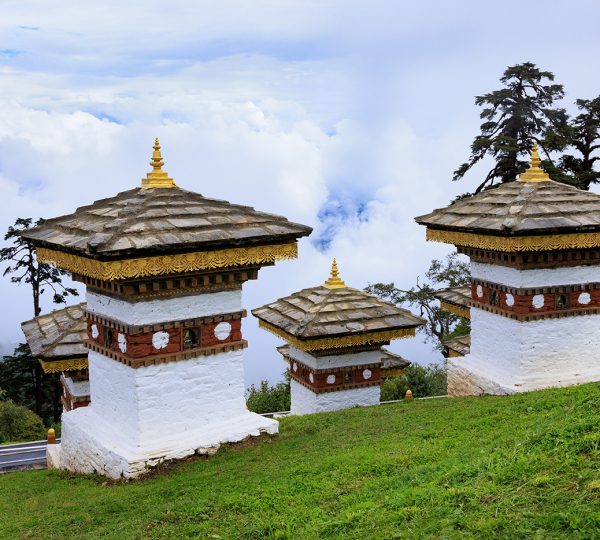
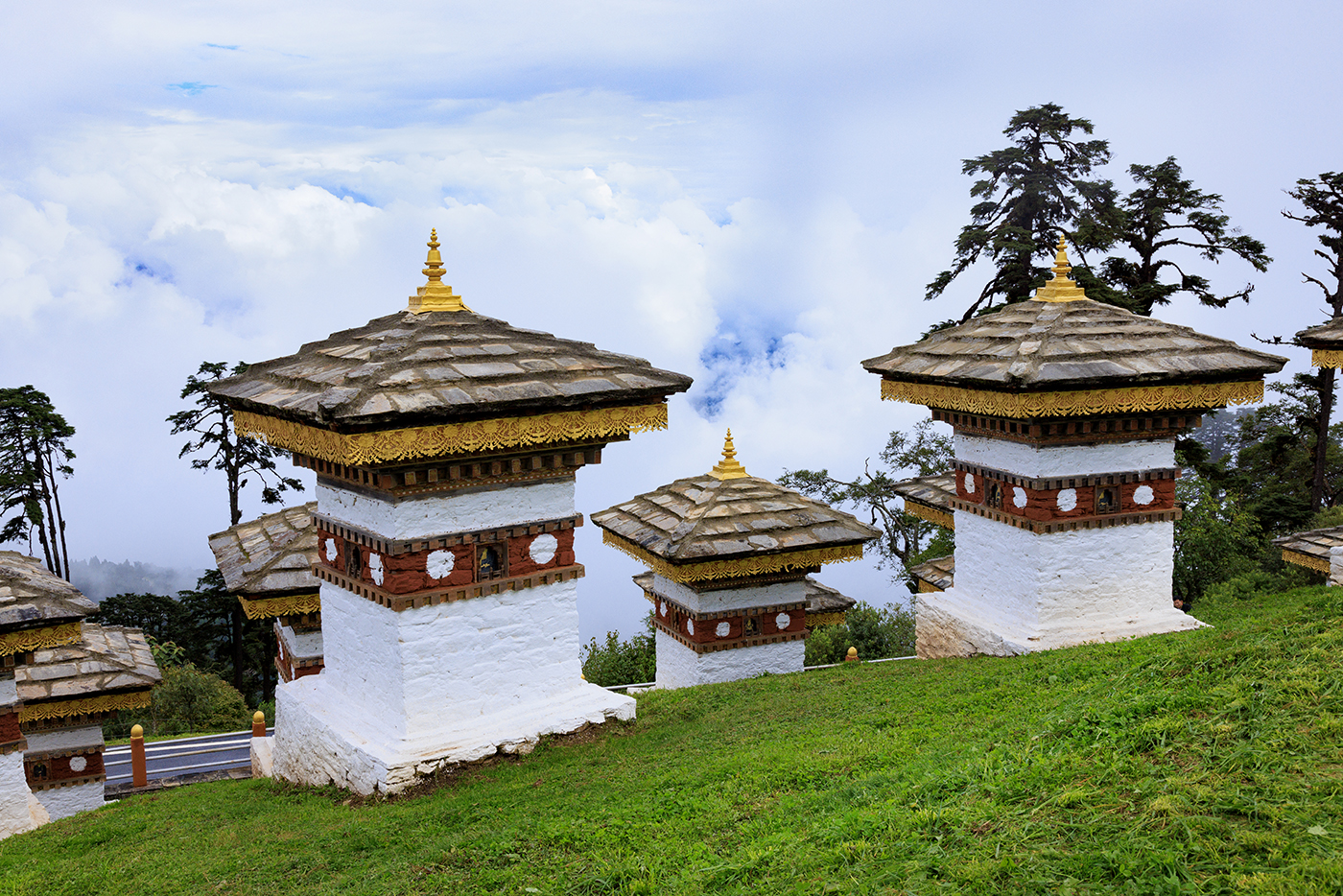
After breakfast, drive to Punakha with a short stop at Dochula pass (3,080m) stopping briefly here to take in the view and admire the chorten, mani wall, and prayer flags which decorate the highest point on the road. If skies are clear, the following peaks can be seen from this pass (left to right): Masagang (7,158m), Tsendagang (6,960m), Terigang (7,060m ), Jejegangphugang (7,158 m ), Kangphugang (7,170 m ), Zongphugang (7, 060 m ), a table mountain that dominates the isolated region of Lunana – finally Gangkar puensum, the highest peak in Bhutan at 7,497m. Later visit Punakha Dzong, built strategically at the junction of Pho Chhu and Mo Chhu rivers in 1637 by Shabdrung Ngawang Namgyal to serve as the religious and administrative centre of the region, Punakha Dzong has played an important role in Bhutan’s history. Damaged by four catastrophic fires and an earthquake, the Dzong has now been fully restored. After that drive to Wangduephodrang visiting Dzong and local market. The district of Wangduephodrang is also famous for its bamboo products, slate and stone carvings. Overnight at the hotel in Punakha.
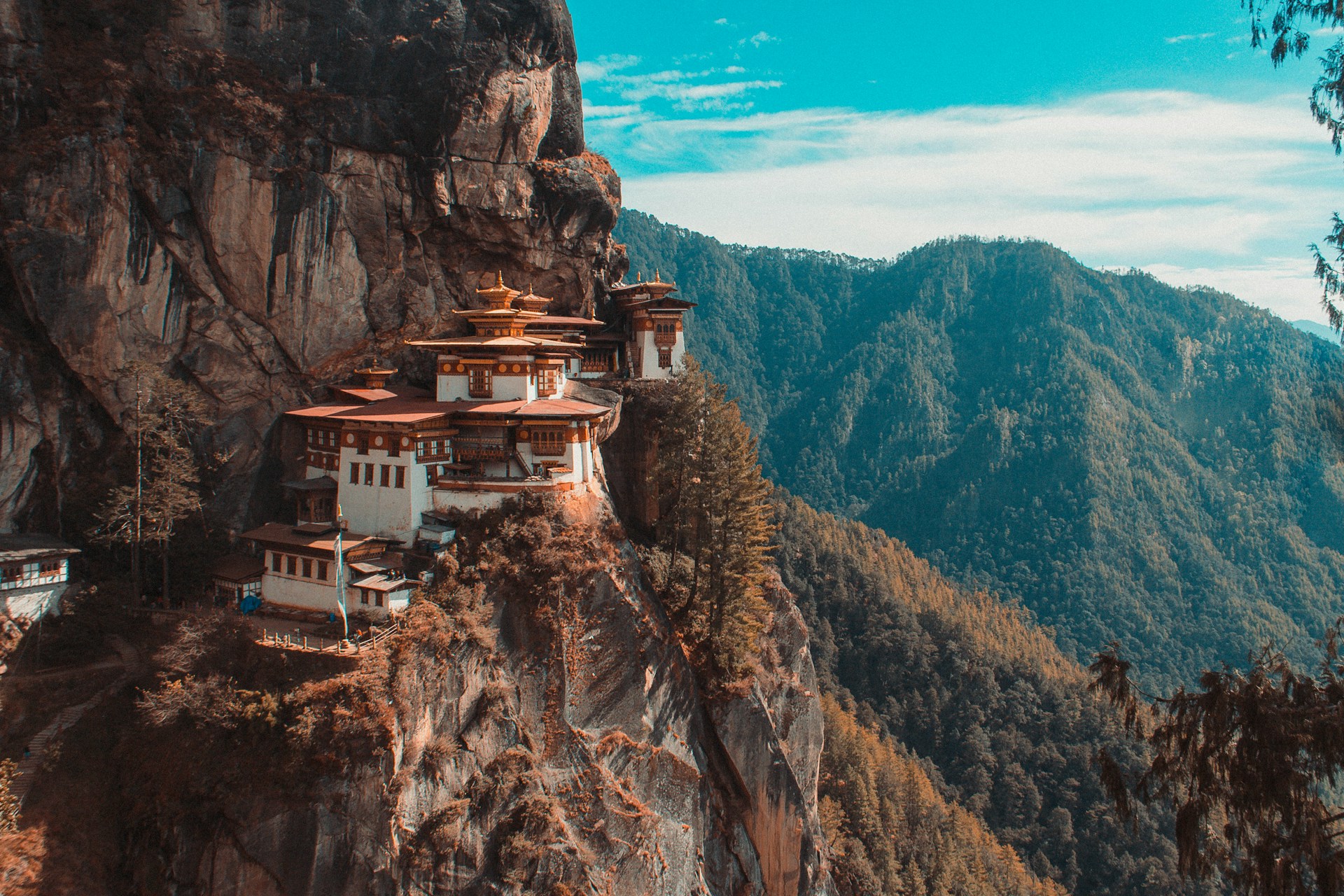
After breakfast drive north of Paro valley to ruins of Drukgyel Dozng. From this fort, Bhutanese repelled several invasions by Tibetan armies. Nearby visit traditional Bhutanese Farm House which offers good insight into lifestyle of local people. After that, take an excursion to Taktsang Monastery, the most famous of Bhutanese monasteries. It is said that Guru Rinpoche arrived here on the back of a tigress and meditated at this monastery hence it is called “Tiger’s Nest”. The excursion to monastery takes about 5 hours for round trip. While returning to Paro town, visit en route Kyichu Lhakhang, one of the oldest and most sacred shrines of the Kingdom. Overnight at the hotel in Paro.
After breakfast drive to the airport for flight to onward destination.
Included
- 3-star Hotels in a Standard on a twin sharing basis
- All meals at the given hotels or local restaurants
- All transfers & transportation within Bhutan
- English speaking guide, monument entrance fees, sightseeing
- All Service Charge and necessary Government Taxes
Excluded
- All beverages including water consumed at hotels/restaurants
- Hotel facilities, laundry, phone calls Taktsang horse fee
- Person travel health Insurance etc. Visa Fee
- Any other items not mentioned on above Include section
Location
Find a route from your location
Frequently Asked Question (FAQ)
Is Bhutan safe for travelers?
Bhutan is considered one of the safest travel destinations in the world, with extremely low crime rates, no political unrest, and a society deeply rooted in Buddhist values of compassion and honesty. The mountainous terrain does present some risks when trekking, but licensed guides are trained in safety protocols. Healthcare facilities are basic outside major towns, so comprehensive travel insurance is recommended. Women travelers generally feel safe, and solo exploration (within guided tour parameters) is common. The biggest hazards are typically altitude sickness on high treks or windy mountain roads during monsoon season.
Do I need a visa for Bhutan?
Yes, nearly all foreign tourists require a visa to enter Bhutan, which must be arranged in advance through a licensed Bhutanese tour operator as part of a pre-paid travel package. The only exceptions are citizens of India, Bangladesh, and the Maldives who have different entry requirements. The visa process is straightforward but requires submitting your passport details and travel itinerary to your tour company, who will handle the approval through Bhutan’s immigration system. Once approved, you’ll receive a visa clearance letter to present upon arrival, where the actual visa will be stamped in your passport.
Is independent travel allowed in Bhutan?
No, Bhutan does not permit fully independent travel for most tourists. Visitors must book through a government-approved tour operator who arranges accommodations, transportation, guides, and itineraries as part of a pre-paid package. The only exception is for Indian nationals, who can obtain a permit at the border and travel more freely, though they still need to register and pay applicable fees. This policy helps manage tourism sustainably while ensuring visitors have proper support and guidance during their stay in Bhutan’s remote and culturally sensitive regions.
When is the best time to visit Bhutan?
The ideal times to visit Bhutan are during spring (March to May) when valleys come alive with blooming wildflowers and rhododendrons, and autumn (September to November) when skies are clearest for mountain views and major festivals occur. Summer brings monsoon rains that can disrupt travel, while winter offers crisp, sunny days but cold temperatures, especially at higher elevations. Many travelers plan their trips around colorful tshechus (religious festivals) held in various dzongs across the country, with the Paro and Thimphu festivals being particularly spectacular.
What currency is used in Bhutan?
The official currency is the Bhutanese Ngultrum (BTN), which is pegged at par with the Indian Rupee (INR). Indian rupees are widely accepted, though high-denomination INR notes (₹500 and ₹2000) may not be taken due to counterfeit concerns. US dollars are also useful for paying the SDF fee or larger expenses. Credit cards work in major hotels and shops in cities, but cash in small denominations is essential for rural areas, handicraft purchases, and donations at temples. ATMs are available in towns but shouldn’t be relied upon exclusively.
What language is spoken in Bhutan?
Dzongkha is Bhutan’s national language, used in government and education, but English is widely spoken due to being the medium of instruction in schools. Most Bhutanese working in tourism are fluent in English, making communication easy for visitors. In eastern regions, Sharchop is common, while Nepali is spoken in southern areas. Learning a few Dzongkha phrases like “Kuzuzangpo” (hello) is appreciated, though not necessary as your guide will handle all translations during your tour.
Can I use credit cards in Bhutan?
Credit cards (Visa/Mastercard) are accepted in larger hotels, upscale restaurants, and souvenir shops in cities like Thimphu and Paro, but cash remains king throughout most of the country. Many smaller guesthouses, local markets, and rural areas operate cash-only. It’s advisable to carry sufficient Ngultrum or Indian rupees (US dollars as backup) when venturing beyond main towns. ATMs exist in urban centers but may have withdrawal limits and occasional technical issues, so don’t rely on them as your sole source of funds during your Bhutan trip.
What makes Bhutan unique?
Bhutan stands out as the only country that measures progress through Gross National Happiness (GNH) rather than GDP, prioritizing environmental conservation, cultural preservation, and citizen well-being over unchecked development. Its dramatic Himalayan landscapes remain pristine, with over 70% forest coverage constitutionally mandated. Ancient dzongs (fortress monasteries) host vibrant festivals featuring masked cham dances, while traditional dress (gho for men, kira for women) is worn daily. The country only opened to tourism in 1974 and still carefully controls visitor numbers to maintain its distinctive character and sustainable way of life.
Are there frequent flight delays in Bhutan?
Yes, flight disruptions are common due to Bhutan’s challenging mountain weather and limited airport infrastructure. Paro International Airport, nestled between steep peaks, frequently experiences cancellations or delays when clouds or winds make landing unsafe. Druk Air and Bhutan Airlines may consolidate flights during low season. Smart travelers build buffer days into itineraries and consider travel insurance covering delays. The alternative overland route from India via Phuentsholing takes considerably longer but avoids aviation uncertainties while offering scenic Himalayan foothill views.
Where is Bhutan?
Bhutan, officially the Kingdom of Bhutan, is a landlocked Himalayan country located in South Asia, bordered by China (Tibet) to the north and India to the south, east, and west. It lies between approximately 26°N to 28°N latitude and 88°E to 92°E longitude, nestled in the eastern Himalayas with rugged mountain terrain dominating its landscape. Known as the “Land of the Thunder Dragon,” Bhutan spans about 38,394 square kilometers (14,824 sq mi) and is renowned for its pristine forests, deep valleys, and dramatic peaks, including the towering Gangkhar Puensum—the world’s highest unclimbed mountain. The capital, Thimphu, sits in the western part of the country, while Paro, home to the international airport, lies to the northwest. Bhutan’s isolation and focus on sustainable development have preserved its unique Buddhist culture and breathtaking natural beauty.
Why find us and get our tour?
Lorem ipsum dolor sit amet, utinam munere antiopam vel ad. Qui eros iusto te. Nec ad feugiat honestatis. Quo illum detraxit an. Ius eius quodsi molestiae at, nostrum definitiones his cu. Discere referrentur mea id, an pri novum possim deterruisset. Eum oratio reprehendunt cu. Nec te quem assum postea.
How much price about tour & travels?
Lorem ipsum dolor sit amet, utinam munere antiopam vel ad. Qui eros iusto te. Nec ad feugiat honestatis. Quo illum detraxit an. Ius eius quodsi molestiae at, nostrum definitiones his cu. Discere referrentur mea id, an pri novum possim deterruisset. Eum oratio reprehendunt cu. Nec te quem assum postea.
Best experience travel agency?
Lorem ipsum dolor sit amet, utinam munere antiopam vel ad. Qui eros iusto te. Nec ad feugiat honestatis. Quo illum detraxit an. Ius eius quodsi molestiae at, nostrum definitiones his cu. Discere referrentur mea id, an pri novum possim deterruisset. Eum oratio reprehendunt cu. Nec te quem assum postea.
What is Acclimatization? Is it important to acclimatized?
To enable all trekking & expedition members to acclimatize well and hence maximize their chances of success, our trekking & expedition programs are prepared with sufficient time for acclimatization. Adaptation to the altitude takes time and there can be no short-cuts, even if supplementary oxygen is used in the final stages. The atmospheric pressure at the base camp is half of that at the sea level. A thorough program of acclimatization is built into the itinerary which consists of regulated height ascents, followed by descents and rests before the final ascent to the summit. Yes it is very important for all trekkers and climbers because this will prevent the climbers to get rid from altitude sickness.
How GNTE handle you during the case of emergency?
You never know when the unexpected situation comes and put you in hearse condition whether you are professional or beginners. Our professional guides do their best to make you well with first aid support. If the situation goes worse, you will be evacuated by Helicopter. You are entirely liable for all the expenses incurred in evacuation. So, before coming to Nepal, please make your travel insurance. Ask your guide to arrange a runner to the nearest communication point and inform office about requirement of a helicopter. For evacuation, we require the name of the sick person and the exact location from where helicopter can airlift you. You should not leave the place after calling Helicopter for evacuation though you are feeling better than before.
Are we safe with Great Nepal Treks during our trekking or expedition journey?
Security and a safe journey is our core objective of trekking. Our guide holds licenses issued by the Nepal Government and our staffs are local, honest, kind and genuine. But we also insist you to take care of your own personal belongings. If you are on ‘camping trek’ please take your main bag inside the tent once you reach campsite and put all bags and belongings in the middle of the tent when you feel sleepy. Your guide assigns a Sherpa on turn wise basis to guard the campsite throughout the night. If you are on ‘Tea house arrangement, never leave your baggage unattended and keep your lodge room locked when you go out. Feel safe since you are in the hands of ethical trekking company in Nepal.
Travel For Cause
At Great Nepal Trek, your adventure directly fuels positive change. We are proud to allocate 10% from every tour booked with us to our Initiative Inclusion Development Forum Nepal. This dedicated commitment channels vital funds directly into supporting education and healthcare for underprivileged children from the Himalayan communities we explore. By trekking with us, you're not just witnessing the majestic mountains—you're actively helping to build a brighter, healthier future for its next generation.
What makes us different?
Changing Community Through Tourism
Travel for Cause - 10% of every booking amount goes to our CSR initiative, Inclusive Women Development Forum (IWDFN), educating and provide lively hood training to the women and children from Under preveliged society in Rural Nepal.
Sustainable Tourism
At Great Nepal Treks, we believe adventure should protect and empower. Our treks are designed to minimize environmental impact (zero-waste policies, solar-powered teahouses) and maximize community benefits—hiring local guides, sourcing supplies from village cooperatives, and funding education projects. When you travel with us, your journey supports conservation and cultural preservation across the Himalayas.




5
Bhutan Adventure
Oct 2024 • Friends
Amrit organised our trip to Bhutan. The trip was great. Our guide and driver were wonderful. The accommodations and meals were top notch. We even got to dine with the princess. A totally memorable trip.
5
Amrit organised our trip to Bhutan. The trip was great. Our guide and driver were wonderful. The accommodations and meals were top notch. We even got to dine with the princess. A totally memorable trip.
5
Two great weeks in Nepal and Bhutan thanks to Great Nepal Treks & Expeditions
If you ever have the urge to visit the Himalayan region, contact Yugal Labar of Great Nepal Treks. He arranged a great one week tour of Nepal for me and through a partner arranged a week tour in Bhutan. Both tours more than met my expectations for experiences and accommodations, and all at a very reasonable cost.
From the time I arrived at the airport in Kathmandu until I departed from the same airport, Yugal had someone available to make my time as enjoyable as possible. The Nepal portion of the tour included walking tours of the historic sections of Kathmandu and Bhaktapur, a visit to Pokhara, a walk from Sarangkot to Australian Camp, a restful day at Begnas Lake, and a day in the hilltop town of Bandipur. My favorite experiences were with my guide, Tikaram, on the journey from Sarangkot to Australian Camp. The sunrise at Sarangkot was spectacular, the walk and short bus ride gave me a close-up look at local life, the hike up to Australian Camp provided incredible views of the valley, and the topper was the sunrise on the mountains at Australian Camp. Yugal knows Nepal and the Himalayans. He’s guided treks and would be a great resource for anyone who wants to see Nepal. I’m retired and don’t have the physical ability to hike to a base camp, but Yugal arranged a tour that allowed me to experience as much of Nepal as possible and arranged for guides and drivers who looked after me as if I were their parent. Tikaram is an exceptional guide and I’d recommend him to anyone visiting Nepal.
My week in Bhutan was equal to my week in Nepal. While the countries have similar geography, they are very different. Bhutan is much more rural and the highlights tend to be more cultural with many visits to forts and temples, but my guide, Karma, and driver, Chimi, were just as attentive as those in Nepal. The highlights of my time in Bhutan were the hikes to Cheri Monastery and the Tiger’s Nest and the visit to the Punakha Dzong.
My only regret is that I didn’t go on a trip like this when I was younger and more physically able. The consolation is that I finally got to the Himalayans, thanks to Yugal and Great Nepal Treks.