

Honey Hunting Tour In Nepal – 11 Days
Duration
Tour Type
Explore Tours
Country
Nepal
Duration
11
Trip Grade
Moderate
Best Season
Spring (April/May End), Autumn (September/October End)
Altitude
2100m/6889Ft
Group Size
1-12 PAX
Accomodation
Homestay
Activity
Trekking/Honey Hunting
Trek Style
Homestay
Transportation
Overland
Culture
Gurung
Himalayan Sight
Annapurna, Lamjung Himal
Honey Hunting Tour in Nepal, is indeed one of the most amazing tours conducted in Nepal which will take you to the Himalayan foothill of Central Nepal. These hunts take place only twice a year and locate the world’s largest honey bee colony, making it a very prestigious place.
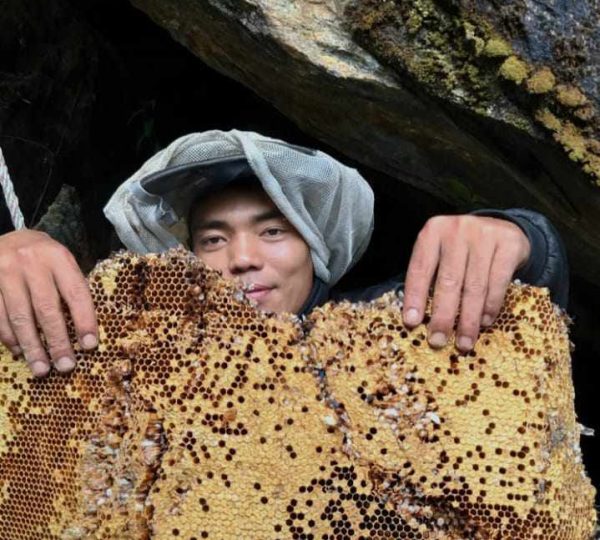
These Himalayan Honey bees are also known as the world’s largest bees and make their honey’s out of the wild Rhododendron flowers that grow in the forest. Honey is also considered to have medicinal qualities and used for special purposes.
Honey Hunting Tour in Nepal (Quest of the Wild Honey Hunting)
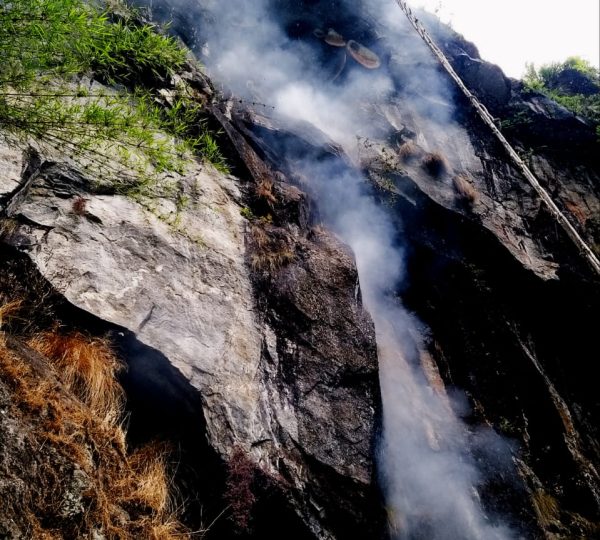
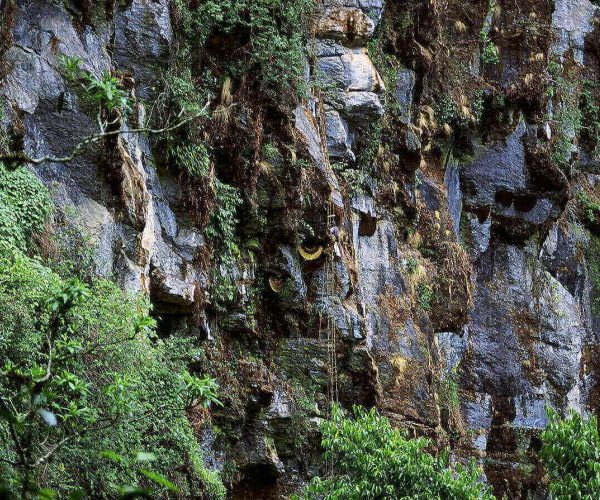
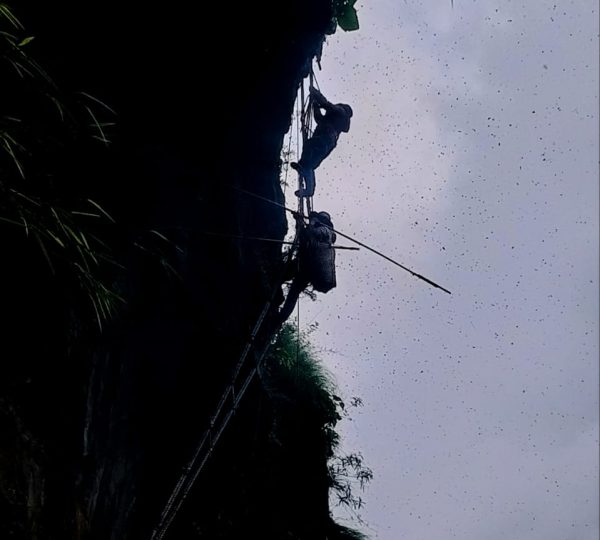
Honey Hunting Tour in Nepal begins from the village of Ghan Pokhari and Ghale Gaun homestay to the local Gurung tribe. The wild honey bees make their hives high on the rocks near a waterfall, which can only be approached by climbing with the help of bamboo ladders and ropes.
The lead honey hunter will collect the honey in his bucket and passes it down to other members. Honey hunting is a part of livelihood for the people of this region and is a very important aspect of their culture. Besides that, you will also experience the culture, village life, and beautiful scene of the green hills and Himalayas of Nepal during this tour.
Experience a mesmerizing honey-Nepal Honey Hunting Tour where you can watch the Indigenous Gurung community collect wild honey from cliffs against the backdrop of the beautiful Himalayas. This adventure offers an insight into local culture and traditions. As well as taking a walk to admire the scenery and soak in the pure nature Perfect for adventure seekers and culture lovers.
Why Honey Hunting Tour in Nepal?
Being a unique tour, honey hunting tour in Nepal is an ancient traditions meeting adrenaline-pumping adventure! This one-of-a-kind journey takes you deep into the Himalayan cliffs of Kaski, Lamjung, or Dolpa, where the indigenous Gurung and Magar communities practice centuries-old honey hunting techniques. Watch in awe as skilled hunters descend 300-foot cliffs using handmade bamboo ladders and ropes to harvest wild Himalayan honey from the world’s largest honeybees (Apis laboriosa). This UNESCO-listed intangible cultural heritage activity is not just a spectacle—it’s a test of courage, skill, and tradition, offering travelers an unforgettable glimpse into Nepal’s rural life.
Extended Experience
Pair your tour with a home-stay in a Gurung village, learning to cook with Himalayan honey or trekking to nearby viewpoints like Annapurna Base Camp. Perfect for culture lovers, adventure seekers, and documentary filmmakers!
Tour Plan
Welcome to the land of Himalaya at 1333m. You will be warmly welcomed by the mountains and our company representative will be standing with your name card at the arrival terminal with a beautiful smile. You will be escorted to your hotel and you will be provided with all the detailed information about your Honey Hunting Tour in Nepal program. If your arrival is late in the evening then there is always another day to provide you information about your tour.
We explore the Pashupatinath Temple, Bouddhanath Stupa, Swoyambhunath Stupa (Monkey Temple) and Patan Durbar square etc which are enlisted in UNESCO world heritage sites.
Drive along the Prithvi highway across beautiful villages, colorful peoples, landscapes, all we drive along the River Valley.
Ascend all the way to Ghalagaun, The trail passes through the beautiful forest, you may get chances to see some of the wildlife’s. This area holds a tremendous potentiality for bird watching. It really can be a birdwatcher’s paradise.
This place provides you with stunning views of numerous Mountains, This place itself is located at beautiful mountain with Gurung community where you are offered to observe their culture & traditions.
Today your trail descend to Bhujung and followed by ascend to Passgaun. It will comparatively be counted one of the hard trek today.
Thoroughly ascends gently through jungles, beautiful waterfalls and the chirping of the birds. Again after few hours will be time to descend steep downwards. The intense heat, humidity and the direct sunlight striking can really be unbearable.
Trail descends about 1150 Meters & drives approximately 3 hrs by jeep through unpaved Road to Pokhara. Overnight at Hotel in Pokhara
Early morning visit Sarangkot (1592m) to enjoy the stunning sunrise view over Himalaya. Back to hotel for breakfast, take some rest then go for boating in Fewa Lake, visit Barahi temple, World Peace Stupa, Mahendra cave, Davids' falls. Overnight stay at Hotel in Pokhara
Today, you fly back to Kathmandu after your long mountain journey. The early morning flight drops us in Kathmandu or alternatively you can use surface transport. You can rest and relax throughout the day at hotel. If you get interested to take some gifts home from Nepal for friends and relatives, you can visit to some nearby shops or venture out in Thamel for typical Nepalese goods.
Our Honey Hunting Tour in Nepal comes to an end today. The Great Nepal representative will escort you to the airport approximately 3 hours before your scheduled flight or to the stop where your next destination begins.
Included
- All arrival and departure transfer services to and from Airport both Domestic and International with ( A/C or non A/C Vehicles) as per itinerary.
- Assistance at the International airport by Great Nepal’s representative while arriving and departing.
- All accommodation with BB plans on twin sharing basis.
- Necessary staffs including experienced guides during the tour.
- 3 meals a day (Breakfasts, Lunch, and Dinners with tea or coffee) along with available accommodation at Hotel/ Lodge/ Guest Houses at the village in twin sharing basis.
- First Aid medical kits for the Group and the staffs.
- Our service charge and Government Taxes levied in Nepal.
- Farewell Dinner in a typical Nepali restaurant with domestic culture show in Kathmandu before departure
Excluded
- Any packed food/snacks, aerated drinks, energy drinks, mineral water, alcohol, cigarettes, chocolates, nutria-bars or any other food consumed beyond the prescribed breakfast, lunch and dinner, etc.
- Items of personal nature, Laundry Expenses, Tips.
- Expenses incurred towards usage of landlines, mobiles, walkie-talkies or satellite phone And Internet expenses
- Clothing, Packing Items or Bags, Personal Medical Kit, Camera/Video Fees or Personal Trekking Gears
- Any extra expenses arising out of various/unforeseen situations like natural calamities, landslides, political disturbances, strikes, changes in Government regulations, etc that is beyond our control.
- Transportation is not on disposal basis. It is strictly as per the itinerary.
- Any extra distance traveled will be charged extra.
- Any additional staff other than specified.
- Insurance (Compulsary)
- Tips, gifts, souvenirs.
- Any other item not included in cost includes section
- Airfare of international flights.
- Nepal entry visa fee
- Any extra services or products or offers or activities which are not mentioned in the itinerary
Location
Find a route from your location
Frequently Asked Question (FAQ)
What Permits Do I Need for Trekking in Nepal?
Most trek require:
- TIMS Card (Trekkers’ Information Management System).
- National Park/Conservation Area Permits (e.g., Sagarmatha or Annapurna permits).
- Restricted Area Permits (for Upper Mustang, Manaslu, etc.).
Great Nepal Treks handles all permit arrangements for hassle-free travel.
Is Travel Insurance Mandatory for Trekking in Nepal?
Yes! Insurance covering emergency helicopter evacuation (up to 6,000m) and high-altitude medical expenses is essential. Many standard policies exclude altitudes above 4,000m, so verify coverage before booking.
What Safety Measures Does Great Nepal Treks Provide?
We prioritize safety with:
- Pulse oximeters & daily health checks.
- Emergency oxygen and portable hyperbaric chambers on high-altitude climbs.
- Helicopter evacuation protocols and satellite communication in remote areas.
- Small groups for better guide-to-client attention.
Can Beginners Trek in Nepal?
Absolutely! Beginner-friendly treks include:
- Ghorepani Poon Hill (3-5 days, easy-moderate).
- Langtang Valley (7-10 days, moderate).
- Everest View Trek (short, low-altitude).
Great Nepal Treks customizes itineraries for all skill levels.
Why find us and get our tour?
Lorem ipsum dolor sit amet, utinam munere antiopam vel ad. Qui eros iusto te. Nec ad feugiat honestatis. Quo illum detraxit an. Ius eius quodsi molestiae at, nostrum definitiones his cu. Discere referrentur mea id, an pri novum possim deterruisset. Eum oratio reprehendunt cu. Nec te quem assum postea.
How much price about tour & travels?
Lorem ipsum dolor sit amet, utinam munere antiopam vel ad. Qui eros iusto te. Nec ad feugiat honestatis. Quo illum detraxit an. Ius eius quodsi molestiae at, nostrum definitiones his cu. Discere referrentur mea id, an pri novum possim deterruisset. Eum oratio reprehendunt cu. Nec te quem assum postea.
Best experience travel agency?
Lorem ipsum dolor sit amet, utinam munere antiopam vel ad. Qui eros iusto te. Nec ad feugiat honestatis. Quo illum detraxit an. Ius eius quodsi molestiae at, nostrum definitiones his cu. Discere referrentur mea id, an pri novum possim deterruisset. Eum oratio reprehendunt cu. Nec te quem assum postea.
What is Village Tourism and Homestay Trekking in Nepal?
Village tourism and homestay trekking in Nepal offer travelers a deeply immersive cultural experience by allowing them to stay with local families in traditional villages. Unlike conventional hotel stays, these experiences provide an authentic glimpse into rural Nepali life, where guests participate in daily activities such as farming, cooking traditional meals, and even joining local festivals. Popular destinations include the Gurung villages of Ghandruk and Sikles near Pokhara, where visitors can learn about indigenous traditions, music, and dance. In the Tsum Valley, a remote Himalayan region influenced by Tibetan Buddhism, homestays allow trekkers to engage with monks, explore ancient monasteries, and witness unique customs. Meanwhile, in the Lumbini region, Tharu homestays showcase indigenous crafts, jungle walks, and organic farming. These treks are ideal for travelers seeking meaningful connections with local communities while enjoying Nepal’s stunning landscapes at a slower, more sustainable pace.
How Safe and Comfortable Are Homestays in Nepal?
Homestays in Nepal are generally very safe, with welcoming hosts who take pride in sharing their culture. Accommodations are basic but comfortable, often featuring clean beds, warm blankets, and shared bathrooms (some with hot showers). Meals are freshly prepared using local ingredients, with staples like dal bhat (rice and lentils), homemade pickles, and seasonal vegetables. Since many villages are off the beaten path, amenities like Wi-Fi and electricity may be limited, so packing essentials like a power bank and toiletries is recommended. Culturally, guests are expected to dress modestly, remove shoes before entering homes, and ask permission before taking photos of religious ceremonies. For those concerned about health, sticking to cooked food and bottled water minimizes risks. Reputable homestay programs work closely with local families to ensure hygiene and security, making this a rewarding and worry-free experience.
What Exactly is a Honey Hunting Tour in Nepal?
A honey hunting tour in Nepal is a thrilling adventure that showcases one of the world’s most ancient and dangerous traditions—harvesting wild honey from steep Himalayan cliffs. Indigenous Gurung and Magar communities have practiced this skill for generations, using handmade bamboo ladders, ropes, and smoke torches to collect honey from the hives of the giant Himalayan honeybee (Apis laboriosa). These expeditions take place in remote regions like Bhujung (Lamjung), Rukum, and Dolpa, where hunters perform rituals before scaling cliffs up to 300 feet high to extract the honeycombs. Visitors witness this breathtaking spectacle, often participating in pre-hunt ceremonies led by village shamans to ensure a safe harvest. Due to the seasonal nature of honey collection, tours are only available twice a year—April-May (spring harvest) and October-November (autumn harvest)—when the hives are fullest. This experience is perfect for adventure seekers, photographers, and cultural enthusiasts looking to document a vanishing tradition.
Is Honey Hunting Ethical and Sustainable?
Ethical honey hunting tours in Nepal prioritize sustainability and cultural preservation. Responsible operators ensure that hunters follow traditional methods, leaving enough honey for the bees to survive and reproduce. Unlike exploitative “staged” hunts designed for tourists, authentic tours support local livelihoods by compensating hunters fairly and involving them in eco-tourism initiatives. Some organizations also reinvest profits into community projects, such as schools and health clinics. Travelers should avoid operators that over-commercialize the practice or disturb hives excessively, as this threatens both the bees and the tradition. By choosing ethical tours, visitors help preserve this UNESCO-recognized intangible heritage while ensuring that honey hunting remains a viable cultural practice for future generations.
How Physically Demanding Are Homestay Treks in Nepal?
Homestay treks in Nepal are significantly less strenuous than high-altitude expeditions like Everest Base Camp or Annapurna Circuit. Designed for cultural immersion rather than endurance, these treks typically involve 3-5 hours of walking per day on well-trodden village trails, with minimal elevation gain. Routes such as the Ghandruk Homestay Trek or the Panauti Cultural Trek are accessible to beginners, seniors, and even families with children. Since most homestays are located below 3,000 meters, altitude sickness is rarely a concern. However, some remote villages may require light uphill hiking, so a basic level of fitness is beneficial. The focus is on interaction rather than exertion—guests can take breaks, explore at their own pace, and engage in activities like farming, weaving, or cooking classes. For those seeking a relaxed yet enriching Himalayan experience without the physical demands of high-altitude trekking, homestay treks are an ideal choice.
Why Should I Choose Nepal for Trekking?
Nepal is a paradise for trekkers, offering some of the world’s most iconic trails, from the legendary Everest Base Camp and Annapurna Circuit to remote gems like Upper Mustang and Kanchenjunga. The country’s diverse landscapes—lush valleys, high-altitude deserts, and towering Himalayan peaks—provide unmatched adventure opportunities. Nepal is also culturally rich, with ancient monasteries, traditional villages, and warm Sherpa hospitality. Whether you seek challenging expeditions or scenic tea-house treks, Nepal caters to all levels of experience, making it a top destination for hikers, climbers, and cultural explorers alike.
What Makes Great Nepal Treks Different from Other Companies?
Great Nepal Treks stands out for its personalized service, expert local guides, and commitment to safety and sustainability. Unlike larger commercial operators, we specialize in small-group treks (max 10 people), ensuring individual attention and a more immersive experience. Our 1:1 Sherpa support on high-altitude climbs, luxury base camp setups (heated tents, gourmet meals), and 95% summit success rate on Everest expeditions make us a trusted choice. Additionally, we prioritize eco-friendly practices, support local communities, and provide transparent pricing—no hidden costs.
When is the Best Time to Trek in Nepal?
The optimal trekking seasons in Nepal are spring (March-May) and autumn (September-November). Spring brings blooming rhododendrons and stable weather, ideal for Everest and Annapurna treks. Autumn offers crystal-clear skies and post-monsoon freshness, perfect for high-altitude climbs and cultural tours. Winter (December-February) is colder but great for lower-altitude treks, while monsoon (June-August) is best avoided due to rain and landslides, except in rain-shadow regions like Upper Mustang.
Do I Need a Guide for Trekking in Nepal?
While some popular routes (e.g., Poon Hill, Langtang) allow independent trekking, hiring a guide is highly recommended for safety, navigation, and cultural insights. For restricted areas (Upper Mustang, Manaslu), a guide is mandatory. Great Nepal Treks provides certified guides with wilderness first-aid training, ensuring you avoid altitude sickness, route mistakes, and language barriers with locals.
How Do I Prepare for High-Altitude Trekking?
Preparation is key for high-altitude treks like Everest Base Camp or Dhaulagiri Circuit. Focus on:
- Cardio/endurance training (hiking with a loaded backpack 3x/week).
- Altitude acclimatization (choose itineraries with rest days).
- Packing essentials (layered clothing, broken-in boots, Diamox for altitude).
Great Nepal Treks offers pre-trek training guides and gear lists to help you prepare.
Travel For Cause
At Great Nepal Trek, your adventure directly fuels positive change. We are proud to allocate 10% from every tour booked with us to our Initiative Inclusion Development Forum Nepal. This dedicated commitment channels vital funds directly into supporting education and healthcare for underprivileged children from the Himalayan communities we explore. By trekking with us, you're not just witnessing the majestic mountains—you're actively helping to build a brighter, healthier future for its next generation.
What makes us different?
Changing Community Through Tourism
Travel for Cause - 10% of every booking amount goes to our CSR initiative, Inclusive Women Development Forum (IWDFN), educating and provide lively hood training to the women and children from Under preveliged society in Rural Nepal.
Sustainable Tourism
At Great Nepal Treks, we believe adventure should protect and empower. Our treks are designed to minimize environmental impact (zero-waste policies, solar-powered teahouses) and maximize community benefits—hiring local guides, sourcing supplies from village cooperatives, and funding education projects. When you travel with us, your journey supports conservation and cultural preservation across the Himalayas.
Related Information
Review Scores
2 thoughts on “Honey Hunting Tour In Nepal – 11 Days”
Add a Comment Cancel reply
Related Tours
- Quality5
- Location4.75
- Amenities4.75
- Services5
- Price5


4.4
It is a great place to shop not too far from New York. We took the bus from Port Authority and traveled through the countryside to get there.
4.4
This is the best tour on the east coast! It was amazing how many places we visited and what great memories we made!