“Climbing Everest Expedition is a process, not an event. A lot of it is tedious. Very little of it is glorious when you are there- that magically changes upon return. Much of the satisfaction and feeling of achievement, when it gets down to it, is very private — Dan Holle
A climb of Mt. Everest is not a mere climb. It is a show that goes on until 8848m in which you see two fighters; your will and the adversaries. It is up to you which side you are to take. Take the side of the will and expedite yourself or succumb to the adversaries and stop. The journey starts with a mountain flight from Lukla.
Great Nepal Treks & Expedition offers its clients a world-class service from Base Camp to high camps to approach for Everest Expedition (South Col). With all-inclusive price gives you a mere chance to focus only on your Expedition. For us Safety comes First, such as we operate with well-trained team of Climbing guides with years of experience. This is a serious climb and mistakes can have serious consequences. This is why we focus extensively on safety and accident prevention for both clients and guides on our Everest expedition. No expedition is without risk and certainly not one to the highest Mountain in the world. However, we implement rigorous safety standards to minimize the risk. We’d also like to highlight that our guides and staff are all employed under ethical standards.
For Everest Expedition, all group members will be fully trained in the appropriate techniques required to negotiate any fixed ropes using jumars, belay devices and prussiks for going up and down the mountain and we will also spend time looking at how to negotiate up, down and across ladders. All members will also be made aware of how to use the oxygen systems and we will discuss the benefits and drawbacks of various flow rates and protocols.
South Col Route Camps:
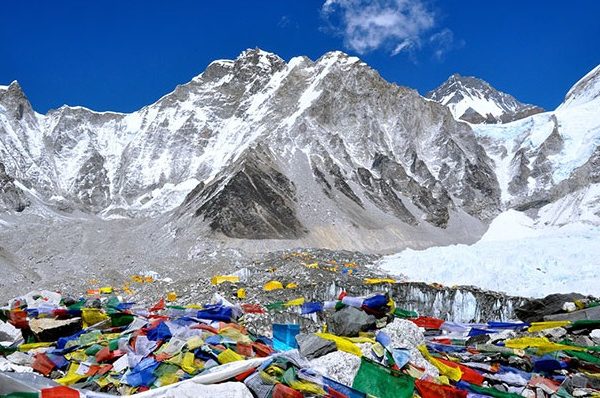
Basecamp: 17,060’/5200m
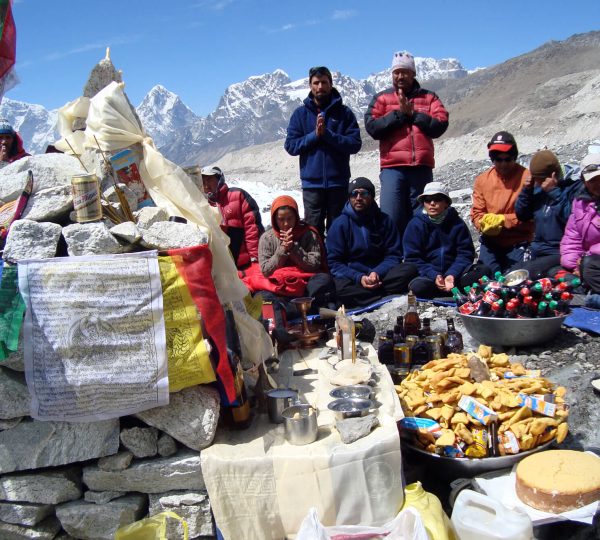
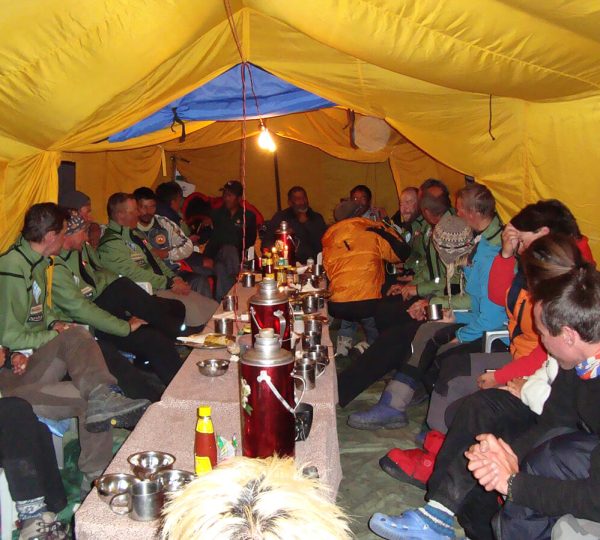
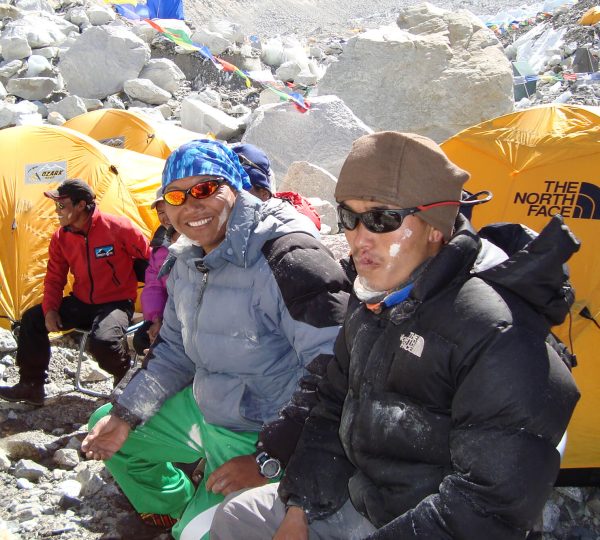
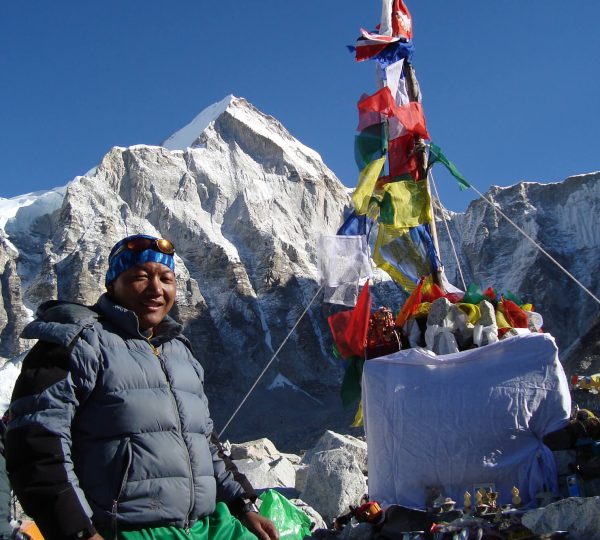
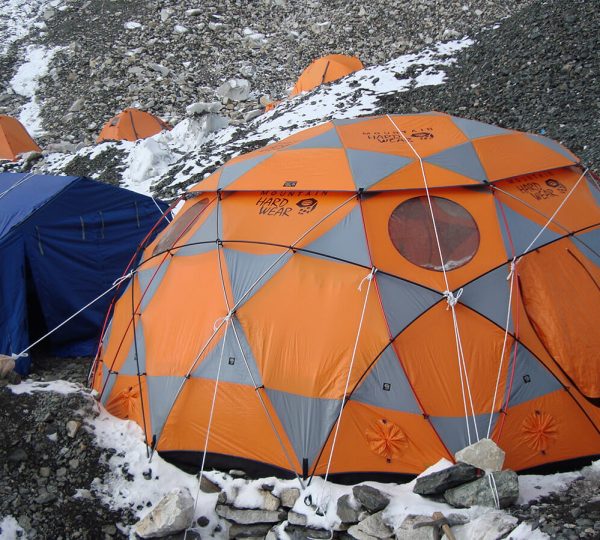
Everest Base Camp, located on a moving glacier at 5,200 meters from sea level where you will spend up to 45 days. Conditions in base camp will remain consistent during the climbing period and will consist of shifting and moving tents and platforms as the ice moves and melts. The area is harsh, but beautiful surrounded by Pumori, Lola, Nuptse, Nutse and the Khumbu Icefall with warm mornings and occasional afternoon snow squalls. With so many expedition teams at Base Camp, it looks and feels like a small village in the Himalaya.
Camp One (C1): 19,357’/5900m
Reaching Camp One is the most technical part of a south side climb since it crosses the Khumbu Icefall. The Icefall is 2,000 feet of moving ice with deep crevasses, towering ice sera’s and avalanches off Everest’s west shoulder. During the climbing period, we attempt to spend only 2 nights at Camp I for acclimation.
Camp Two (C2): 20,998’/6400m
Camp Two is located in a lateral moraine at the bottom of the west ridge. It is a very safe and sheltered location with tremendous views of Lhotse. All companies set-up their main climbing camp for the duration of the climbing period here with tents for individual climbers along with kitchen and dining tents. Camp 2 is the main acclimatization camp and the base for camp 3 acclimatization climbing and the final summit attempt. This is the camp, where you are spending the most time after base camp.
Camp Three (C3): 23,294’/7100m
Climbing the Lhotse Face to Camp Three is often difficult since almost all climbers are feeling the effects of high altitude and are not yet using supplemental oxygen. The Lhotse Face is steep and the ice is hard, but the route is fixed with rope and the angles can range from 30 to 45 degrees. It is a long climb to C3 but is required for acclimatization prior to a summit bid. You will spend 2 nights at camp three for acclimatization and the summit push.
Camp Four (South Col): 26,300’/8000m
Welcome to the moon. This is a flat area covered with loose rock and surrounded by Everest to the north and Lhotse on the south. Located at the South Col is the last camp; it is easily accessible by a majority of climbers without supplementary oxygen. There are two rock sections to navigate before camp 4: the Yellow Band an inter-layer of marble, phyllite and semi schist rock and the Geneva Spur, an anvil shaped rib of black rock. Both of these areas are set-up with fixed ropes.
Summit: 29,029′/8848m
The last section from the South Col to the summit takes 09-13 hours to navigate. There is the Balcony, the Hillary Step, and the south summit before reaching the central summit. The route to the true summit is a moderate snow slope and while tired, adrenaline keeps most climbers moving at this point.