
Buddhist Pilgrimage Tour in Nepal -10 Days
Duration
Tour Type
Explore Tours
Country
Nepal
Duration
10 Days
Trip Grade
Easy
Best Season
Throughout the year
Altitude
1445m
Group Size
2-16 Pax
Accomodation
Hotel
Co-ordinates
N/A
Activity
N/A
Trek Style
N/A
Transportation
Kathmandu
Culture
N/A
Himalayan Sight
N/A
Airport
Domestic
Range
N/A
Buddhist Pilgrimage Tour in Nepal, takes you through an awful spiritual journey, which includes the birthplace of Lord Buddha. This sacred journey, expertly crafted by Great Nepal Treks, begins in the cultural heart of Kathmandu and takes you on a spiritual path to Lumbini, a UNESCO World Heritage Site and the most important pilgrimage destination for Buddhists worldwide.
More than just a tour, this experience offers a deep insight into the life of Buddha, his priceless teachings, and the rich traditions that have flourished in Nepal for centuries. From ancient stupas and monasteries to serene meditation sessions, you will walk in the footsteps of the Enlightened One and explore the archaeological wonders that stand as a testament to mankind’s spiritual triumph.
The Spiritual Journey Through the Buddhist Pilgrimage Tour in Nepal
This 10-day Buddhist Pilgrimage Tour itinerary is a holistic exploration of Nepal’s profound Buddhist heritage. Your spiritual journey commences in the Kathmandu Valley, visiting iconic sites like the great Boudhanath Stupa and the self-existent Swayambhunath, before traveling to the sacred Lumbini Garden.
In Lumbini, you will pay homage at the Maya Devi Temple, the exact birthplace of Buddha, and explore the tranquil monastic zone built by Buddhist communities from around the globe. The pilgrimage extends to the ancient Sakya Kingdom of Tilaurakot and the revered meditation caves of Pharping, where Guru Rinpoche attained enlightenment. Each day is designed to offer both historical context and personal moments of reflection, making this a transformative journey of a lifetime.
The Kathmandu Valley’s Sacred Sites for Buddhist Pilgrimage Tour
Before venturing to Lumbini, your 10-day Buddhist tour immerses you in the living heritage of the Kathmandu Valley. In Patan, the “City of Fine Arts,” discover a beautiful harmony of Buddhist monuments and Hindu temples. The experience is further enriched by visiting the powerful Boudhanath Stupa, a wish-fulfilling center of Tibetan
Buddhism, and exploring the ancient caves of Pharping, where Mahasiddhas like Naropa and Tilopa once meditated. The tour also includes the awe-inspiring Swayambhunath Stupa, known as the “Self-Created,” which offers panoramic views and is considered the most powerful shrine in the Himalayas. These sites provide a profound introduction to the diverse tapestry of Buddhist practice and history in Nepal.
Lumbini – The Heart of the Pilgrimage
Buddhist Pilgrimage Tour takes us at the heart of your 10-day Nepal pilgrimage lies Lumbini, the sacred garden where Queen Maya Devi gave birth to Siddhartha Gautama, the future Buddha. This spiritual sojourn dedicates two full days to exploring over 62 archaeological sites within the Lumbini region. Witness the famous Ashoka Pillar, which marks the exact birthplace, and explore the ruins of the ancient Kapilavastu kingdom at Tilaurakot, where Prince Siddhartha spent 29 years.
A highlight is a visit to the Ramgram Stupa, the only stupa in the world that still contains original, unopened Buddha relics. With a meditation class in a serene monastery, this tour component connects you directly to the peaceful essence and historical depth of Buddhism.
While this is a pilgrimage tour, on one hand, on the other, it also displays the great archaeological triumph of mankind. There are 62 archaeological sites in the Lumbini region which show different events in Buddha’s life. Buddhist Pilgrimage Tour include a visit to Lumbini, Pharping, Dhulikhel, and Namobuddha which collectively show the vastness of Buddhism along with its traditions and cultures.
Nepal has a very strong Buddhist background and has played a very important role in spreading Buddhism to Tibet. Buddha was born in Lumbini and according to Tripitaka, he visited his father’s kingdom and converted his family and clan to Buddhism. Buddhist Pilgrimage Tours give you an insight into the Buddhist Pilgrimage, the life of Buddha, his place of enlightenment, and his priceless teachings.
Tour Plan
You will be welcomed by a Great Nepal Representative at the airport. From there, you will be transferred to the hotel. Freshen up and meet the representatives once again to get the brief about the Buddhist Pilgrimage Tour itinerary. In your free time, you can stroll around the city of Kathmandu. Overnight stay at hotel in Kathmandu.
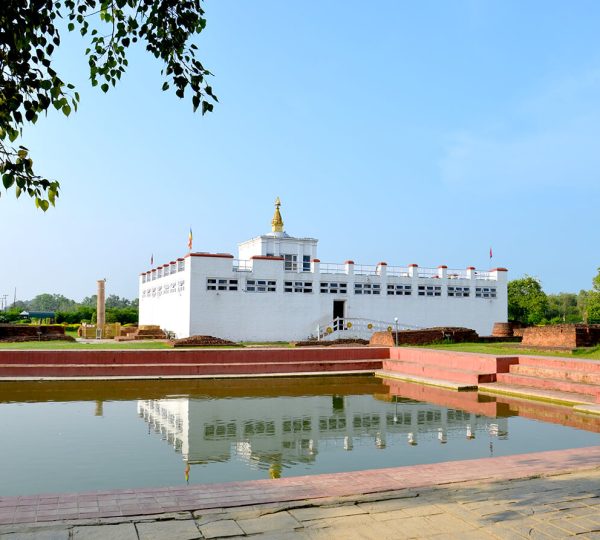
Drive to Lumbini (285 Kms/6 hours). Lumbini, situated in southern Nepal is one of the world’s most important spiritual site, home to the historic birthplace of the Lord Buddha, apostle of compassion. Lumbini attracts Buddhist devotees around the world to pay homage at the sacred place where the “Enlightened One’ was born. You can witness a famous landmark “Ashoka Pillar” which was made by the Great Emperor Ashoka, who later converted to Buddhism. Overnight stay at Hotel in Lumbini.
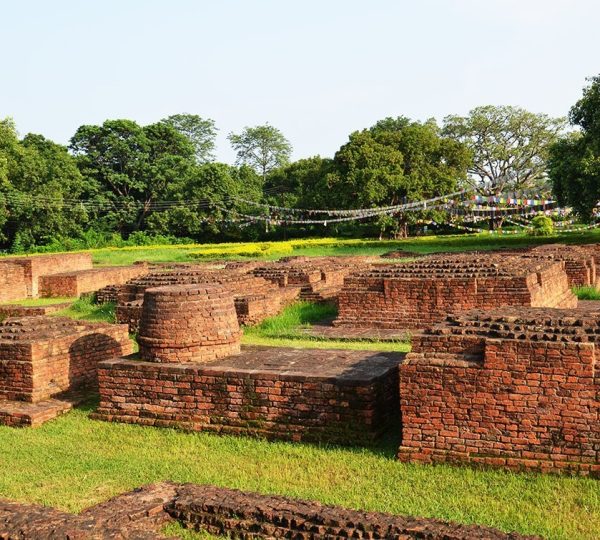
After breakfast we will start exploring the real essence of Lumbini at a glance including the most important sites according to Buddhism consists of Tilaurakot, Ramgram Stupa, Gothihawa, Kudan, Niglihawa, Sagarhawa. Starting from Tilaurakot, an ancient capital of Sakya Kingdom (Kapilavastu) situated 27 Km from Lumbini, where Siddhartha lived his early 29 years as a prince.
Ruins of Tilaurakot palace has been discovered 27 km west of Lumbini. Along with other structures, one can still observe the remains of the eastern gate through which Prince Siddhartha took great renunciation. Later visit Ramgram Stupa , the only Stupa which still retains Buddha relic in its intact form. When Buddha attained ‘Mahaparinirvana’, his body was cremated. The mortal relic was divided among the 8 claimants.
While other Stupas were later excavated by Emperor Ashoka or distorted in conflict, the relic remained intact until the date in the Ramagram Stupa. Kudan (Nigrodharma) has the stupa remains, where King Suddhodhana (father of Lord Buddha) met Lord Buddha after he attained enlightenment. Gotihawa was ancient Khemavati the birth place of Krakucchanda Buddha. Niglihawa is the birthplace of Kanakmuni Buddha. Emperor Ashoka visited both places and erected pillars with inscriptions. The pillars are broken in both places. Sagarhawa is the place where Sakyas were massacred by King Virudhaka out of vengeance. About 70,000 Sakyas were killed in the massacre. The sakyas didn’t strike back as they believed in nonviolence. Overnight stay at Hotel in Lumbini.
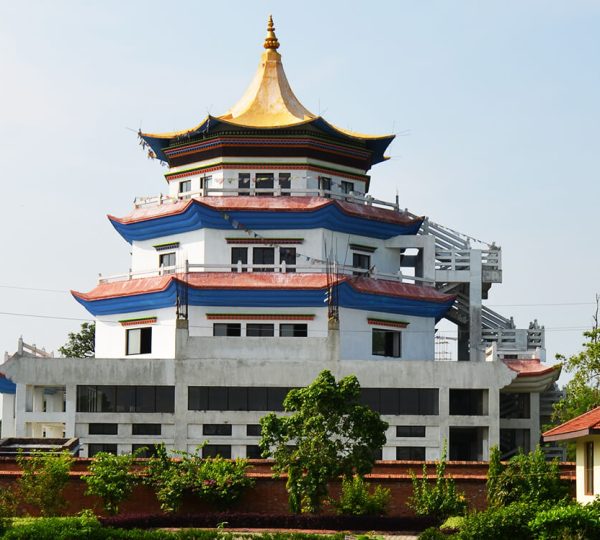
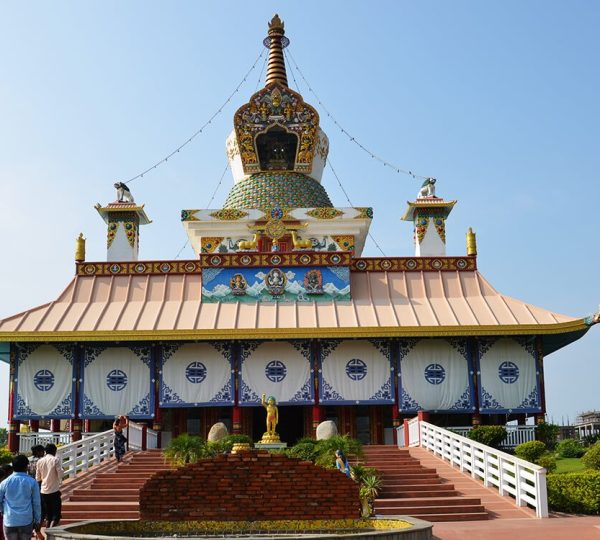
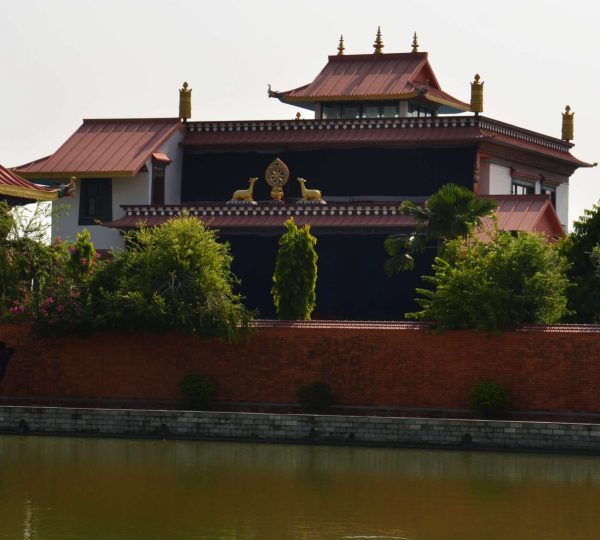
Maya Devi Temple is set in the middle of the large 4 km by 2.5 km park grounds known as the Lumbini Development Zone. Designed by Japanese architect Kenzo Tange in 1978, it’s still a work in progress that comprises landscaped lakes and numerous Monasteries that have been or are being constructed by Buddhist communities from around the world. The Mayadevi temple houses the marker stone and foundation of ancient temple resembling the exact birthplace of Lord Buddha. Monastic zone is developed into World Buddhist center with Monasteries constructed by Buddhist communities from different countries. We will have a meditation class in Monastery inside Lumbini Garden.
Later drive to Pokhara (195 Kms/6 Hrs). Pokhara, the center of adventure in Nepal is located in the mid western Nepal. The valley is filled with lush vegetation, swift flowing rivers and dotted with clear, shimmering lakes. It is one of the major towns of Nepal, providing a perfect gateway from the chaotic life in the cities. Pokhara is blessed with the backdrop of one of the most dramatic sceneries in the world. Overnight stay at Hotel in Pokhara.
From Lakeside start your half day sightseeing tour of Pokhara city consists of David Falls, Gupteswor Cave, Tibetan Refugee Camp. Overnight stay at Hotel in Pokhara.
After breakfast drive to Dhulikhel via Kathmandu 235 Kms/7 Hrs approx. Dhulikhel is a typical Newari town with nearby Tamang villages. It is situated 30 km. east of Kathmandu on the side of Arniko Highway on the way towards Tibet. Dhulikhel is popular for its natural beauty and ancient traditions. The Himalayan ranges from the twin crest of Mt. Langtang in the west to the Mt. Everest in the east can be clearly viewed in a clear day. It is ideal place for a bird eye view of sunrise and sunset over snow-capped peaks and it is different from any other place. One can say Dhulikhel is where the mountains speak. Overnight stay at Hotel in Dhulikhel.
Located on slightly elevated land, Namo Buddha is a pleasant and out-of-the way place. The landscape below resembles an eight-petaled lotus, and the sky above has the form of a wheel with nine spokes. In this wide panorama, some mountains glisten white like a conch shell or a crystal. After Great Buddha Being offered his body in generosity to the tigress, people found it difficult to travel through the region for fear of all wild animals, so they developed the practice of reciting “Namo Buddhaya” (“I take refuge in the Buddha”) to dispel their anxiety. To this day, the local inhabitants call the area Namo Buddha. Meditate in Monastery and witness the Lama children and their lifestyle in Monastery.
Afterwards drive to Kathmandu. On the way visit Bhaktapur (City of Devotees), locally known as Bhadgaon and Khowpa (in Newari). This ancient city is also known as “City of culture”, “Living heritage” and “Nepal’s Cultural Capital. A visit to Bhaktapur is a cultural sightseeing where we can also enjoy seeing the traditional people and their lifestyle. The major attractions of Bhaktapur Durbar Square are Taleju Temple, Nyatapole Temple, most famous pagoda of Nepal, dedicated to Siddhi Laxmi, the tantric Goddess of supreme power and success, Big bell, 55 windows Palace, built by Yakshya Malla, considered with woodcarving, Yaksheswor Mahadev Temple, built by Yakshya Malla in 15th century.
Other attractions of Bhaktapur Durbar Square are Chyasin Mandap, Siddhi Laxmi Temple (Fasi dega), Vatsala Temple, dedicated to a mother Goddess and known for its dog barking bell, Bhandarkhal Complex, Chatu Brahma Mahavihar, Indrayeni Temple, Balakhu Ganesh Temple, Tripura Sundari Temple and the Char Dham, the four greatest hindu pilgrimage sites, Bhairavnath Temple, dedicated to Bhairav, the God of terror and death. Overnight stay at Hotel in Kathmandu.
After breakfast in the hotel; you will explore the fascinating city of Kathmandu consists of Pashupatinath Temple, Boudhanath Stupa and Patan City. We firstly go for one of the biggest in the world of its kind and the popular Hindu pilgrimage site, Pashupatinath Temple, which lies 6 Km from central Kathmandu. Buddhist people worships Pashupati as Bodhisatva Avalokiteswara.
Both Avalokiteswara and Siva are known as Lokeswar, Lord of the World. For them Pashupati is well-known from their tantric texts on sacred geography as an Upachandoha power place which is counted amongst the Twenty-four Pithasthanas of the principal Mandala of sacred tantric sites of the Sub-continent. Explore Tilopa and Naropa’s Caves: Pashupatinath is also the location of the very sacred meditation caves of Two Buddhist Mahasiddhas, Naropa and Tilopa, Sadhu-Yogis of the tenth century, and progenitors of a lineage of Buddhist Tantra that became the Tibetan Kagyu School of the Karmapas. Thise was where Naropa engaged in Vajrayogini retreat and gained visions of her – from here, the teachings were passed down to local Nepalese disciples, and from there, through the generations, it has gone all over the world. Tilopa, his Guru, also meditated in the cave just next to it.
Bouddhanath Stupa lies about 6 km east of downtown Kathmandu and is the largest Stupa in the Valley and one of the largest in the world. It looms 36 meters high and presents one of the most fascinating specimens of Stupa design with hundreds of prayer wheels and 108 small images of Buddha all around. Just like the Swayambhunath, the Stupa here is too has four sides with the watchful eyes of Lord Buddha. It’s also called wish-fulfilling because of the belief that, it is so powerful that the wishes of anybody who makes prayers to the Stupa are fulfilled. Especially when you see the Stupa for the very first time, whatever you pray for, it will succeed. Boudhanath Stupa is known as the mind nature of Buddhas of three time-past, present and the future. This Stupa is also called the Stupa of enlightenment or Bodhi Stupa.
Patan City (City of Fine Arts), is full of Buddhist Monuments and Hindu Temples with fine bronze gateways, Guardian Deities and wonderful carvings. Krishna Mandir, which is one of the grandeur of the square, was built in 1637 by the king Siddhinarsingh Malla. The entire temple is constructed from the stone. Noted for its craftsmen and metal workers, it is known as the city of fine arts or city of artists. The diversity of the Medieval culture that allowed both Hinduism and Buddhism to flourish has left a rich legacy of impressive sightseeing in this city for today’s visitors. Krishna Mandir, Bhimsen Temple, Hiranya Varna Maha Bihar are just a few among the temples offering you an ecstasy of paintings, wood and metal carvings.
Pharping (Padmasambhava’s Asura Cave): However more specifically it is referring to two caves in which Guru Rinpoche is said to have meditated. One is located on the hillside behind and above Pharping, commonly known as Azura Cave or the ‘Upper cave of Yanglesho’. The other one is located slightly below Pharping, about a five minute walk outside of town and known as ‘Lower cave of Yanglesho’ or simply Yanglesho.
Pharping has not only been blessed by Guru Rinpoche, it has been also visited by many great beings, like long term resident Marpa Lotsawa, who practiced, made offerings, Ganachakra Feasts, aspiration prayers and so on. Padmasambhava also known as Guru Rinpoche is said to have attained enlightenment here. Thus Pharping (Yanglesho) is considered to be as important as Bodhgaya for practitioners of Tibetan Buddhism. You will have a meditation secession in the Monastery.
Swoyambhu Nath Stupa: The Great Stupa of Swayambhu stands on a hill to the west of Kathmandu. Its name means “The Self-created, Self-existent Buddha”. The myth of its origin is also the myth of the primordial Buddha’s enlightenment, it is the story of the origin and spread of Buddhism in Nepal and the origin myth of the Valley. This most sacred power place has always been the most important power place for Valley Buddhists and for pilgrims of all Buddhist persuasions from all over the world. It is considered to be the most powerful shrine in the Himalayas.
At the top of the eastern stairway is the great Vajra set upon a drum that has the Dharmadhatu Mandala inscribed upon its gilt copper top. It is said that this drum covered a well that reflected images of the beloved dead with such flattery that wives and husbands would throw themselves in and drown. Another story has it that the Mandala covers a pit to the hells and the realms of the hungry ghosts. The drum plinth is decorated with the twelve animals of the zodiac.
Kathmandu Durbar Square: This complex of palaces, courtyards and temples like Hanuman Dhoka Palace, Kumari Ghar (Abode of the Living Goddess), Taleju temple, built between the 12th and 18th centuries, used to be the seat of the ancient Malla Kings of Kathmandu. An intriguing piece here is the 17h -century stone inscription set into the wall of the palace with writings in 15 languages. The Durbar Square, protected as a UNESCO World Heritage Site, is the social, religious and urban focal point of the city. Even to date, all the major state and social ceremonies, including the solemnization of coronations are performed in one of the courtyards in this complex. There are also museums inside the palace building.
Your Buddhist Pilgrimage Tour journey in Nepal comes to an end today! A Great Nepal representative will escort you to the airport approximately 3 hours before your scheduled flight. On your way to home, you have plenty of time to plan your next adventure to the wonderful country of Nepal.
Included
- All surface transfer as per the itinerary including airport transfer in a private vehicle with escort.
- All accommodation in Kathmandu, Lumbini, Pokhara, Dhulikhel using 3* category Hotel on twin sharing basis with Breakfast.
- Guided sightseeing tour as stated on the itinerary.
- A Government authorized English speaking local Guide for the sightseeing tour in Kathmandu, Lumbini & Pokhara.
- Food, accommodation, salary, insurance, equipment, medicine, and transportation for the office staff
- Dinner and cultural show on final evening in Kathmandu.
- Service charge and necessary Government Taxes.
Excluded
- Lunch and dinner whilst in Kathmandu, Lumbini, Pokhara and Dhulikhel. (Each item costs about $4 - $7 dollars depending on place where you eat)
- Snacks, soft drinks, alcoholic drinks, water and personal items, towels, laundry or other services.
- Your travel insurance (If necessary)
- International airfare and airport departure tax.
- Nepal entry visa cost. One can obtain a visa easily upon your arrival at Tribhuwan International Airport in Kathmandu. A multiple-entry tourist visa good for 30 days can be obtained by paying US$ 40 or equivalent in foreign currency. Similarly, multiple-entry tourist visas for 90 days can be obtained by paying US$ 100. Please bring 2 passport-size photos.
- Any extra expenses arising out of various/unforeseen situations like( natural calamities, landslides, political disturbances)
- Tips for guide, staff and driver (Which is not mandatory but highly appreciated)
- Any other items not mentioned on above Include Section
Location
Find a route from your location
Frequently Asked Question (FAQ)
What Safety Measures Does Great Nepal Treks Provide?
We prioritize safety with:
- Pulse oximeters & daily health checks.
- Emergency oxygen and portable hyperbaric chambers on high-altitude climbs.
- Helicopter evacuation protocols and satellite communication in remote areas.
- Small groups for better guide-to-client attention.
How GNTE handle you during the case of emergency?
You never know when the unexpected situation comes and put you in hearse condition whether you are professional or beginners. Our professional guides do their best to make you well with first aid support. If the situation goes worse, you will be evacuated by Helicopter. You are entirely liable for all the expenses incurred in evacuation. So, before coming to Nepal, please make your travel insurance. Ask your guide to arrange a runner to the nearest communication point and inform office about requirement of a helicopter. For evacuation, we require the name of the sick person and the exact location from where helicopter can airlift you. You should not leave the place after calling Helicopter for evacuation though you are feeling better than before.
Travel For Cause
At Great Nepal Trek, your adventure directly fuels positive change. We are proud to allocate 10% from every tour booked with us to our Initiative Inclusion Development Forum Nepal. This dedicated commitment channels vital funds directly into supporting education and healthcare for underprivileged children from the Himalayan communities we explore. By trekking with us, you're not just witnessing the majestic mountains—you're actively helping to build a brighter, healthier future for its next generation.
What makes us different?
Changing Community Through Tourism
Travel for Cause - 10% of every booking amount goes to our CSR initiative, Inclusive Women Development Forum (IWDFN), educating and provide lively hood training to the women and children from Under preveliged society in Rural Nepal.
Sustainable Tourism
At Great Nepal Treks, we believe adventure should protect and empower. Our treks are designed to minimize environmental impact (zero-waste policies, solar-powered teahouses) and maximize community benefits—hiring local guides, sourcing supplies from village cooperatives, and funding education projects. When you travel with us, your journey supports conservation and cultural preservation across the Himalayas.


